





A High-Stakes Repair Job
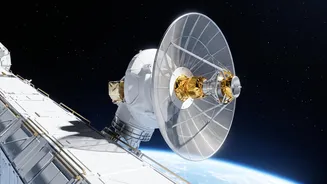
On Tuesday, August 25, NASA astronaut Anil Menon and European Space Agency (ESA) astronaut Sophie Adenot ventured outside the International Space Station for a demanding six-and-a-half-hour spacewalk. Their mission was to replace a failed Space-to-Ground
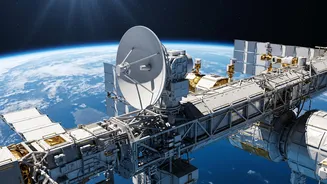
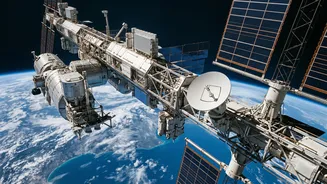
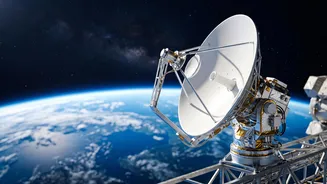
Antenna (SGANT), a key piece of hardware responsible for relaying communications, video, and critical data between the orbiting laboratory and Mission Control in Houston. This was the second spacewalk dedicated to the task. An earlier attempt on August 18 saw the duo successfully remove the broken antenna but run out of time to install its replacement due to stubborn bolts and electrical cables. This follow-up extravehicular activity (EVA) successfully finished the job, restoring full redundancy to the station's communication systems.
The Spacewalkers in Action
The operation was a carefully choreographed dance in the vacuum of space. Menon, secured to the end of the Canadarm2 robotic arm, was maneuvered into position to retrieve the spare antenna from its external storage platform. Adenot, making her second career spacewalk, assisted in the intricate process of mounting and connecting the new dish to the station's Z-1 truss structure. This spacewalk was the third for Menon and the second for Adenot, who made history on the previous EVA as the first French woman to perform one. The successful installation concluded the 283rd spacewalk in support of ISS assembly and maintenance. Upon completion, Mission Control celebrated with a playful parody of a classic song, telling the astronauts, "You just saved the video dish."
Why This Antenna Is a Lifeline
The Space-to-Ground antennas are the workhorses of ISS communications. Operating in the S-band frequency range (2-4 GHz), these systems are highly reliable and essential for what is known as Telemetry, Tracking, and Command (TT&C). In simple terms, they are the link that allows flight controllers to monitor the station's health, send commands, and maintain voice communication with the crew. The antennas work by communicating with NASA's Tracking and Data Relay Satellite System (TDRSS), a constellation of satellites in a much higher orbit that then passes the signal down to ground stations. While the ISS has redundant systems and was never completely out of contact, losing one of its two primary high-speed antennas last November meant operating without a crucial backup. Restoring this capability was a top priority for mission managers to ensure operational safety and resilience.
The Challenge of Working in Space
Replacing an antenna on Earth is a routine task; in orbit, it's a monumental undertaking. Astronauts must work in bulky, pressurized suits that limit dexterity, all while floating in zero gravity. The initial attempt to fix the antenna highlighted these challenges, as the spacewalkers spent more time than anticipated wrestling with stiff connectors and bolts that had been exposed to the harsh environment of space for years. Each movement must be precise and deliberate to avoid damaging the multi-billion dollar station or, worse, endangering a crewmate. This successful repair not only fixes a technical problem but also serves as a powerful demonstration of human ingenuity and the incredible skill required to maintain our outpost in the cosmos.