








An Uber to Space, Made in India
Founded in 2018 by former ISRO scientists, Skyroot Aerospace has a bold mission: to make space access as routine and affordable as air travel. The company aims to capture a significant share of the booming global market for small satellite launches. Clients
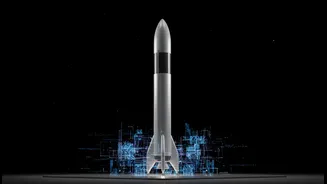
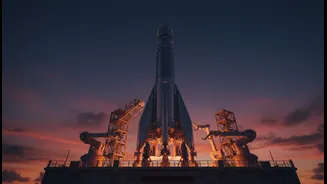
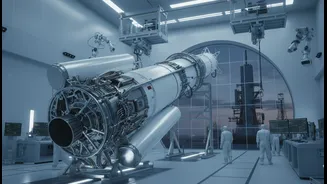
often wait years to hitch a ride on large, government-run rockets, where their small payloads are secondary. Skyroot wants to offer them a dedicated 'cab to orbit' with its Vikram series of launch vehicles, named after the father of India's space program, Dr. Vikram Sarabhai. After a successful suborbital flight with the Vikram-S in 2022, all eyes are on the Vikram-1, a seven-storey-tall rocket designed to deliver payloads of up to 350 kg to Low Earth Orbit. Its upcoming launch, named Mission Aagaman ('The Arrival'), is set to be the first time a privately developed Indian rocket attempts to place satellites in orbit.
The Crucial Challenge of Trajectory
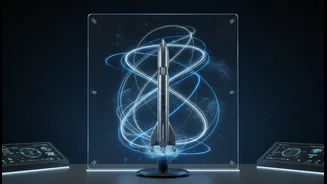
Launching a rocket is more than just pointing it at the sky. Reaching orbit requires achieving a precise speed of nearly 8 kilometres per second while navigating Earth's gravity and atmosphere. This path is the orbital trajectory, and perfecting it is a monumental task. The flight software must execute a perfectly timed sequence of events, including stage separations and engine burns. For Vikram-1, this involves its three solid-fuelled lower stages firing and detaching, followed by a restartable liquid-fuelled upper stage that fine-tunes the final orbital placement. A tiny error in calculation, a deviation of a single degree, or a millisecond of delay can lead to mission failure. This is where software becomes the unsung hero of the launch.
Not Just Hardware, But Intelligent Software
While the rocket's carbon-composite body and 3D-printed engines are marvels of hardware engineering, the brains of the operation reside in the software. There are two main types: ground software and flight software. Ground software manages mission control, simulations, and data processing on Earth. Flight software runs on the rocket itself, an extremely reliable and mission-critical system written in performance-focused languages like C++. This code reads data from sensors, calculates the rocket's real-time position, and issues commands to the engines and control systems to stay on the predetermined path. At Skyroot, young graduates and engineers work on the Guidance, Navigation, and Control (GNC) systems, developing the very algorithms that will steer Vikram-1 through its complex journey.
A New Generation of Rocket Scientists
The individuals writing this critical code represent a new wave of talent in India's aerospace sector. They are software engineers, data scientists, and embedded systems specialists, often recruited for their strong grasp of programming languages like Python and C++, and their ability to solve complex problems under pressure. The work involves creating and running thousands of simulations to test the rocket's performance in every conceivable scenario. These young engineers are tasked with building robust, fault-tolerant systems where, if one component fails, others can compensate to ensure the mission continues. This software-first approach, blending startup agility with the rigour of rocket science, allows Skyroot to innovate quickly and prepare for a future of high-frequency launches.
From Code on the Ground to Orbit in the Sky
The upcoming Vikram-1 launch is the ultimate test for this software. The flight will provide invaluable real-world data on how every system performs, from propulsion to guidance. This data, collected by on-board systems and transmitted back to the ground team, is foundational to Skyroot's goal of establishing a reliable, on-demand launch service for the world, from India. The success of the mission hinges not just on the physical rocket lifting off the pad, but on the millions of lines of code executing flawlessly, guiding the vehicle to its precise destination in space. It's a testament to the fact that in the modern space age, rocket science is as much about brilliant code as it is about powerful engines.