




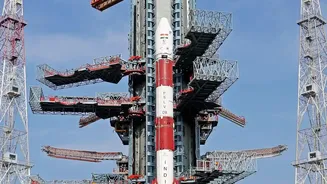
India's Unblinking Eye on the Sun
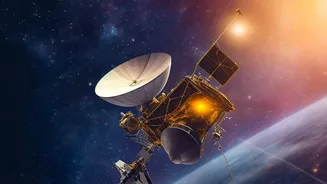
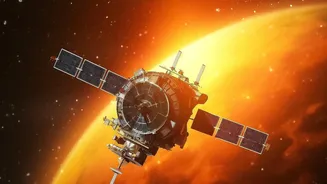
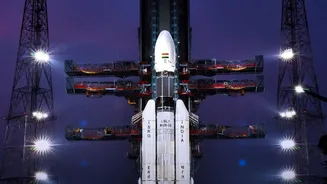
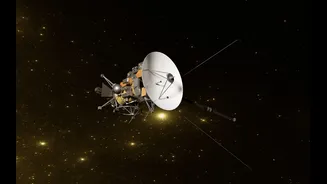
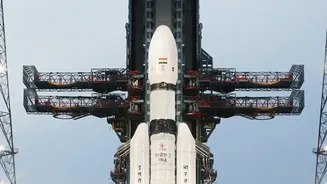
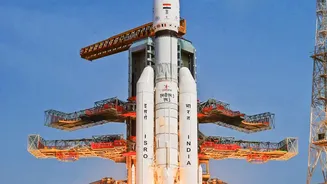
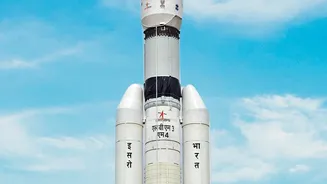
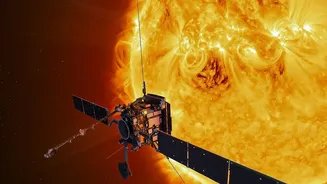
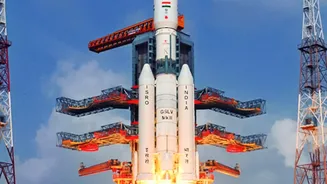
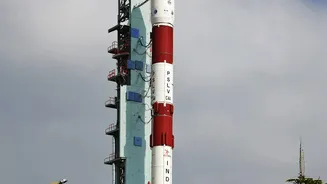
Launched in September 2023, the Aditya-L1 is ISRO's first dedicated observatory for studying the Sun. It is strategically positioned at Lagrange Point 1 (L1), about 1.5 million kilometres from Earth, a special vantage point that allows it to watch the Sun continuously
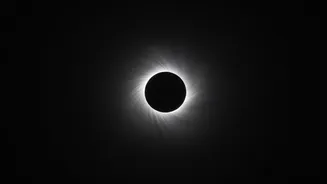
without any eclipses or occultations. This uninterrupted view is fundamental for monitoring solar activities, such as solar flares and coronal mass ejections (CMEs), which are the primary drivers of space weather. The mission's suite of seven sophisticated instruments is designed to observe the Sun's various layers, from the photosphere and chromosphere to the outermost corona.
What Are Space Storms?
Space storms, or geomagnetic storms, are major disturbances of Earth's magnetic shield caused by violent eruptions from the Sun. A Coronal Mass Ejection, for instance, is a massive expulsion of plasma and magnetic field from the Sun's corona. When one of these is aimed at Earth, it can trigger a geomagnetic storm. The consequences are not just pretty auroras. These storms can have severe impacts on our technology-dependent society. They can fry satellites in orbit, disrupt GPS and communication signals, endanger astronauts, and even cause widespread blackouts by overwhelming power grids on the ground. A notable incident in 2022 saw dozens of Starlink satellites lost due to a geomagnetic storm, highlighting the very real threat.
How Aditya-L1 Turns Data into Warnings
Prediction is the key to protection. Aditya-L1's instruments, like the Visible Emission Line Coronagraph (VELC) and the Solar Ultraviolet Imaging Telescope (SUIT), provide high-resolution images of the Sun's atmosphere, allowing scientists to study the dynamics that lead to eruptions. Other payloads like ASPEX measure the solar wind and energetic particles as they travel from the Sun. By combining data from these different instruments, scientists can get a more complete picture of solar events as they unfold. Recent studies have shown that data from Aditya-L1 was crucial in confirming that sudden changes in solar wind pressure directly caused magnetic disturbances on Earth. This direct link between the Sun's activity and its effect on our planet is the foundation for creating reliable prediction models.
A Protective Shield for a Digital India
For India, a nation rapidly expanding its digital infrastructure and space assets, this capability is more critical than ever. Our economy relies on a network of satellites for everything from weather forecasting and resource management to banking and navigation through services like NavIC. The military also depends on these space-based assets for communication, navigation, and surveillance. An accurate space weather forecast, enabled by Aditya-L1's data, acts as an early warning system. It gives satellite operators, power grid managers, and airlines crucial time to take protective measures, such as temporarily shutting down systems or rerouting flights to mitigate the worst effects of an incoming solar storm.
A Global Contribution to Space Science
While Aditya-L1 serves India's national interests, its contributions are global. Space weather affects everyone, and data from the mission is a vital addition to the international network of solar observatories that work together to monitor the Sun. By providing new insights into phenomena like the mysterious heating of the solar corona and the mechanics of solar flares, Aditya-L1 is helping scientists worldwide solve long-standing puzzles about our nearest star. This collaborative effort is essential for building a comprehensive understanding of the Sun and improving our collective ability to forecast its sometimes-violent behaviour and protect our shared technological infrastructure.