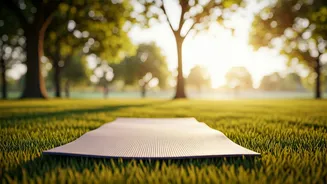









The Dawn of a New Routine
Visit any major urban park at sunrise, from Lodhi Garden in Delhi to Cubbon Park in Bengaluru, and you’ll see it. It’s not just the usual morning walkers. It’s organised boot camps with kettlebells on the grass, sprawling yoga circles moving in unison,
and packs of runners with matching club jerseys. This is the new face of Indian fitness: communal, accessible, and bathed in sunlight. For years, the aspirational image of fitness was tied to a swanky gym membership, complete with personal trainers and imported equipment. But something has changed. The four walls of the gym, once a status symbol, are beginning to feel restrictive for a growing number of people who are rediscovering the simple joy of moving in the open air.
More Than Just a Pandemic Rebound
It’s easy to dismiss this trend as a simple reaction to pandemic-era lockdowns, a temporary euphoria for regained freedom. While that was certainly the catalyst, the roots of this movement run deeper. Many are experiencing what can be called ‘gym fatigue’. The high costs, the commute, the waiting for equipment, and the sheer monotony of indoor workouts were grating on people even before 2020. The pandemic simply forced a reset, compelling people to find alternatives. What they discovered was that a good workout didn’t require a hefty monthly fee or a biometric entry scan. It just required a pair of shoes and a bit of open space. This realisation has had a lasting impact, fundamentally altering the value proposition of fitness for many urban Indians.
Finding a Tribe, Not Just a Trainer
Perhaps the most powerful driver of the outdoor fitness boom is community. Gyms can be surprisingly isolating places; headphones on, head down, focused on your individual routine. Outdoor fitness, by contrast, is inherently social. Running groups like the Mumbai Road Runners or Chennai Runners aren't just about logging kilometres; they’re about camaraderie, mutual encouragement, and shared post-run breakfasts. Cyclists gather in pelotons for weekend-long rides, transforming a solitary activity into a team sport. This sense of belonging is a powerful motivator. It provides accountability—it’s harder to skip a 5 AM run when you know your friends are waiting—and turns exercise from a chore into a social event. In a world of digital isolation, these real-world connections are proving to be as beneficial as the physical activity itself.
The Mental Health Dividend
The conversation around fitness is no longer just about physical aesthetics or athletic performance. Mental well-being is now a primary goal, and this is where outdoor exercise truly shines. Scientific research has consistently shown the benefits of ‘green exercise’. Spending time in nature, even in a city park, has been proven to reduce stress, anxiety, and depression. The combination of physical exertion, fresh air, and natural light provides a powerful mood boost that an artificially lit, enclosed space can rarely match. For many, a morning run in the park isn't just for cardiovascular health; it's a form of meditation, a moment of peace before the chaos of the workday begins. This holistic approach to wellness is a defining feature of the new fitness culture.
Reclaiming the Cityscape
This trend is also a story about our relationship with our cities. People are actively repurposing public infrastructure for their health. Mumbai’s Marine Drive becomes an unofficial running track every morning. The wide, tree-lined avenues of Lutyens' Delhi are a haven for cyclists. Public parks, once seen as passive recreational spaces, are now active fitness hubs. This movement is a quiet act of reclaiming the urban environment for public good. It demonstrates a collective desire to make our cities more liveable, breathable, and human-centric. As more people use these spaces for fitness, it creates a virtuous cycle, encouraging civic authorities to better maintain parks, build cycling lanes, and invest in public amenities that support a healthy, active lifestyle.