


Catch the Tail End of a Famous Meteor Shower
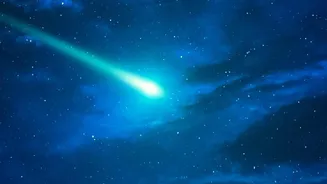
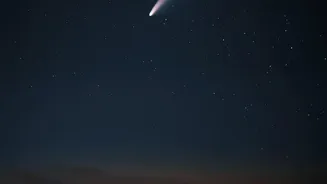
While the famous Perseid meteor shower had its spectacular peak around August 12th and 13th, its activity continues until late August. If you find yourself under clear, dark skies in the last weeks of the month, it's still worth looking for these shooting
stars. The Perseids are known for their bright, fast meteors that can leave glowing trails. For your best chance, find a location far from city lights after midnight and look towards the northeast. Although the rate of meteors will be much lower than the peak, catching a late Perseid is a special treat. The shower officially remains active until around August 24th, giving you a final opportunity to witness this celestial display.
Watch Venus Dominate the Evening Sky
Throughout August, the planet Venus puts on a brilliant show. Reaching its greatest eastern elongation on August 15th, it remains a dazzling 'evening star' for the rest of the month. This means it will be at its highest point above the horizon in the western sky just after sunset. You don't need any special equipment to see it; its brightness makes it impossible to miss, provided you have a clear western view. Its intense, steady light distinguishes it from twinkling stars. As twilight deepens, Venus will be one of the very first points of light to appear, a beautiful and easily identifiable target for even the most novice stargazer.
Spot the First Quarter Moon
On August 20th, the Moon reaches its First Quarter phase. This is an excellent time for casual observation, especially with binoculars or a small telescope. At this stage, the Moon is half-illuminated, and the line separating the lunar day and night—known as the terminator—is starkly visible. This dramatic lighting casts long shadows across craters and mountains, giving the lunar surface a stunning three-dimensional appearance that is often more visually interesting than the flat light of a Full Moon. Look for it in the sky as evening falls; it will be well-positioned for viewing before it sets around midnight.
Prepare for the August Full Moon
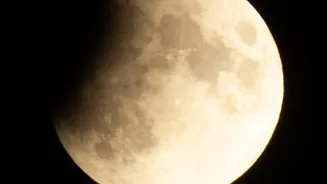
Mark your calendar for August 28th, when the month's Full Moon will grace the night sky. Known by traditional names like the 'Sturgeon Moon', this is when the Moon is on the opposite side of the Earth from the Sun, so its face is fully illuminated. While the bright moonlight will wash out fainter stars, the Full Moon itself is a magnificent sight. It rises in the east around sunset and remains visible all night long. A partial lunar eclipse will also occur on this date, but it will unfortunately not be visible from India. Still, the sight of a brilliant full moon rising is a timeless and rewarding experience.
An Early Look at Saturn
The ringed planet, Saturn, is becoming an increasingly prominent feature in the night sky as the month progresses. While its big event, the opposition, where it's at its brightest and closest for the year, isn't until early October, late August is still a great time for a preview. Visible for most of the night, it will rise in the eastern sky and travel across the night. To the naked eye, it appears as a steady, yellowish point of light. However, even a modest telescope will reveal its most famous feature: its breathtaking rings. This makes it one of the most rewarding objects for anyone with access to basic astronomy equipment to observe.