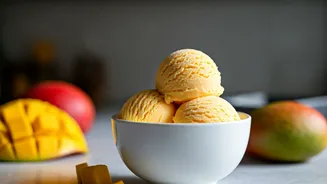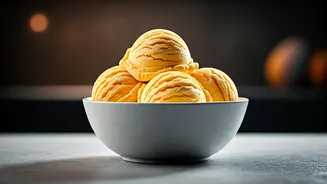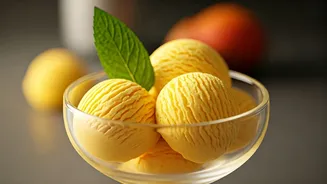

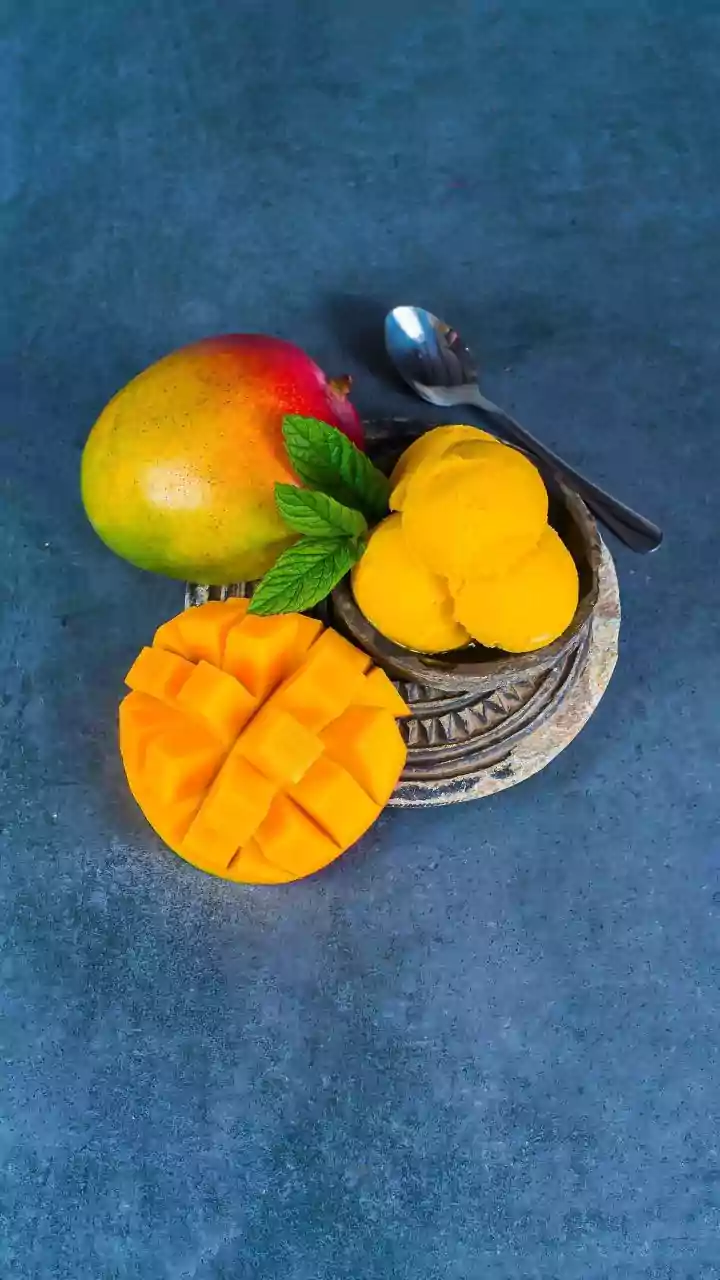




Why You'll Love This Recipe
The allure of this recipe lies in its beautiful simplicity. With no ice cream machine, no complex custard to prepare, and no chemical stabilisers, you get pure, unadulterated mango flavour. Commercial ice creams often contain preservatives, artificial
flavours, and excess air to bulk up the volume. When you make it at home, you control the quality of the ingredients, the level of sweetness, and the intensity of the mango taste. The result is a richer, denser, and creamier dessert that truly tastes like the king of fruits. Plus, the satisfaction of serving a scoop of delicious ice cream that you made from scratch in your own kitchen is a reward in itself. It's an easy, impressive dessert perfect for family gatherings or a simple moment of indulgence.
The Magic Three Ingredients
To create this frozen masterpiece, you only need three core components. First, ripe, flavourful mangoes are the star of the show. Second, a can of sweetened condensed milk provides the sweetness and, crucially, the creamy texture that prevents the formation of large ice crystals. This is the secret to getting a smooth scoop without churning. Finally, heavy whipping cream, when whipped to stiff peaks, incorporates air into the base, giving the ice cream its light, luscious structure. The science is simple: the fat in the cream, the sugar in the condensed milk, and the natural fruit pulp all work together to create a perfectly balanced, scoopable dessert right from your freezer.
Choosing the Right Mango
For an ice cream that sings with authentic flavour, the choice of mango is paramount. The ideal mango should have sweet, non-fibrous flesh and a strong, pleasant aroma. In India, the undisputed king is the Alphonso (Hapus). Its saffron-hued pulp, creamy texture, and intense sweetness make it the gold standard for desserts. Another excellent choice is the Kesar mango from Gujarat, known for its sweet taste and beautiful colour. If you can't find these, Badami (the Alphonso of Karnataka) or the lighter-flavoured Banganapalli are also wonderful alternatives. The key is to use mangoes that are perfectly ripe and in season for the best possible flavour. You can also use high-quality canned mango pulp when fresh mangoes are unavailable.
Step 1: The Mango Pulp
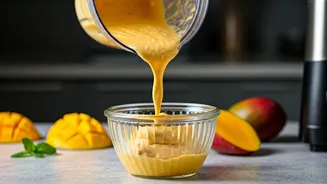
Start by preparing your mangoes. You will need about 2 cups of thick mango puree. Take two to three large, ripe mangoes, wash them, and peel the skin. Chop the flesh away from the stone and cut it into cubes. Place the mango chunks into a blender or food processor. Blend until you have a completely smooth, thick puree. If your mangoes are slightly fibrous, you may want to strain the puree through a fine-mesh sieve to ensure a silky-smooth final texture in your ice cream. Once you have your vibrant, fragrant puree, set it aside.
Step 2: The Creamy Base
This step is crucial for achieving a light, airy texture. Pour about 2 cups (or approximately 500ml) of cold heavy whipping cream into a large, chilled bowl. Using an electric hand mixer or a stand mixer with the whisk attachment, begin whipping the cream on a low speed, gradually increasing to medium-high. Continue to whip until the cream becomes thick and forms stiff peaks. This means when you lift the beaters out of the cream, the peaks should stand tall without collapsing. Be careful not to over-whip, or you'll start making butter! The perfectly whipped cream is the foundation of your ice cream's volume and lightness.
Step 3: Combine and Freeze
Now, it's time to bring everything together. In a separate bowl, pour one standard can (about 400g) of sweetened condensed milk. Add your prepared mango puree to the condensed milk and mix them together until well combined. Next, gently fold this mango mixture into your whipped cream. Use a spatula and a gentle 'cut and fold' motion, scooping from the bottom of the bowl over the top. This technique helps combine the ingredients without knocking the air out of the cream. Continue folding until the mixture is uniform in colour and no streaks remain. Pour the final mixture into a freezer-safe container, like a loaf pan. Smooth the top, and it's ready for the freezer.
Tips for a Perfect Scoop
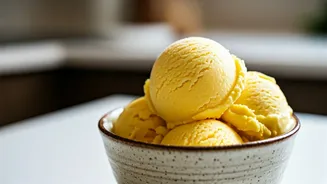
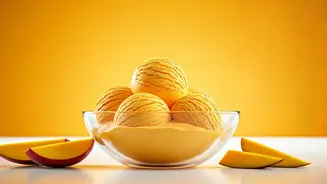
For the creamiest result, cover the surface of the ice cream directly with a piece of plastic wrap or parchment paper before putting on the lid. This prevents ice crystals from forming on top. Freeze the ice cream for at least 6 to 8 hours, or preferably overnight, until it is firm. When you're ready to serve, the ice cream will be very hard directly from the freezer. Allow it to sit at room temperature for 10-15 minutes to soften slightly, making it easier to scoop. For an extra touch, you can garnish your scoops with chopped pistachios, fresh mango chunks, or a sprinkle of cardamom.