







The Vanishing Toll Booth
For years, FASTag has been the face of electronic tolling in India, significantly reducing wait times. However, the system still often requires vehicles to slow down or pass through a dedicated lane with a boom barrier. Now, the National Highways Authority
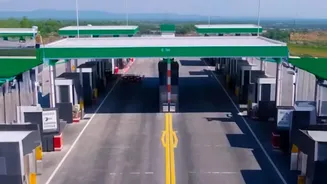
of India (NHAI) is deploying the next evolution: Multi-Lane Free Flow (MLFF) tolling. This technology removes physical toll booths and barriers entirely. As seen on stretches like the Manesar-Jaipur corridor of NH-48, vehicles can now travel at normal highway speeds while toll collection happens invisibly in the background. This marks a fundamental shift from merely speeding up the queue to eliminating it altogether, paving the way for truly uninterrupted highway travel.
Technology Behind the Speed
This seamless experience is powered by advanced technology. The current MLFF systems primarily use a combination of FASTag and Automatic Number Plate Recognition (ANPR) cameras. As a vehicle passes under an overhead gantry, its FASTag is scanned for the primary transaction. Simultaneously, high-resolution ANPR cameras capture the vehicle's number plate. This dual system provides redundancy and accuracy. If the FASTag fails to read for any reason, the ANPR system identifies the vehicle, and the toll is charged to the associated account. The government is also exploring satellite-based GPS tolling, which would track a vehicle's journey and deduct a precise toll based on the distance travelled on the highway, making the system even more sophisticated.
Gains in Time, Fuel, and Emissions
The benefits of barrier-free tolling extend far beyond simple convenience. By eliminating the need to stop or even slow down, the system drastically cuts travel time. This has a direct impact on fuel consumption; vehicles save fuel by maintaining a consistent speed instead of braking and accelerating at toll plazas. The Ministry of Road Transport & Highways highlights that this reduction in idling and congestion also leads to a significant drop in vehicle emissions, contributing to better air quality around busy highway corridors. For the more than 6.2 crore active FASTag users in the country, this translates to faster, cheaper, and greener journeys.
The Driver's New Responsibility
This new freedom on the road comes with a critical shift in responsibility. In a barrier-free world, the onus is entirely on the vehicle owner to ensure their account is ready for automated deductions. This concept of 'account readiness' has several key components. First, maintaining a sufficient balance in your FASTag wallet is non-negotiable. A low balance can get your tag blacklisted, rendering it unusable. Second, your Know Your Customer (KYC) details must be complete and up-to-date, as per recent government mandates. This ensures your tag remains active and linked correctly to you and your vehicle. Finally, it’s crucial that your FASTag is properly linked to your vehicle's registration number to avoid any mismatches.
Navigating Potential Problems
With no gate to stop you, what happens when a payment fails? The MLFF system has a process for this. If a toll is not paid due to an insufficient balance or an invalid tag, an Electronic Notice (E-Notice) is issued to the vehicle owner via SMS or email. You are typically given 72 hours to pay the standard toll amount after receiving this notice. Failure to pay within that window results in a penalty, often double the original toll fee. To avoid this, drivers should regularly check their FASTag balance through their provider's app or website and consider setting up an auto-recharge facility. If you believe a toll was deducted incorrectly, you can file a dispute, but be aware that new rules may require a waiting period before a chargeback can be initiated.