



The Two-Step Appointment
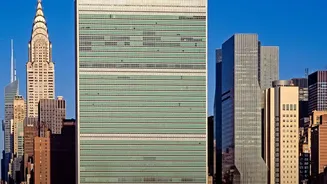
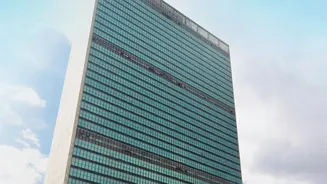
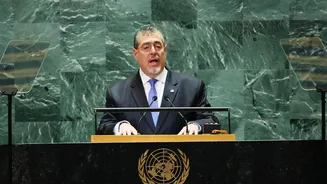
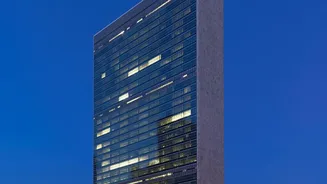
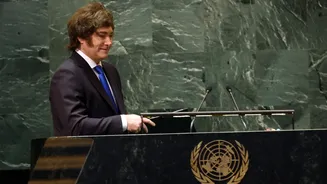
On paper, the process for appointing the Secretary-General is straightforward. Article 97 of the UN Charter states that the General Assembly, which includes all 193 member states, appoints the chief upon the recommendation of the Security Council. In
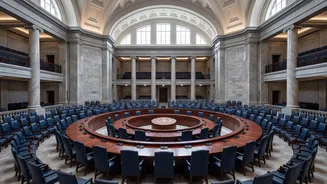
reality, the Security Council holds all the meaningful power. The Council deliberates in private, often using informal secret ballots or 'straw polls' to gauge support for candidates, before presenting a single name to the General Assembly. The General Assembly has never rejected a candidate recommended by the Council, making the Council's 'recommendation' a de facto appointment.
The Power of the 'P5'
The Security Council has 15 members, but five of them hold a unique and decisive power: the veto. These are the permanent members, or 'P5' — China, France, Russia, the United Kingdom, and the United States. This power was written into the UN Charter in 1945 to ensure the world's major powers would act together and to protect their own national interests. To be recommended, a candidate for Secretary-General needs at least nine affirmative votes in the Security Council, but critically, they must receive no vetoes from any of the P5. A negative vote from a permanent member on a substantive issue, like the selection of a Secretary-General, acts as a veto and stops the resolution.
The Veto in Action
The veto isn't just a tool; it's a weapon that shapes the entire race. While the final vote is secret, the P5's preferences are the most important factor. During the straw poll process, ballots from permanent members are sometimes a different colour to distinguish them. A 'discourage' vote from a P5 member is effectively a veto and a clear signal that a candidate cannot succeed. This has happened historically. The United States vetoed a second term for Boutros Boutros-Ghali of Egypt, while China vetoed a third term for Kurt Waldheim of Austria. More recently, in the ongoing 2026 selection process, reports indicate that the leading candidate, Rebeca Grynspan of Costa Rica, faced two such 'discourage' votes from permanent members, stalling her frontrunner status despite having majority support in the Council.
A Race for Consensus, Not Vision
Because any P5 nation can block a candidate, the process tends to favour individuals who are seen as 'safe' and unlikely to challenge the interests of the permanent members. This has led to criticism that the job often goes not to the most qualified or visionary leader, but to the least objectionable one. The intense, opaque lobbying often leads to a compromise candidate who can secure the unanimous backing of the P5. Candidates traditionally come from small or medium-sized neutral countries, and nationals of the P5 states do not run for the post themselves. This dynamic ensures the Secretary-General rarely has a power base independent of the Security Council's most powerful members.
Calls for an Overhaul
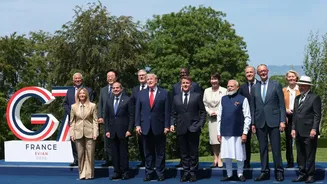
This system, designed in the post-World War II era, faces growing criticism for being undemocratic and anachronistic. Nations like India, Brazil, Germany, and Japan (known as the G4) have long campaigned for permanent seats on the council themselves, arguing its current structure doesn't reflect modern geopolitical realities. Many of the UN's 193 member states feel the process gives disproportionate influence to just five countries, sidelining the will of the global majority. However, any reform to the UN Charter requires the approval of two-thirds of the General Assembly and, crucially, must be ratified by all five permanent members. This means the P5 have a veto over any attempt to diminish their own veto power, creating a deadlock that has so far proven impossible to break.