






First, What Is a HEPA Filter?
Before comparing, it's crucial to understand the technology at the heart of most effective air purifiers. HEPA stands for High-Efficiency Particulate Air. A 'True HEPA' filter is a mechanical air filter that is certified to trap at least 99.97% of airborne
particles that are 0.3 microns in size. This specific size is considered the most difficult to capture, which means these filters are often even more effective at trapping both larger and smaller particles. The particles captured by HEPA filters include many of the most common indoor irritants: dust, pet dander, pollen, mould spores, and even some bacteria and viruses. Essentially, it's a super-fine net that mechanically traps tiny pollutants as air is forced through it, making it the gold standard for particle filtration in homes, hospitals, and cleanrooms.
The Case for Air Purifiers
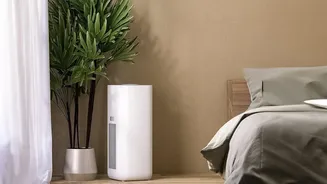
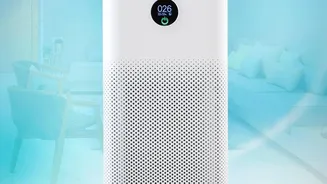
An air purifier is an active solution. It uses a fan to pull in the air from a room, pass it through a series of filters—including a HEPA filter—and then circulate the clean air back out. This process is fast and efficient. A properly sized purifier can clean the air in a room multiple times per hour, leading to a significant and measurable reduction in airborne particulate matter. For anyone suffering from allergies or asthma, this can provide noticeable relief by removing triggers like pollen and pet dander from the air. Many purifiers also include an activated carbon filter, which works alongside the HEPA filter to adsorb gases, odours, and volatile organic compounds (VOCs)—something HEPA filters alone cannot do. This makes them a powerful tool for tackling a wide range of indoor air pollutants, from dust and allergens to smoke and cooking smells.
The Myth of Houseplants as Purifiers
The belief that houseplants can effectively clean indoor air largely stems from a famous NASA study from 1989. The study showed that, in small, sealed chambers, plants could remove VOCs like benzene and formaldehyde from the air. However, subsequent research has shown that these lab conditions do not translate to a typical home or office. A real-world room has much more air volume and natural ventilation, which dilutes pollutants far faster than a few plants can absorb them. To replicate the cleaning power seen in the NASA study, you would need an impossibly large number of plants—estimates range from 10 to 1,000 plants per square metre of floor space. While plants do absorb some VOCs, the rate is so slow that it's negligible compared to a mechanical air purifier or simply opening a window. For particulate matter like dust and pollen, plants have virtually no effect.
Head-to-Head: Which Is Better?
When it comes to measurably improving indoor air quality, the science is clear: an air purifier with a True HEPA filter is vastly superior. For removing particles—the primary trigger for allergies and respiratory irritation—there is no contest. Air purifiers are designed specifically for this task and perform it with speed and efficiency. Houseplants, on the other hand, are passive and have a minimal effect on particulate levels. In terms of removing gaseous pollutants (VOCs), the comparison is more nuanced but still favours technology. While plants can absorb certain gases, their impact is extremely slow and limited. An air purifier equipped with a substantial activated carbon filter will remove a broader range of gases and odours much more effectively. The bottom line is that houseplants cannot replace the function of an air purifier.
The Best Solution: Use Both
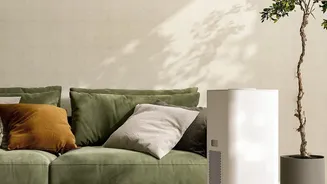
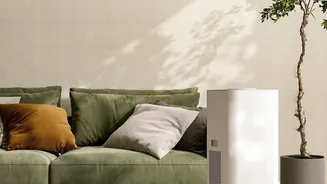
This doesn't mean you should get rid of your green friends. While they aren't effective air cleaners, houseplants offer numerous other benefits. They are aesthetically pleasing, can boost mood, reduce stress, and add a touch of nature to your indoor space. They also contribute to a room's humidity through transpiration. The ideal strategy for a truly healthy and pleasant home is to use both. Rely on a high-quality air purifier with HEPA and activated carbon filters to do the heavy lifting of removing pollutants from the air. Then, add houseplants for their psychological and decorative benefits. Think of the air purifier as the functional workhorse for your respiratory health, and the plants as a beautiful addition that nurtures your well being.