
Your Guide to the Urban Cosmos
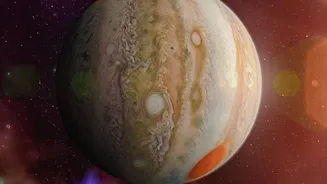
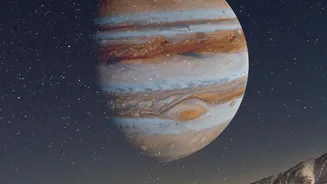
It’s a common myth that city lights have erased the night sky. While light pollution does hide fainter stars, it doesn't leave the sky empty. The Moon remains a spectacular target, and the brightest planets—Venus, Mars, Jupiter, and Saturn—are often visible
to the naked eye, appearing as unusually bright, steady 'stars'. Major constellations like Orion and Ursa Major can also be spotted. The challenge isn't a lack of objects, but knowing where and when to look. This is where your smartphone transforms from a distraction into a powerful astronomical tool, using its internal sensors and location data to create a live map of the heavens above you.
How Augmented Reality Unveils the Night
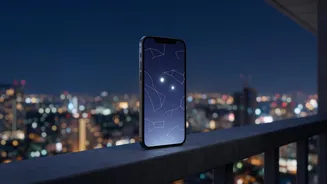
Modern stargazing apps act as a window into the cosmos by using your phone's built-in technology. When you point your device at the sky, the app uses its GPS to know your location, its compass for direction, and its gyroscope to sense the angle. It combines this data to display a real-time, augmented reality (AR) overlay of stars, planets, and constellations. As you move your phone, the map moves with you, identifying celestial bodies with pinpoint accuracy. Many apps even let you tap on an object to pull up detailed information about its distance, composition, and history, turning a simple viewing into an educational experience.
Top Apps to Begin Your Stargazing
Choosing an app can feel overwhelming, but a few stand out for their user-friendly design and powerful features. Star Walk 2 is often praised as a great starting point for beginners, offering a polished interface, AR overlays, and an astronomical calendar to track events. For those wanting a free and highly accurate planetarium experience, Stellarium Mobile is a top choice, providing a massive database of stars and deep-sky objects. SkyView Lite is another excellent free option known for its simplicity; just point it at the sky to quickly identify stars, constellations, and even satellite fly-bys like the International Space Station (ISS). Most of these apps offer robust free versions that are more than enough for casual stargazing.
Tips for Your First Urban Session
To make the most of your urban stargazing, a little preparation goes a long way. First, find the darkest spot you can. This could be a local park, a rooftop, or even just the side of your building that shields you from the brightest streetlights. Give your eyes at least 20-30 minutes to adapt to the darkness; this will dramatically increase the number of stars you can see. Avoid looking at your bright phone screen unless you're using an app with a red-light 'night mode', which helps preserve your night vision. Finally, check a weather app for clear skies. Haze and high humidity can amplify the effects of light pollution, so the clearest nights will always offer the best views.
Beyond the Brightest Planets
Once you get comfortable finding planets, you can start hunting for other celestial sights. Many apps include trackers for the International Space Station and other major satellites, often sending you an alert just before they become visible overhead. Depending on the time of year, your app can guide you to meteor showers, showing you the radiant point from which the shooting stars will appear to originate. Even from a moderately light-polluted area, you can still spot bright star clusters like the Pleiades or prominent deep-sky objects like the Orion Nebula, which can look like a faint, fuzzy star to the naked eye but comes alive with detail through binoculars.