





How did our universe begin? How did galaxies form? And where did the ingredients for life come from? NASA's SPHEREx mission is designed to tackle these monumental questions by creating a unique 3D map of the entire cosmos in unprecedented detail.
A New Cosmic Atlas
SPHEREx,
which stands for Spectro-Photometer for the History of the Universe, Epoch of Reionization, and Ices Explorer, is a space telescope with a grand ambition. Over its two-year mission, it will survey the entire sky four times, creating a comprehensive map of the cosmos. Unlike telescopes that focus on specific, small patches of the sky, SPHEREx is an all-sky survey, designed to capture the big picture. It will gather data on hundreds of millions of galaxies, some so far away that their light has traveled for 10 billion years to reach us, as well as over 100 million stars within our own Milky Way galaxy. This massive dataset will serve as a rich archive and a vital resource for astronomers worldwide for decades to come, complementing the deep-dive observations of missions like the James Webb Space Telescope.
Seeing the Universe in 102 Colors
The key to SPHEREx's power lies in its ability to see the sky not just in one image, but in 102 distinct wavelengths, or 'colors', of near-infrared light. This technique, called spectroscopy, splits light into its component parts, much like a prism creates a rainbow. Each 'color' reveals a different chemical signature, providing clues about an object's composition and distance. Think of it as upgrading from a black-and-white photo of the universe to a hyperspectral image, where every pixel contains a wealth of new information. This capability far exceeds previous all-sky maps, like that of the WISE mission which used only four infrared bands. By analysing these 102 color bands, scientists can identify specific molecules and chart their distribution across the cosmos.
Unraveling Three Great Mysteries
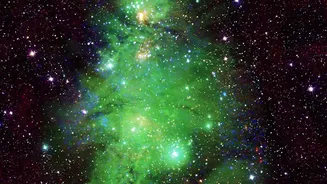
The mission has three primary scientific goals. First, it will probe 'cosmic inflation'—the moment in the first fraction of a second after the Big Bang when the universe expanded exponentially. By creating a 3D map of how galaxies are distributed, SPHEREx can look for the subtle imprints left by this event, helping scientists understand the fundamental physics of our universe's birth. Second, it will study the history of galaxy formation by observing the faint, collective glow of all galaxies, known as the Extragalactic Background Light. This will help reveal how galaxies grew and evolved over cosmic time. Finally, SPHEREx will search for water and organic molecules—the building blocks of life—frozen as ice on dust grains in our own galaxy's stellar nurseries, where new stars and planets are born.
How It Works and What's Next
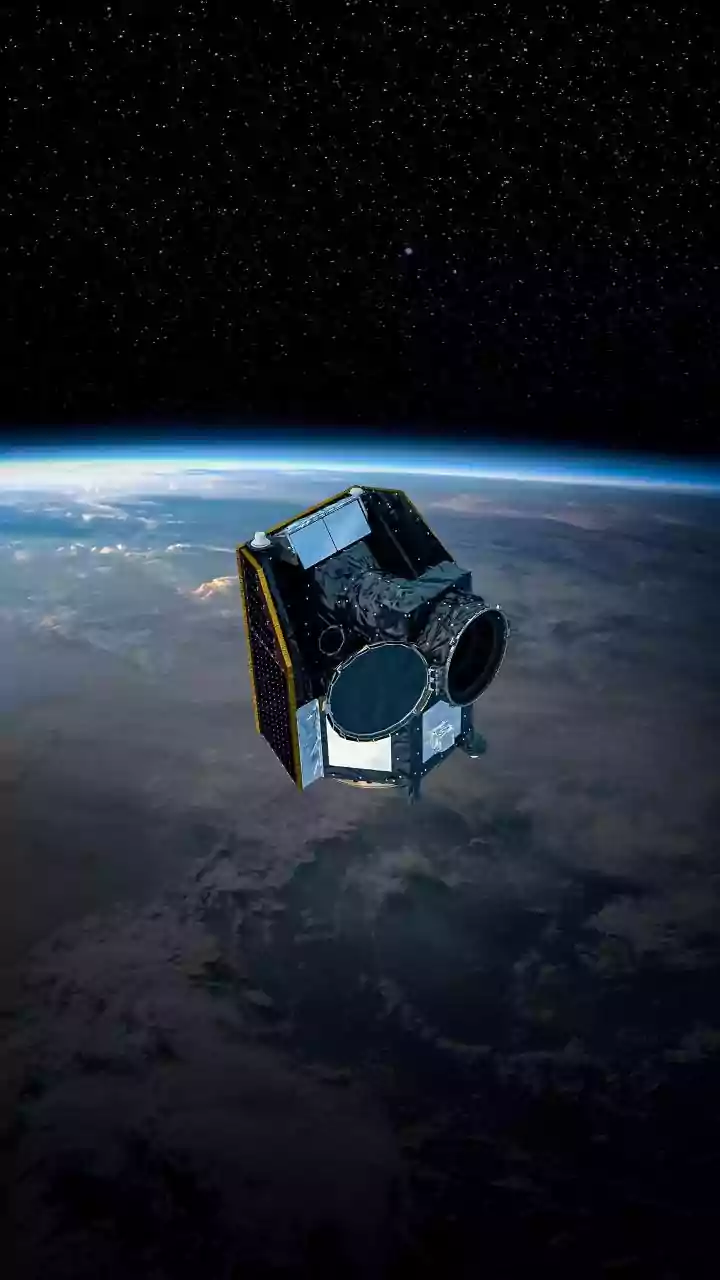
To achieve its goals, the SPHEREx observatory orbits Earth in a Sun_synchronous polar orbit, allowing it to survey a complete strip of the sky with each trip around the planet while keeping its sensitive instruments shielded from the Sun and Earth's heat. Every six months, it completes a full map of the sky. The mission launched in early 2025 and has already begun delivering its data, which is made publicly available for scientists and the public to explore. By completing four full_sky surveys, SPHEREx will not only create a static map but also provide insights into cosmic changes over time. The data will identify the most interesting targets for future, more detailed studies by other powerful observatories.