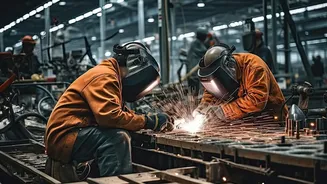








India's job story is no longer just about the big metros. A quiet revolution is reshaping the employment landscape, with smaller cities emerging as powerful manufacturing hubs that spark massive, seasonal hiring sprees. Here's what's happening.
The Great Migration of Industry
For decades,
manufacturing in India was synonymous with sprawling industrial estates on the outskirts of megacities like Mumbai, Chennai, and Delhi-NCR. But a powerful shift is underway. Driven by high operational costs, real estate prices, and intense competition for talent in metros, companies are increasingly looking towards Tier-II and Tier-III cities. Today, nearly two-thirds of new manufacturing hires are happening in these smaller urban centers. This decentralization is not accidental; it's a strategic move supported by government incentives like the Production Linked Incentive (PLI) scheme, which aims to boost domestic production in key sectors. Improved infrastructure, from better highways to more reliable power, has also made these locations more attractive for setting up shop.
India's New Manufacturing Hotspots
Specific cities are becoming synonymous with certain industries, creating specialized ecosystems. Tiruppur in Tamil Nadu, the 'Knitwear Capital of India', is a global hub for textiles and apparel. Similarly, Pune in Maharashtra has become a powerhouse for automotive and engineering. Other notable clusters include Coimbatore for textiles and engineering, Indore for manufacturing and logistics, and Ludhiana for woollen apparel. Government data shows that states like Tamil Nadu, Gujarat, and Maharashtra continue to lead, but Uttar Pradesh and Haryana are also major contributors to manufacturing employment. This clustering effect creates a virtuous cycle: as major companies move in, a network of smaller suppliers and service providers follows, further deepening the talent pool and infrastructure.
The Seasonal Surge
The hiring in these manufacturing hubs often comes in waves, dictated by seasonal demand. The most significant driver is India's festive season, which triggers a massive uptick in consumer spending. To meet this demand, sectors like electronics, consumer durables, and apparel ramp up production months in advance. This creates a surge in temporary or seasonal jobs, particularly in roles like assembly line work, packaging, and logistics. This festive hiring is growing much faster in smaller cities (22-25% year-on-year) compared to metros (18-20%). E-commerce and organized retail's push into these regions further fuels this trend, as companies need to build out their warehousing and last-mile delivery capacity closer to a growing base of new consumers.
The Nature of the New Jobs
The jobs being created are a mix of skilled, semi_skilled, and unskilled roles. While shop_floor positions for production are in high demand, the PLI scheme's focus is also on creating higher_value roles and increasing domestic value addition, for example in sectors like white goods and electronics. These seasonal roles provide a crucial entry point into the formal workforce for many, with estimates suggesting around a quarter of these temporary workers could transition into permanent positions. However, a significant pay gap persists. Workers in smaller towns can earn 25_30% less than their counterparts in major metros for similar roles. While this gap is narrowing, it remains a key challenge.
The Ripple Effect on Local Life
The establishment of these manufacturing clusters has a profound impact on the local economy and society. The influx of jobs and investment boosts local businesses, from real estate to retail. It creates a more balanced and distributed model of economic growth, reducing the overwhelming pressure on a handful of megacities. However, this rapid growth is not without challenges. For the millions of migrant and circular workers who fill many of these seasonal roles, conditions can be precarious. They often face issues related to low job security, inconsistent work, and a lack of access to social safety nets like housing and healthcare in their new locations. As these hubs grow, ensuring sustainable and equitable development for all residents, both permanent and temporary, will be a critical task for policymakers and corporations alike.