







The Philosophy of the Central Hub
In modern Indian homes, especially in urban areas, rooms are often expected to serve multiple roles. The concept of a single, hardworking table taps directly into this need for flexibility. It’s about more than just furniture; it's a lifestyle choice
that embraces minimalism and intentionality. Instead of cluttering a space with a separate desk, dining table, and craft station, consolidating these functions onto one surface creates a central hub for daily life. This table becomes the heart of the home, a place for connection, productivity, and celebration. Studies show that gathering around a table for meals strengthens family bonds, improves communication, and creates a sense of stability and security. By extending this principle to other activities, the table becomes a constant, reliable anchor in the flow of a busy day.
Finding the Right Fit
Choosing the right table is critical. Durability is paramount, as this surface will see a lot of action. Solid hardwoods like oak, walnut, or acacia are excellent long-term investments, known for their strength and ability to be refinished. For a more budget-friendly and low-maintenance option, high-pressure laminate (HPL) or engineered wood with a quality veneer can be very resilient against scratches and spills. Consider the size and shape carefully. An extendable table offers the best of both worlds—compact for daily use and spacious for hosting guests. A rectangular table fits well in most rooms, but a round or oval one can improve traffic flow in smaller, open-plan spaces. Before buying, assess your primary needs: will it be a workstation for long hours, a place for kids' homework, or the main stage for frequent dinner parties? The answer will guide your choice in material and design.
From Office to Eatery: The Daily Transition
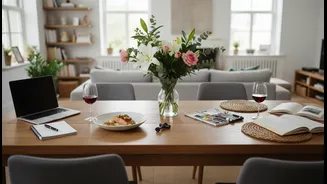
The biggest challenge of a multi-use table is managing the switch between activities, especially from work to dining. The key is to create simple, repeatable systems. Keep work-related clutter contained. Use a decorative tray or box to hold your laptop, notebooks, and pens. At the end of the workday, everything on the tray can be quickly moved to a nearby shelf or cabinet. This 'pack-up' ritual helps create a mental boundary between work and personal time. Consider a rolling cart that can be tucked away, holding supplies and peripherals. Cable management is also essential; use clips or sleeves to keep wires from taking over. Finally, a quick wipe-down and setting the table for dinner—even with just simple placemats—completes the transformation, signaling that the workday is over and it's time to relax and connect.
The Creative & Social Hub
Beyond work and meals, your table is a blank canvas for creativity and connection. It’s where children can spread out their art supplies, where you can tackle a thousand-piece puzzle, or where you can dive into a new hobby. Layered lighting is crucial for supporting these different functions. A bright, adjustable task lamp is perfect for detailed work, while a warm overhead pendant creates an inviting atmosphere for meals. When it comes to hosting, the table is your centerpiece. A simple runner, a few candles, or a small vase of flowers can instantly elevate the mood. Family-style serving, where dishes are placed on the table for everyone to share, enhances the sense of community and conversation. The goal is to create a space that feels adaptable and welcoming, ready for whatever the day or evening holds.