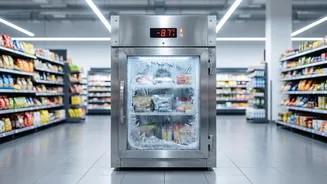

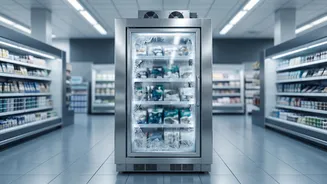
The frozen food aisle is an unlikely frontline for cyber warfare. Yet recent attacks across Europe saw hackers spoil tonnes of food by remotely manipulating supermarket freezers, revealing a critical vulnerability in our modern food supply chain.
What Happened in Europe?
In October
and November 2026, hundreds of supermarkets across at least nine European countries, including France, Belgium, Sweden, and Ireland, experienced a bizarre and costly disruption. Staff arrived to find freezer temperatures soaring to as high as 50°C (122°F), destroying vast quantities of frozen and chilled goods. Affected retailers included major chains like Carrefour, Intermarché, and IKEA. This was not a mechanical failure but a coordinated cyberattack. Hackers remotely accessed the control systems for the refrigeration units, switching them into defrost mode or simply turning up the heat, causing millions of euros in damages and raising serious food safety concerns.
How Did Hackers Access the Freezers?
The attacks exploited the very technology designed to make supermarket operations more efficient: the Internet of Things (IoT). Modern commercial refrigeration systems are rarely standalone units. They are governed by centralized controllers connected to the internet, allowing technicians to monitor temperatures and diagnose faults remotely. These internet-facing systems became the point of entry. Investigators found that hackers compromised controllers from manufacturers like Danfoss and Copeland. Many of these units were older models running on outdated software that no longer received security updates, or were still using factory-default passwords. Cybersecurity researchers had previously identified flaws, but they had not been patched, leaving a digital door wide open for attackers to walk through.
The Rise of Operational Technology Attacks
These incidents are significant because they represent a shift in cybercrime tactics. Instead of targeting customer data or deploying ransomware for a direct payout, the attackers targeted 'operational technology' (OT)—the hardware and software that controls physical equipment. The motive remains unclear, as no group has claimed responsibility or issued ransom demands. This ambiguity has led to speculation ranging from hacktivism to a nation-state demonstrating its capability to disrupt critical infrastructure. Whatever the reason, the attacks prove that compromising a simple connected device can cause direct, physical-world damage, disrupting business operations and the food supply chain itself.
A Wake-Up Call for the Food Industry
The food and agriculture sector has become increasingly reliant on IoT devices for everything from temperature monitoring to automated quality control. While this technology boosts efficiency, it also expands the potential 'attack surface' for criminals. The supermarket freezer hacks serve as a stark warning. A single compromised sensor or controller can lead to massive product loss, regulatory breaches, and a loss of consumer trust. The European Commission has begun examining the preparedness of supermarkets for such attacks, highlighting that food security is now intrinsically linked to cybersecurity. Experts stress that businesses can no longer treat OT security as an afterthought.
What Are the Broader Implications?
The vulnerability is not limited to supermarket freezers. The same principles apply to countless other connected devices in homes and industries. From smart ovens and security cameras in a household to industrial control systems in factories and power plants, the convenience of remote access comes with inherent risk. These attacks underscore the urgent need for better security standards across all IoT devices. This includes abandoning default passwords, providing regular security updates, and segmenting networks so that a breach in one simple device cannot cascade into a major system failure. As more of our physical world becomes connected to the digital one, securing that connection is paramount.