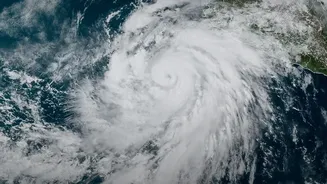





A major climate signal is flashing red, and it has significant implications for India. The U.S. National Oceanic and Atmospheric Administration (NOAA) confirms a strong El Niño is not only here but is expected to last well into early 2027.
First, What Is El Niño?
Think of El
Niño as a massive disruption in the Pacific Ocean that has a ripple effect on weather worldwide. Normally, strong winds push warm surface water from South America towards Asia, keeping the western Pacific warm. During an El Niño, these trade winds weaken. This allows a huge mass of warm water to slosh back eastward, toward the Americas. This change in ocean temperature, even thousands of kilometres away, is so significant it alters major atmospheric circulation patterns. For India, this is critical because it can disturb the delicate system that drives the annual southwest monsoon, which delivers about 70% of the country's rainfall.
The Official Forecast: Strong and Persistent
According to the latest updates from NOAA's Climate Prediction Center, this isn't just any El Niño. It is officially a 'strong' event, with sea surface temperatures in the key Pacific region running significantly above average. The agency gives it a greater than 79% chance of remaining a 'strong-to-very-strong' event through the first three months of 2027. Forecast models show the event is likely to peak towards the end of 2026 before gradually weakening. Some meteorologists have even dubbed it a 'super El Niño' due to its intensity, which is tracking similarly to the historic events of 1997-98 and 2015-16.
The Critical Question: Impact on India’s Monsoon
The primary concern for India is El Niño’s well-documented tendency to suppress monsoon rainfall. A strong El Niño often correlates with a weaker, delayed, or more erratic monsoon, which has already been observed with uneven rainfall during 2026. While it doesn't guarantee a drought every time—other factors like the Indian Ocean Dipole (IOD) can sometimes provide a buffer—a powerful El Niño significantly raises the risk. A weaker monsoon means less water for agriculture, which is a massive issue when nearly half of India's farmland is rain-fed. This threatens the output of crucial kharif crops sown during the monsoon season.
Beyond the Farm: Economic Ripple Effects
The consequences of a poor monsoon extend far beyond agriculture. Lower crop yields can lead to food shortages and drive up inflation, affecting household budgets across the country. Water reservoirs that rely on monsoon rains for replenishment may see lower levels, impacting drinking water supplies and hydroelectric power generation. Furthermore, the weather patterns associated with a strong El Niño are expected to contribute to a warmer and drier winter across India, followed by a potentially hotter summer in 2027. This could increase the demand for electricity for cooling and put further strain on the power grid.
Preparing for a Shifting Climate
The forecast serves as a crucial warning signal for policymakers and citizens alike. For farmers, it highlights the need for contingency planning, such as shifting to drought-resistant crops or conserving water. For the government, it underscores the importance of managing water resources, ensuring food security, and preparing for potential heatwaves. While El Niño is a natural cycle, its effects are now playing out against a backdrop of a warming climate, which can make extreme weather events more intense and unpredictable. Staying informed about weather advisories and water conservation measures will be key for communities across India.