




The Allure of the Curve
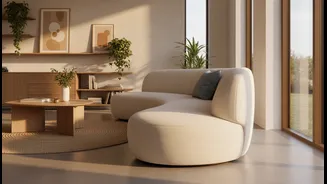
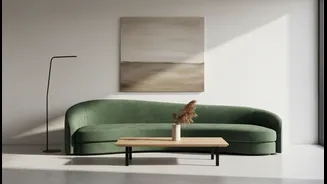
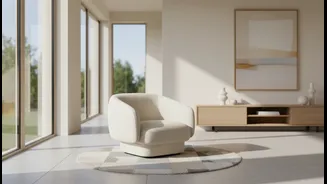
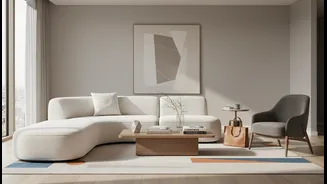
There’s a reason why sinuous sofas and rounded armchairs have captured the design world's attention. After years dominated by rigid, straight lines, these softer shapes feel fresh and inviting. Curved furniture introduces a sense of fluidity and movement,
breaking up the boxy nature of most rooms and creating a more organic, calming atmosphere. Psychologically, rounded forms can evoke feelings of safety and relaxation, making a space feel more like a sanctuary. This trend is a response to a collective desire for homes that are not just stylish, but also comfortable and human-centric.
The Practical Problem
The main challenge with curved furniture is that its unconventional shape can create awkward layouts. A curved sofa pushed against a straight wall often leaves behind a frustratingly useless gap. These dead zones can make a room feel poorly planned, and the piece itself can demand more floor space than a traditional rectilinear sofa. This can be especially problematic in smaller homes, where every square inch counts. Furthermore, some find that while beautiful, highly sculptural sofas may not be as practical for lounging or accommodating multiple people comfortably compared to their straight-lined counterparts.
Planning Your Layout
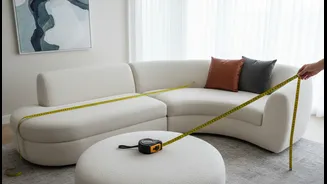
Success with curved furniture begins before you buy. It’s crucial to measure your space and consider how a curved piece will affect traffic flow. One of the biggest mistakes is pushing a curved sofa flat against a wall; designers often recommend 'floating' it in the room. This allows the piece's sculptural back to be appreciated and creates a more deliberate, high-end look. By pulling it away from the wall, you can define a seating area, especially in an open-plan space, without creating a visual barrier. Aim for at least eight to ten inches of clearance from the wall to let the shape 'breathe'.
Turning Gaps into Functional Nooks
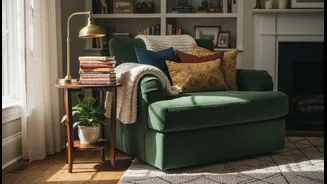
That seemingly awkward space behind a curved sofa is actually an opportunity. Instead of seeing it as a void, treat it as a design feature. A slim console table placed flush against the back of a floating sofa is a classic designer trick that provides a surface for lamps, books, or decorative objects. A tall, elegant floor lamp can be tucked into the corner of the curve, providing ambient lighting and adding vertical interest. You can also use this space for a large plant to enhance the organic feel, or a stylish woven basket to hold extra blankets and pillows, turning a potential flaw into a functional and beautiful moment.
Balancing with Straight Lines
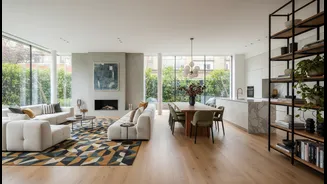
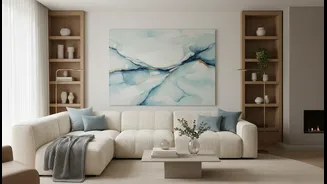
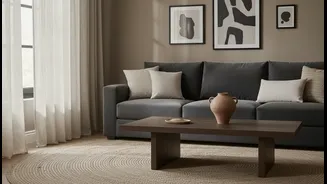
The most successful rooms don't rely solely on curves. The key is to create a dynamic balance between curved and straight-lined pieces. A room filled with only curves can feel unstructured, while a room with only straight lines can feel rigid. Let your curved sofa or armchair be the star and support it with rectilinear elements. Pair a sinuous sofa with a rectangular coffee table, a linear bookshelf, or a structured media console. This contrast makes the curved piece stand out even more, creating a sophisticated, layered look. A good rule of thumb is to aim for a mix, such as 70% straight-lined furniture and 30% curved pieces, to maintain harmony.