





What is a Caretaker Government?
In Israel's political system, a caretaker or interim government takes charge during transitional periods. This typically happens after a government resigns, a no-confidence motion passes, or following an election where no clear winner emerges to form
a new coalition. Under Israel's Basic Law, the outgoing government continues to perform its functions until a new one is formed and sworn in. The primary purpose is to prevent a power vacuum and ensure the state continues to function. Interestingly, the term 'caretaker government' does not actually appear in the law itself; its limitations have been defined over time by Supreme Court precedents and guidelines from the Attorney General.
The Unwritten Rules of Restraint
While an interim government legally retains all the powers of a regular one, a powerful convention of 'restraint' applies. The Supreme Court has established that a caretaker government, having lost its full democratic legitimacy, must act with greater caution. This principle of restraint is not absolute and is balanced against necessity. The more urgent a public need, the more freedom the government has to act. Generally, this means avoiding major, long-term policy decisions, significant budget allocations, or making high-level appointments to senior public posts, such as for judges or the police chief, unless there is a vital and pressing need.
Security: The Major Exception
The most significant exception to the rule of restraint involves national security. The Supreme Court has historically avoided intervening in decisions to go to war, and a caretaker government retains considerable freedom to act in the face of an immediate security threat. This has been a recurring theme in Israeli history. For example, in December 2008, Ehud Olmert's caretaker government launched Operation Cast Lead in Gaza. More recently, debates have flared around the authority of Benjamin Netanyahu's interim government to take major military action concerning Iran or other regional threats, with opponents arguing such momentous decisions should not be made without a full parliamentary mandate. However, legal analysts note that a caretaker prime minister can legally take the country to war, especially since parliamentary oversight is often at its weakest during the post-election transition before new committees are formed.
Netanyahu and the Current Test
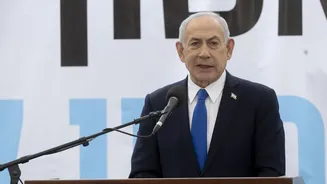
The current political landscape, with Netanyahu remaining prime minister after recent elections failed to produce a clear majority for any bloc, puts these unwritten rules to a significant test. As the incumbent, he continues to direct the government and set the security agenda while efforts to form a new coalition are underway. This situation creates what some call a 'constitutional paradox' where the prime minister holds legal power but lacks a fresh popular mandate. Critics and political opponents have accused Netanyahu of using his position for political advantage, attempting to fracture the opposition and shape the news cycle, while his office maintains all decisions are based purely on security considerations and made in coordination with the defense establishment.
The Role of the Watchdogs
Two key institutions serve as the primary checks on a caretaker government's power: the Attorney General and the Supreme Court. The Attorney General, an independent appointee, acts as the government's chief legal counsel and is tasked with representing the public interest. This office issues legal guidelines on what is permissible and represents the state in court. Ultimately, the Supreme Court, sitting as the High Court of Justice, is the final arbiter. It can review government decisions and annul them if they are deemed to have been made without authority or are 'unreasonable'—a standard that is applied more strictly to a caretaker government. This delicate balance between an empowered executive and its legal checks is central to navigating Israel's frequent periods of political transition.