





Why Stretching Fights Fatigue
That sluggish, heavy feeling that often accompanies a dreary, rainy day isn't just in your head. When we're less active—as is common when stuck indoors—our circulation can slow down. Stretching helps counteract this by increasing blood flow to your muscles.
This enhanced circulation delivers more oxygen and nutrients throughout your body, which can help increase energy levels, improve focus, and even lift your mood. Even a few minutes of mindful movement can signal to your body and brain that it's time to wake up, shaking off the lethargy.
The Core Movement: Seated Cat-Cow
If you only have time for one stretch, make it the Seated Cat-Cow. This single movement is the champion of desk stretches because it gently wakes up the entire spine, relieves tension, and syncs your breath with movement. To do it, sit on the edge of your chair with your feet flat on the floor and hands on your knees. On an inhale, arch your back, lift your chest, and look slightly upward—this is the 'Cow' pose. As you exhale, round your spine, tucking your chin to your chest and pulling your belly button in—this is the 'Cat' pose. Flow between these two positions for 8-10 repetitions, letting your breath guide the pace. This simple act massages the muscles along the spine, opens the chest for deeper breathing, and reduces back, neck, and shoulder tension.
Add-On: Neck and Shoulder Release
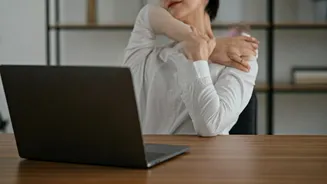
Desk work often leads to tension accumulating in the neck and shoulders. To release it, sit tall and slowly tilt your head to bring your right ear toward your right shoulder. Hold for 15-30 seconds, feeling a gentle stretch along the left side of your neck. For a deeper stretch, you can gently place your right hand on your head, but do not pull. Repeat on the other side. Afterward, gently roll your shoulders backward and forward several times to release any remaining stiffness.
Add-On: Seated Figure-Four for Hips
Sitting for long periods can lead to tight hips and even lower back pain. The seated figure-four stretch is excellent for targeting these areas. While sitting on your chair, cross your right ankle over your left knee. Keep your left foot flat on the floor. Sit up straight, and if you already feel a stretch in your right glute and hip, hold it there. For a deeper stretch, gently hinge forward from your hips, keeping your back straight, until you feel a comfortable tension. Hold for about 30 seconds and then switch to the other side.
Add-On: Chest Opener for Better Posture
Slouching over a keyboard is a major contributor to fatigue and poor posture. Counteract this with a simple chest opener. You can do this in two ways. First, sit at the edge of your chair and clasp your hands behind your back. Gently squeeze your shoulder blades together and lift your chest, feeling the stretch across the front of your shoulders and chest. Hold for 20-30 seconds. Alternatively, if you have a chair with a low back, you can simply lean back over it, letting your upper back arch and your chest open up toward the ceiling.
Add-On: Wrist and Finger Savers
Don't forget your hands and wrists, especially after hours of typing. Extend your right arm in front of you with your palm facing down. Use your left hand to gently bend your right wrist downwards, stretching the top of your forearm. Hold for 15-20 seconds. Then, flip your hand so the palm faces up and gently pull your fingers back to stretch the underside of your forearm. Repeat on the left side. Finish by making tight fists and then spreading your fingers wide a few times to get the blood flowing.