



Understanding Hidden Hunger
Hidden hunger is a form of malnutrition where a person's diet lacks essential vitamins and minerals, even if they consume enough calories to feel full. This micronutrient deficiency is a quiet epidemic, with few obvious symptoms in its early stages, but
with devastating long-term consequences. It can impair cognitive development in children, weaken immune systems, reduce productivity in adults, and increase the risk of chronic diseases. In India, the problem is severe. Studies suggest over 80% of the population may be at risk for deficiencies in crucial micronutrients like calcium, vitamin A, and folate. This crisis quietly undermines the nation's health and economic potential, making it a critical public health challenge.
The Monoculture Dilemma
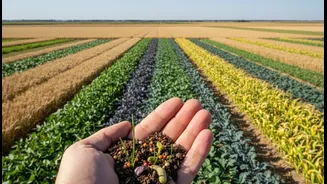
For decades, India's agricultural policy, born from the Green Revolution, has focused on ensuring food security by maximizing the production of staple grains. Policies like the Minimum Support Price (MSP) and the Public Distribution System (PDS) have incentivized farmers to overwhelmingly cultivate high-yield crops like rice and wheat. While this strategy successfully averted famine and boosted calorie availability, it had an unintended consequence: it encouraged agricultural monocultures. As vast stretches of farmland became dedicated to a handful of crops, the diversity of what was grown—and by extension, what was locally available and eaten—shrank dramatically. This shift away from traditional, nutrient-rich crops like millets, pulses, and local vegetables has contributed to a national diet that is often heavy in carbohydrates but poor in micronutrients.
The Crop Diversity Connection
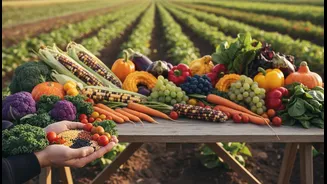
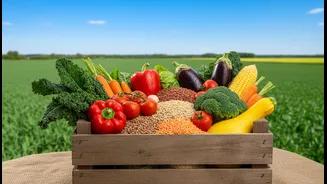
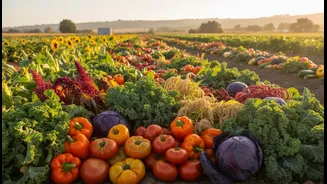
Recent research provides compelling evidence for a solution that starts on the farm. Studies across India are drawing a clear line connecting the diversity of crops grown in a region to the dietary quality of its households. The logic works through two main pathways. First, farming households that cultivate a wider variety of crops are more likely to consume a wider variety of foods themselves, directly improving their nutritional intake. Second, diversifying crops can increase and stabilize a farmer's income, providing them with the financial means to purchase a broader range of nutritious foods from the market. This link proves especially critical in rural areas with limited market access, where what you grow is often what you eat.
Evidence from the Ground
The headline's claim is backed by district-level analysis. Researchers are mapping India's agricultural patterns against its nutritional outcomes, finding that districts with higher agricultural diversity consistently show better nutritional indicators. For example, a 2020 study examining farmer households in Gujarat and Haryana found a positive association between crop diversity and dietary diversity for both adults and children. Conversely, regions dominated by cereal-centric farming often correspond with populations at a higher risk of hidden hunger. This district-level data provides a granular view, allowing policymakers to identify specific areas where promoting crop diversification could have the most significant impact on public health.
Sowing the Seeds of Better Health
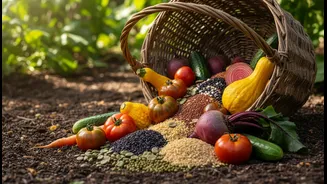
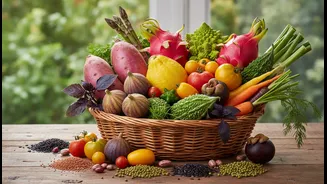
Tackling hidden hunger requires a fundamental shift in perspective: from simply producing more food to producing better food. This means re-imagining agricultural policies to actively encourage and reward crop diversification. Key strategies include promoting the cultivation of traditional, climate-resilient, and nutrient-dense crops like millets, pulses, and vegetables, which have been sidelined for decades. It also requires creating market linkages that make these crops more profitable for farmers and accessible to consumers. Furthermore, public awareness campaigns are needed to educate communities about the importance of a varied diet, moving beyond the deeply ingrained preference for cereal-heavy meals. Integrating agricultural strategy with nutritional goals is no longer an option, but a necessity for a healthier India.