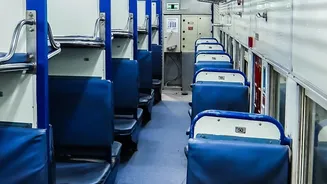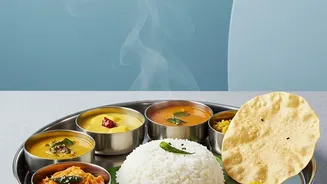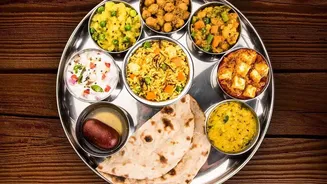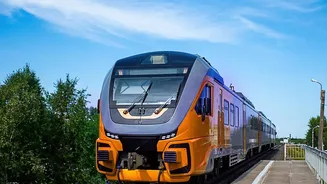





The familiar, sprawling menu on Indian Railways may soon be a thing of the past. IRCTC has begun a trial on select trains, replacing extensive meal lists with a shorter, more focused menu in a bid to elevate food quality and passenger satisfaction.
The Shift to 'Less Is More'
Indian
Railway Catering and Tourism Corporation (IRCTC) has launched a pilot project on three Vande Bharat sleeper routes, fundamentally changing how food is served. Instead of a wide-ranging à la carte menu that could include eight to ten items per meal, passengers are now being offered a compact selection of about four items. This trial, which began on November 1, 2026, is a direct response to persistent passenger complaints regarding food quality, hygiene, and consistency on long-distance journeys. The core idea is that by simplifying the menu, IRCTC can better monitor each dish, ensuring it is prepared hygienically and served fresh. An official noted that this approach, similar to airline catering, allows for a sharper focus on quality over sheer variety.
Which Trains Are Part of the Trial?
This significant change is currently being tested on some of the newest and most premium services in the Indian Railways network. The proof of concept is underway on three key Vande Bharat sleeper train routes: New Delhi-Varanasi, Mumbai-Bengaluru, and Howrah-Kamakhya (Guwahati). By choosing these long-haul premium trains for the pilot, IRCTC aims to gather valuable feedback from passengers who rely heavily on on-board catering. The results of this trial will determine whether the shorter menu concept is rolled out across a wider network of trains in the future.
A Taste of the New, Trimmed Menu
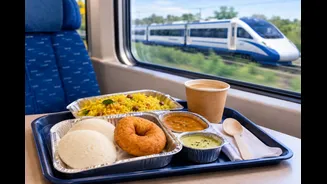
So, what does the new, compact menu actually look like? For breakfast on the Mumbai-Bengaluru route, for example, options have been streamlined to a choice of idli and vada with sambhar, poha, or upma. Items like soup, sandwiches, omelettes, and buttermilk have been removed from the breakfast tray. For lunch and dinner, the meal now consists of staples like chapati, rice, dal, and a single main dish, which can be a vegetable or chicken preparation. Accompaniments such as a second dry vegetable, curd, salad, pickles, and sweets have been discontinued for the trial. This reduction has also decreased the meal's overall weight from about 700-750 grams to a more compact 450-500 grams, though officials state the portion sizes of the main items remain unchanged.
The Logic: Quality, Hygiene, and Efficiency
The primary driver for this experiment is the long-standing issue of food quality. Officials have acknowledged that preparing an elaborate menu in the limited space of a pantry car presents significant operational challenges, often affecting freshness and hygiene. To address this, IRCTC is not only trimming the menu but also changing how the food is sourced. For this trial, it has partnered with major external players, including established cloud kitchens and flight caterers like TajSATS and the Sarovar Portico Group, to prepare the meals. This de-links production from service, allowing specialized kitchens to focus on preparation while the on-board staff focuses on delivery. This move is part of a broader push for quality, which also includes unannounced third-party audits by the Quality Council of India (QCI) to enforce FSSAI standards.
Passenger Reactions and the Road Ahead
While the trial is still in its early days, initial feedback appears to be a key focus for IRCTC. Officials in the Western Zone have already reported a 10% drop in catering-related complaints since the new arrangements began. The success of this 'less is more' approach hinges entirely on passenger satisfaction. If travellers feel the trade-off—less choice for better, hotter, and more reliable food—is worthwhile, the compact menu could become the new standard on long-distance trains. However, IRCTC is also considering regional preferences, with discussions underway to include local Maharashtrian dishes on the Mumbai-Bengaluru route, showing a willingness to adapt the focused menu based on feedback. The insights gained from this pilot will be crucial in shaping the future of dining for millions of railway passengers.