









The Digital Downpour
A rainy day often drives us indoors and online. We open our social media apps and are immediately met with a torrent of information. It’s a feed of arguments, anxieties, advertising, and curated perfection that can feel relentless. Research has shown
that heavy digital consumption, especially passive scrolling, is linked to stress, anxiety, and a feeling of being overwhelmed. This digital downpour, with its constant pings and notifications, creates a state of perpetual alert, leaving little room for quiet reflection or genuine rest. On a day that naturally encourages us to slow down, our digital habits often do the opposite, filling the silence with artificial noise and leaving us feeling more drained than refreshed. The constant stream of information can disrupt our mood and even contribute to feelings of loneliness and depression.
Nature’s Gentle Counterpoint
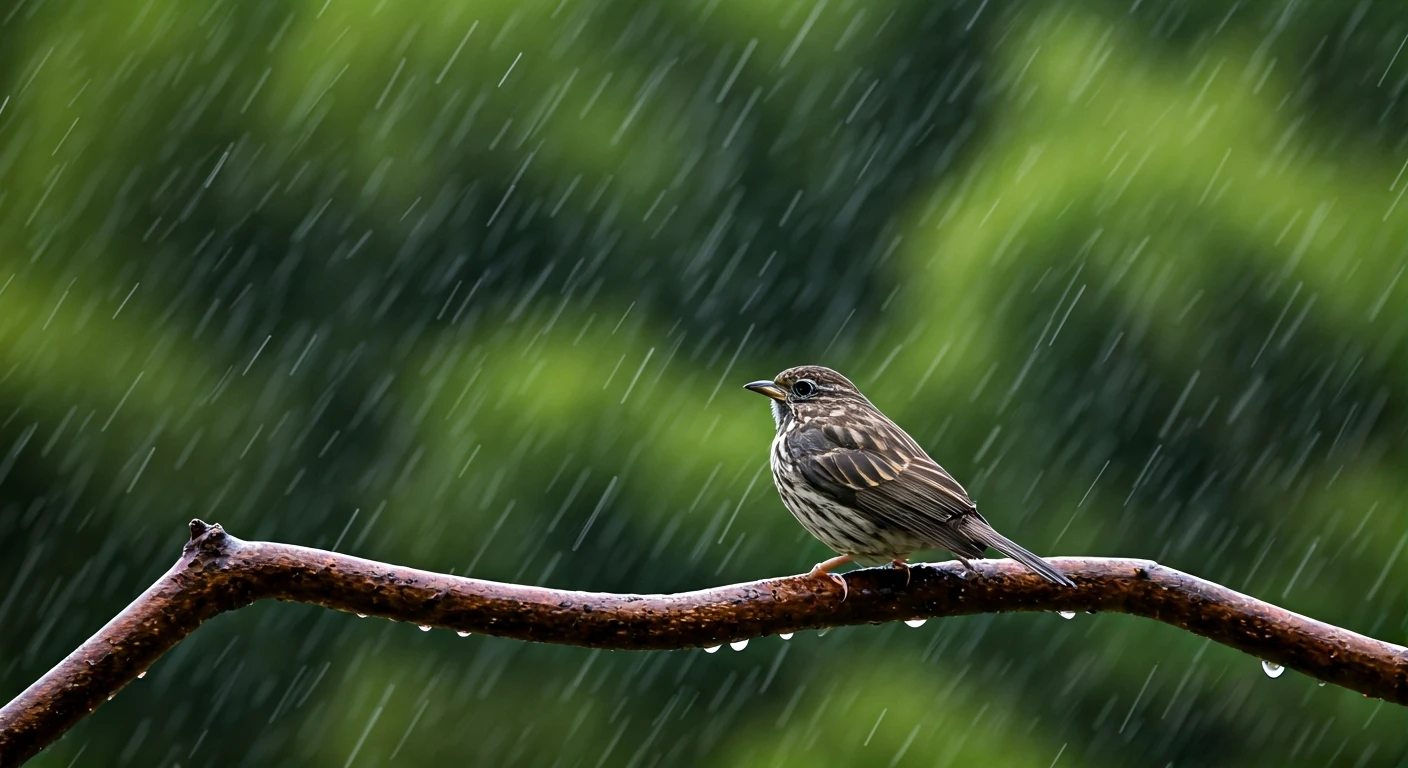
Now, turn to the window. The scene outside offers a different kind of feed. A pair of mynas might be huddled under the eaves, their feathers puffed against the damp. Raindrops trace paths down the glass, magnifying the green of a nearby gulmohar tree. The Pied Cuckoo, known in Indian folklore as the harbinger of the monsoon, might even make an appearance, its distinctive call cutting through the steady rhythm of the rain. This is a world of quiet action and resilience. There are no notifications here, only observations. Watching a spider’s web glisten with captured water droplets or a drenched Coppersmith Barbet shaking its feathers is a meditative act. It’s a live, uncurated stream of small, beautiful moments that asks for nothing but our attention.
The Science of Softness
This feeling of calm isn't just a poetic notion; it's backed by science. The concept is known as the 'biophilia hypothesis,' which suggests that humans have an innate tendency to connect with nature. Studies have repeatedly shown that even viewing nature through a window can have significant health benefits. It can lower stress levels, reduce feelings of anxiety and anger, and improve our overall mood and life satisfaction. The gentle, repetitive sounds of rain can act as 'pink noise,' which helps to decrease brain activity and promote relaxation. At the same time, the visual complexity of nature—the fractal patterns in leaves and branches—engages our minds in a state of 'soft fascination,' which helps restore our capacity for focused attention after it has been depleted by screen time.
Cultivating Your Window View
You don't need a sprawling garden to experience these benefits. This softness is available to anyone with a window. The key is to cultivate the habit of looking. Consider placing a comfortable chair where you can easily watch the rain. If you have a balcony, a few potted plants or a small bird feeder can transform it into a miniature sanctuary, attracting birds like sunbirds and silverbills. Learning to identify a few local trees and birds can deepen this connection, turning a passive glance into an active, engaging hobby. During the Indian monsoon, the air is alive with the calls of birds like the Asian Koel and the Indian Pitta, each with its own story. By simply paying attention, we can turn a simple window into a portal for wonder, a space for quiet observation that costs nothing and gives back so much.