



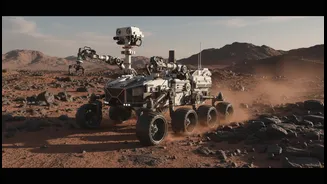


A Legacy of Remarkable Robots
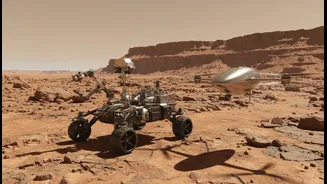
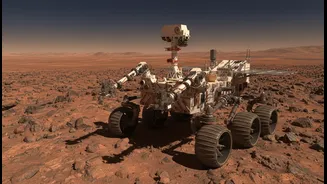
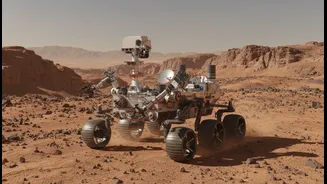
Since the tiny Sojourner rover landed in 1997, NASA has sent a series of increasingly sophisticated robots to the Martian surface. The twin rovers Spirit and Opportunity far outlasted their planned missions, with Opportunity setting an off-world driving
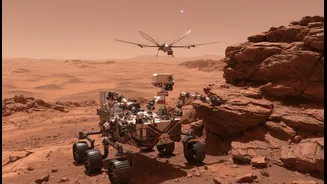
record of over 45 kilometers. They were followed by the car-sized science labs Curiosity and Perseverance, which are still active today. These missions transformed our understanding of the Red Planet, confirming it once had environments capable of supporting microbial life. The Ingenuity helicopter, which arrived with Perseverance, added another dimension by proving powered flight was possible in Mars's thin atmosphere. But as successful as these explorers have been, they have their limits, often constrained by treacherous terrain and the sheer time it takes to explore a planet. NASA's next chapter aims to overcome these hurdles.
Introducing the STRIDE Initiative
In early July 2026, NASA announced it had awarded contracts to seven private companies to conceptualize the next generation of Martian mobility. This initiative, called STRIDE (Science Transport and Robotic Innovation for Deployment and Exploration), has a total value of approximately $17 million and involves a diverse group of firms, including AeroVironment, Astrobotic, and Intuitive Machines. The official goal is to develop robotic systems that can travel farther, faster, and access scientifically valuable regions that are too challenging for current rovers. But the contracts represent more than just a search for better wheels or rotor blades; they reveal the strategic questions NASA is now asking as it plans for the future of Mars exploration.
Question 1: How Do We Reach the Unreachable?
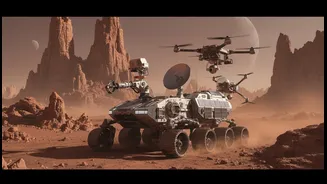
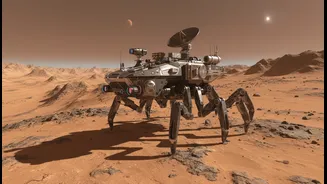
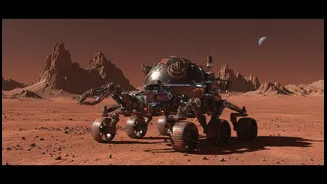
The most compelling scientific targets on Mars are often the hardest to get to. Think steep crater walls, ancient lava tubes, or regions with a tantalizing mix of geological features. Current rovers must navigate around such obstacles, meaning vast areas of the planet remain unexplored. The STRIDE contracts directly challenge companies to design systems that can conquer these environments. This might mean developing wheeled rovers with unprecedented agility, hybrid aerial-ground vehicles, or entirely new methods of locomotion. By pushing industry to solve the problem of extreme terrain, NASA aims to unlock access to sites that could hold definitive proof of past life or critical resources for future missions.
Question 2: How Do We Prepare for People?
These new robotics contracts are not happening in a vacuum. They are a key part of NASA's broader Moon to Mars strategy, which aims to eventually land astronauts on the Red Planet. Before humans can arrive, an enormous amount of preparatory work must be done by robots. This includes scouting landing sites, prospecting for resources like water ice, and potentially even helping to construct habitats. The technologies developed under STRIDE are precursors for the robotic workforce that will be needed to support a human presence. The initiative is a deliberate effort to apply lessons learned from lunar exploration under the Artemis program to the much greater challenge of Mars, laying the groundwork for sustainable, long-term human expeditions.
Question 3: How Can We Explore Faster and Cheaper?
Building a single, flagship rover like Perseverance is a multi-billion dollar, decade-long effort. To accelerate discovery, NASA is embracing a new model. The STRIDE program demonstrates a commitment to strong public-private partnerships, leveraging commercial innovation to develop new capabilities more quickly and affordably. By awarding smaller contracts to seven different companies, NASA is seeding a variety of concepts rather than betting on a single design. This approach fosters competition and allows the agency to identify the most promising technologies from a wider pool of talent. It aligns with NASA's new paradigm for Mars exploration: to send lower-cost, high-value missions at a higher frequency, fundamentally changing the pace of our quest to understand our planetary neighbor.