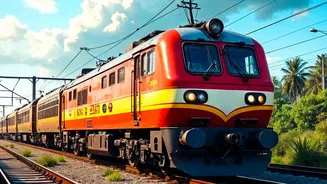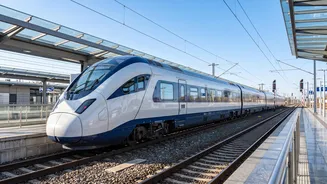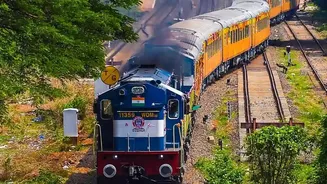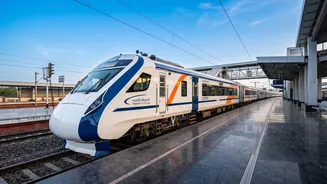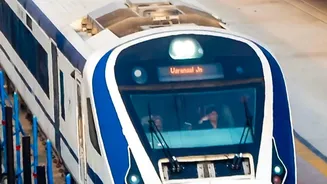








The buzz around India's Vande Bharat trains is shifting from daytime chair cars to a new frontier: overnight travel. A sleeper version is imminent, with a potential November 1 launch for a key route, but a confirmed timetable remains elusive.
A New Era for Overnight Journeys
Indian Railways
is preparing to launch its second Vande Bharat sleeper train, set to connect Bengaluru and Mumbai starting November 1, 2026. This launch follows the introduction of the first-ever Vande Bharat sleeper service between Howrah and Kamakhya in January 2026. These trains are designed to revolutionise overnight travel on long-distance routes, typically spanning 800 to 1,200 kilometres. The new Bengaluru-Mumbai service is a significant step in modernising the network, promising to slash travel time and offer a premium alternative to existing trains. The self-propelled trainsets, built without separate locomotives, allow for faster acceleration and deceleration, which is key to reducing journey times. While the launch date has been announced by Union Minister of State for Railways V Somanna, the final, detailed timetable is still awaited from the Railway Board, leaving passengers eager for confirmation.
The Bengaluru-Mumbai Corridor
The new service is poised to make a major impact on one of India's busiest economic corridors. It is expected to cover the 1,118-kilometre distance between Bengaluru's Sir M. Visvesvaraya Terminal (SMVT) and Mumbai's Chhatrapati Shivaji Maharaj Terminus (CSMT) in approximately 16 hours. This represents a dramatic reduction of up to eight hours compared to existing services like the Udyan Express, which can take around 24 hours for the same journey. The proposed schedule indicates the train will run six days a week. Tentative timings suggest a 10:00 PM departure from Bengaluru to arrive in Mumbai at 1:50 PM the next day, with the return journey leaving Mumbai at 10:30 PM and reaching Bengaluru at 2:50 PM. Key stops along the proposed route include Pune, Solapur, and Kalaburagi.
What to Expect Onboard
The Vande Bharat sleeper aims to set a new standard for comfort and amenities. Each 16-coach trainset will accommodate 823 passengers across three classes: one AC First Class coach (24 berths), four AC Two-Tier coaches (188 berths), and eleven AC Three-Tier coaches (611 berths). The interiors feature ergonomically designed berths with improved cushioning for better sleep. Passengers can expect modern, sensor-based facilities, including bio-vacuum toilets with touch-free fittings, automatic doors, and a passenger information system. First AC coaches will even include showers with hot water. Enhanced safety is also a priority, with the trains equipped with the Kavach automatic train protection system. Unlike Rajdhani trains, which follow standard reservation rules, the Vande Bharat sleeper will only issue confirmed berths, with no RAC or wait-listed tickets.
The Rajdhani Challenger
For decades, the Rajdhani Express has been the gold standard for premium overnight train travel in India. The Vande Bharat sleeper is positioned as its modern successor. While both trains can operate at high speeds, the Vande Bharat's self-propelled design gives it an edge in acceleration, contributing to shorter journey times. The interiors are also a significant upgrade, with a more contemporary design, better noise reduction, and advanced amenities like on-board Wi-Fi and individual reading lights. However, this premium experience will likely come at a higher cost. Fares are expected to be marginally higher than those for Rajdhani trains, though an official fare structure for the new route has not yet been released. Early estimates suggest a fare between ₹2,600 and ₹4,250 for the Mumbai-Bengaluru journey, depending on the class.
Why the Final Timetable is Still Pending
Despite the announced November 1 launch date, Indian Railways has yet to release an official notification with the final timetable. This is a standard procedure, as the introduction of a new service requires complex operational planning. Finalising a schedule involves integrating the new train into an already dense network, ensuring track availability, and coordinating with multiple railway zones. Trial runs and safety clearances are critical steps that must be completed before a service can be formally commissioned. While the core approval for the route was given months ago, the final operational details, including precise timings and frequency, are only confirmed once all logistical checks are complete. Passengers are advised to await the official announcement from the Railway Board before making travel plans.