




Understanding the New Visa Rule
In a move to boost tourism and strengthen international ties, Uzbekistan has introduced a facility that allows citizens of specific countries, including India, to enter for up to 30 days without needing a separate Uzbek visa. This policy, confirmed in September
2026 by the Embassy of India in Tashkent, isn't a blanket visa-free waiver for all. Instead, it acts as a substitute visa arrangement, granting entry to travellers who have already been vetted and approved by other nations. The announcement follows a statement from Uzbekistan's President Shavkat Mirziyoyev about creating a 30-day visa-free regime to enhance people-to-people contacts and business exchanges. This new rule simplifies travel for many, but it's essential to understand the specific requirements before you book your flight.
The Golden Ticket: Which Visas Qualify?
The key to unlocking this 30-day visa-free stay is holding a valid, multiple-entry visa from a select group of developed countries. According to the official announcement, this applies to Indian passport holders who have a multiple-entry business or tourist visa issued by one of the following nations: the United States, the United Kingdom, Schengen Area member states, Australia, Canada, Japan, New Zealand, or South Korea. The logic is that travellers who have successfully obtained a visa from one of these countries have already undergone a thorough screening process. This allows Uzbekistan to welcome them with less administrative friction. Single-entry visas or visas from countries not on this specific list do not qualify for this program. Therefore, the first step for any prospective traveller is to check their passport for a qualifying visa.
Who is Eligible and What is Required?
This specific facility is aimed at Indian citizens. While Uzbekistan has broad visa-free agreements with over 90 countries, this particular rule leveraging third-country visas has been explicitly detailed for Indian travellers. To be eligible, an Indian citizen must present their passport containing the valid multiple-entry visa from one of the approved countries. Crucially, travellers must also hold a confirmed return or onward air ticket to their country of origin or to a third country. This serves as proof that the visitor does not intend to overstay the 30-day period. Immigration officials will check both the qualifying visa and the flight booking upon arrival. Those who do not meet both of these conditions will be required to obtain a standard Uzbekistan visa through the usual channels.
How It Works in Practice
The process is designed to be straightforward for eligible travellers. There is no need for a pre-application or an e-visa. Upon arriving at an international airport in Uzbekistan, such as in Tashkent, you will proceed to the immigration counter. There, you must present your Indian passport, the valid multiple-entry visa from the qualifying country, and proof of your onward or return flight. The border official will verify these documents to grant you a 30-day entry. The 30-day period begins from the date of entry into Uzbekistan. It is vital that the foreign visa you are using for entry is still valid at the time you arrive. An expired visa, even if it's a multiple-entry one, will not be accepted. Travellers who do not qualify must apply for an appropriate visa, such as an e-visa, before their trip.
Why This Is a Game-Changer
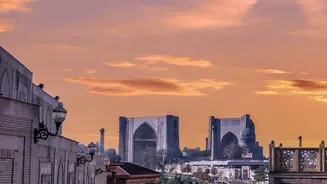
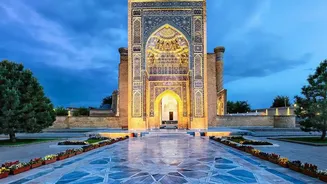
This policy makes Uzbekistan significantly more attractive as a spontaneous or multi-country travel destination for seasoned Indian globetrotters. Someone with a long-term US or Schengen visa can now add a trip to the historic cities of Samarkand, Bukhara, and Khiva without the time and expense of a separate visa application. This removes a significant barrier to entry and aligns Uzbekistan with other countries that offer similar visa-waiver programs for holders of specific visas. As Uzbekistan continues to open up, this move is a clear signal of its ambition to become a major tourism hub in Central Asia, tapping into the large and growing market of Indian tourists. It rewards frequent travellers and simplifies the journey to a land rich with UNESCO World Heritage sites, stunning architecture, and a deep history.