




The Context of the Rate Change
In early August 2026, Indian Railways reported strong year-on-year performance for July, with freight loading growing by 9% to 141.3 million tonnes. This growth was driven by robust demand for key commodities like iron ore, coal, and fertilisers. Coinciding
with this healthy demand, the Railways also saw an 8% increase in freight revenue over the previous year, an incremental gain of ₹1,137 crore. While a specific, across-the-board tariff hike wasn't announced as a singular event, these revenue gains reflect a combination of higher volumes and dynamic pricing adjustments. This strategy aims to bolster the financial health of the Railways, which is essential for funding massive infrastructure upgrades, including the ongoing expansion of the Dedicated Freight Corridors (DFCs).
The Delicate Road-Rail Balancing Act
For decades, about 70% of India's freight has moved by road, not because it's cheaper, but due to its flexibility and historically greater reliability. Rail transport costs nearly half as much per tonne-kilometre as road transport, but chronic delays on a network prioritising passenger traffic pushed businesses towards trucks. Any adjustment in rail freight pricing is therefore a sensitive affair. If rates climb too high, it risks pushing price-sensitive customers back to the highways, undermining the national objective to increase rail's freight share from its current sub-30% level. The economic crossover point, where rail becomes cheaper than road, is generally considered to be for hauls longer than 400-450 kilometres. The latest revenue-enhancing measures will test the elasticity of this equation, forcing companies to re-evaluate their logistics budgets on a route-by-route basis.
Enter the Dedicated Freight Corridors
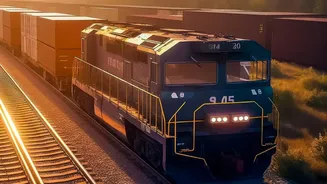
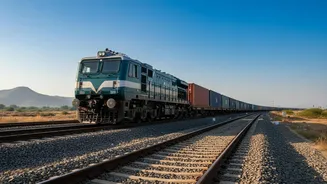
The game-changer in this entire dynamic is the Dedicated Freight Corridor (DFC) network. With the Eastern and Western corridors now largely operational, they are fundamentally altering the value proposition of rail freight. By separating freight from passenger traffic, DFCs allow trains to run at average speeds of 60-70 km/h, more than double the old speeds on congested lines. This has slashed transit times by up to 50% on key routes like Delhi to Mumbai. Though the DFCs make up only 4% of the rail network, they are already handling over 13% of total rail freight, a testament to their efficiency. This enhanced speed and reliability make rail a viable competitor to road for even time-sensitive, higher-value goods, not just bulk commodities like coal.
Impact on Key Industries
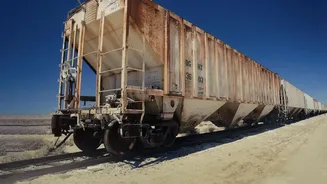
The primary users of rail freight—the coal, steel, cement, and agriculture sectors—will be watching these cost changes closely. For bulk commodities, rail remains the undisputed champion over long distances, and these industries are likely to absorb the costs as a necessity. Strong July 2026 loading figures for iron ore (up 22.2%) and coal (up 11.5%) show that core industrial demand remains strong. The Railways even stepped up coal supplies to power plants by 20% in July to meet rising demand. However, for containerised cargo and finished goods, the decision is more nuanced. The efficiency gains from the DFC network might be enough to offset moderate price increases, but a significant hike could temper the enthusiasm for modal shift, especially among smaller enterprises.
The Larger Economic Picture
This balancing act is central to India’s National Logistics Policy, which aims to reduce logistics costs from an estimated 13-14% of GDP to a globally competitive single-digit figure. Shifting more freight to rail is a cornerstone of this strategy. It not only reduces costs for businesses but also lowers carbon emissions and reduces the burden on an overstretched highway system. The revenue generated from freight is critical for the Railways' capital expenditure on future DFCs and network modernisation. The challenge for policymakers is to set tariffs at a level that ensures the financial viability of the Railways without derailing the broader economic goal of creating a more efficient, rail-centric logistics ecosystem.