





The Core Idea: Ma and Intentional Space
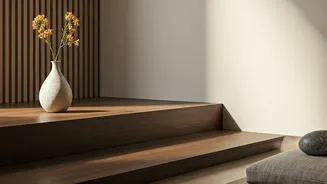
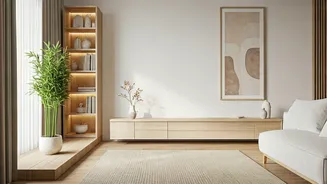
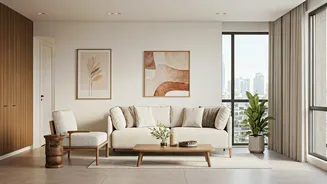
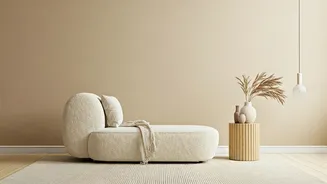
At its heart, the J-beauty ethos is about intention, not excess. This translates into home decor through the Japanese concept of ‘Ma’ (pronounced ‘maah’), which values negative space. It’s not about emptiness, but about giving each object room to breathe.
Instead of filling every corner, this approach encourages us to consider the space between furniture, on walls, and on shelves. The result is a room that feels open, airy, and uncluttered, allowing both the decor and your mind to feel clear. It’s a quiet rebellion against the maximalist ‘more is more’ mindset, proving that what you choose to leave out is just as important as what you put in.
Embracing a Natural, Earthy Palette
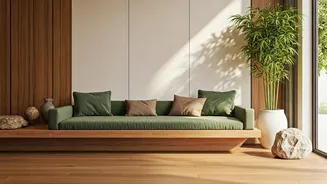
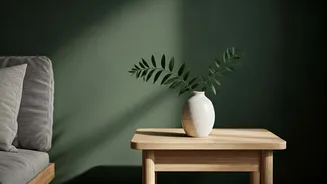
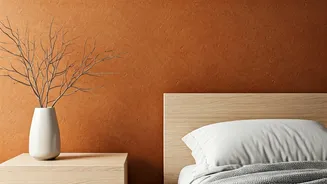
While Indian decor is often celebrated for its vibrant jewel tones, the Japanese aesthetic introduces a calming, nature-inspired colour story. Think of the colours of a tranquil forest or a peaceful zen garden: soft beiges, warm greys, muted olive greens, and deep, earthy browns. These neutrals create a serene backdrop that is easy on the eyes and promotes relaxation. This doesn't mean your home has to be devoid of colour. Rather, it’s about using colour thoughtfully. A single handcrafted cushion in a deep indigo or a piece of art with a splash of terracotta can have a much greater impact when set against a calm, neutral canvas.
Celebrating Wabi-Sabi: The Beauty of Imperfection
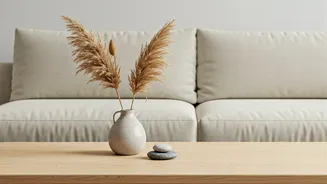
One of the most profound concepts borrowed from Japanese philosophy is ‘wabi-sabi’. This is the art of finding beauty in things that are imperfect, impermanent, and incomplete. In decor, this means moving away from mass-produced, flawless items and embracing things with character and history. Think of a slightly asymmetrical handmade ceramic vase, a reclaimed wood coffee table with its own unique grain and knots, or hand-woven textiles with minor irregularities. This philosophy aligns beautifully with India’s rich tradition of artisanal crafts, encouraging us to value the hand of the maker and the story behind each object, creating a home that feels authentic and soulful.
A Focus on Natural Materials and Textures
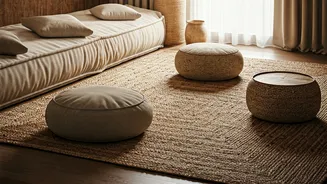
To create a space that feels grounded and connected to the earth, this trend heavily emphasises natural materials. Light woods like bamboo, ash, and pine are favoured for furniture and flooring, bringing a sense of warmth and lightness. These are complemented by tactile textures from natural fibres. Swapping synthetic fabrics for cotton, linen, jute, and wool for curtains, rugs, and upholstery instantly softens a room and adds a layer of quiet luxury. The interplay of these different textures—the smoothness of wood, the roughness of jute, the softness of linen—adds depth and interest to the minimalist palette, making the space feel curated and comforting.
Function Over Frills: Decluttering with Purpose
This isn't about stark, cold minimalism. It’s about thoughtful curation. Every object in the room should have a purpose, a special meaning, or bring you joy—a principle popularised by Japanese organising consultant Marie Kondo. Decorative items are chosen sparingly but with great care. Instead of a shelf crowded with trinkets, you might find a single beautiful sculpture or a cherished family photograph. Furniture is selected for its clean lines and functionality. This mindful approach to consumption encourages us to invest in fewer, better-quality pieces that will stand the test of time, leading to a living room that is not only beautiful but also highly functional and easy to maintain.
Bringing the Outdoors In
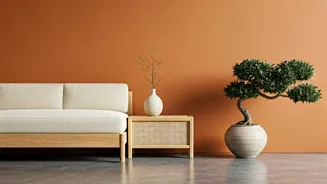
A deep reverence for nature is central to Japanese culture, and this trend reflects that by blurring the lines between indoors and outdoors. Large, unadorned windows that maximise natural light are a key feature. Even in city apartments, this connection can be forged by incorporating greenery. A few well-placed plants, such as a graceful fiddle-leaf fig or a simple collection of succulents, can purify the air and bring life and vitality into the space. The idea is to create a living environment that feels harmonious with the natural world, offering a daily dose of tranquility even in the midst of a concrete jungle.