







In our modern world, long hours of sitting have become the norm for many. While it may seem harmless, prolonged inactivity can stiffen joints and impact your health. The good news is that small, simple movements can make a big difference.
The Hidden Costs of Sitting Still
Before we get
into the movements, it's helpful to understand why breaking up sitting time is so important. When you remain seated for extended periods, your body's processes can slow down. Research shows that prolonged sitting is linked to a higher risk of various health issues, including obesity, high blood pressure, and high blood sugar. It can also lead to musculoskeletal discomfort, like a stiff neck, sore shoulders, and a tight back, as certain muscles become inactive while others are strained. The human body is designed to move, and even brief 'activity snacks' can help counteract these effects, improving circulation, mood, and focus. Just a few minutes of light activity every 30 to 60 minutes can significantly reduce the risks.
Release Your Neck and Shoulders
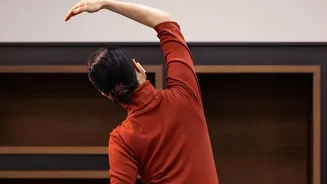
Desk work often causes tension to build up in the neck and shoulders. To combat this, try a simple neck stretch. While seated, gently tilt your right ear toward your right shoulder, holding for 15 to 20 seconds to feel a light stretch on the left side of your neck. Repeat on the other side. Follow this with shoulder shrugs: lift your shoulders up toward your ears, hold for a few seconds, and then relax them down, rolling them backward. Repeating this several times helps release the tension that accumulates from hunching over a screen.
Activate Your Upper Back
To counteract a slumped posture, focus on your upper back. A great exercise is the shoulder blade squeeze. Sit or stand tall and imagine you're holding a pencil between your shoulder blades. Squeeze them together, hold for 3 to 5 seconds, and then release. Repeat this 10 times to activate the muscles that support good posture. Another effective move is a seated chest opener. You can either interlace your fingers behind your lower back or simply grip the back of your chair and gently push your chest forward, pulling your shoulder blades together.
Mobilise Your Spine with Twists
Sitting for long periods can make your spine feel stiff. A seated spinal twist can help restore some mobility. Sit upright with your feet flat on the floor. Gently twist your torso to the right, placing your left hand on your right knee and your right hand on the back or armrest of the chair to deepen the stretch. Hold for 10 to 15 seconds, breathing through the stretch, and then repeat on the left side. This simple rotation helps keep your mid-back from locking into one position.
Wake Up Your Hips and Legs
Your lower body can become inactive and weak from too much sitting. To wake up these muscles, try seated leg raises. While sitting, straighten one leg and hold it parallel to the floor for about 10 seconds before lowering it. Repeat several times on each leg. To engage your glutes and thighs without even leaving your chair, try a 'sit-to-stand'. Simply stand up from your chair and then slowly lower yourself back down as if you're about to sit, but stand back up just before you touch the seat. Do this a few times to get your blood flowing.
Don't Forget Wrists and Ankles
Constant typing can strain your wrists, while inactive feet can lead to poor circulation. Take a moment to gently stretch your wrists. Extend one arm out, palm facing down, and use your other hand to gently pull your fingers back toward your body. Hold for 15 seconds and switch. For your ankles, simply lift your feet slightly off the floor and trace circles with your toes, first clockwise and then counter-clockwise. These small movements can help prevent stiffness and improve blood flow.