





The Premium Economy Promise
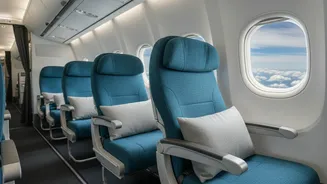
Premium economy was designed to bridge the gap between the affordability of economy and the luxury of business class. For a moderate price increase, passengers typically get a wider seat with more recline, enhanced meal service, a larger entertainment
screen, and an amenities kit. It’s an appealing proposition, especially on long-haul international flights where a little extra comfort goes a long way. The cabin is also smaller and more exclusive, creating a calmer environment. However, when it comes to checked luggage, the benefits are not as standardized as the seat pitch. The assumption that 'premium' automatically means 'more bags' is a common and often expensive one for travellers to make at the check-in counter.
The Baggage Allowance Lottery
A more generous baggage allowance is not a guaranteed feature of premium economy. Airline policies are inconsistent and depend heavily on the carrier and the route. Some airlines offer a significant baggage perk, while for others, the allowance is identical to that of a standard economy ticket. For example, Lufthansa's premium economy passengers typically get two checked bags of up to 23 kg each, a clear step up from the single bag offered in economy. Similarly, British Airways' World Traveller Plus often includes two checked bags. In contrast, some airlines, particularly on certain routes, offer no additional checked baggage allowance at all. Singapore Airlines, for instance, offers two 23 kg bags for both economy and premium economy passengers on routes to and from the US, meaning there's no upgrade in terms of baggage quantity. This variation makes it essential for passengers to look past the marketing and verify the specifics.
Understanding 'Piece' vs. 'Weight'
The confusion is often compounded by two different systems airlines use to calculate allowances: the 'piece concept' and the 'weight concept'. The piece concept, common for flights to and from the Americas, allows a specific number of bags, each with a strict weight limit (e.g., two bags at 23 kg each). The weight concept, prevalent on many routes across Asia, Europe, and the Middle East, gives you a total weight allowance (e.g., 35 kg) that can often be spread across multiple bags, as long as no single bag exceeds a certain safety limit, typically 32 kg. Singapore Airlines’ premium economy offers 35 kg on its weight-concept routes, compared to 25-30 kg in economy. Air India also uses a weight system for many non-US routes, where allowances vary by fare type. Knowing which system applies to your flight is crucial. An upgrade that offers an extra 'piece' can be very valuable on a piece-concept route, while a simple 5 kg weight increase might be less of a deciding factor.
A Look at Major Airlines
To illustrate the differences, let's compare a few major carriers popular with Indian travellers: - Air India: On routes to the US and Canada, Premium Economy includes two checked bags of 23 kg each, which is often the same as higher-tier economy fares but better than the most basic economy tickets. For other routes on the weight concept, the allowance varies by the specific fare purchased. - Emirates: On routes using the piece concept, Premium Economy generally includes two bags up to 23 kg each. However, on weight-concept routes, there is no separate premium economy allowance listed, with economy fares ranging from 20 kg to 35 kg depending on the ticket type. - Lufthansa: This is a clear win for upgraders. Premium Economy offers two checked bags of 23 kg each on intercontinental routes, double the standard economy allowance of one bag. - Singapore Airlines: On piece-concept routes (to/from the US), Premium Economy offers no advantage over Economy, with both allowing two 23 kg bags. On weight-concept routes, the allowance increases from 25-30 kg in Economy to 35 kg in Premium Economy. - British Airways: The World Traveller Plus cabin generally allows for two checked bags of 23 kg each, an increase from the single bag often permitted in economy.
How to Verify Before You Fly
Relying on assumptions is a recipe for surprise fees. The only way to be certain of your baggage allowance is to check the details for your specific flight before you complete your booking. The information is almost always displayed on the fare comparison page when you select your ticket. Once booked, this information is also clearly stated in your booking confirmation email and under the 'Manage My Booking' section on the airline's website. Do not rely on general information pages, as allowances can differ based on the exact route, fare class (even within premium economy), and your frequent flyer status. A quick check can be the difference between a smooth check-in and an unexpected charge of several thousand rupees for an extra bag.