



A New Policy Universe
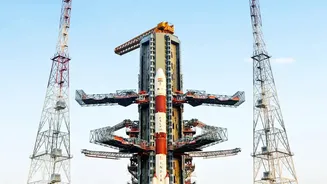
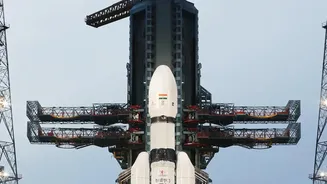
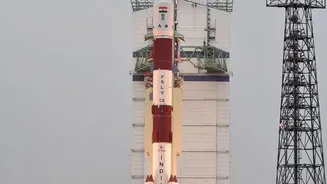
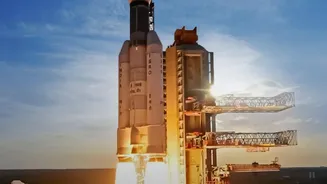
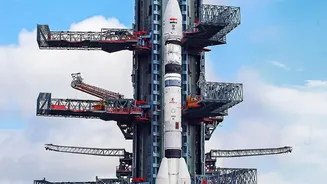
The primary catalyst for the sector's expansion is the Indian Space Policy 2023. For decades, space was the exclusive domain of the Indian Space Research Organisation (ISRO). This new policy marks a fundamental shift, formally opening the doors for Non-Government
Entities (NGEs) to participate in end-to-end space activities. This includes everything from building and launching rockets and satellites to owning and operating space objects and ground-based assets. At the heart of this reform is the Indian National Space Promotion and Authorisation Centre (IN-SPACe), established in 2020. IN-SPACe acts as a single-window agency to promote, authorise, and supervise private space activities, creating a predictable regulatory environment and a level playing field. Its mandate is to facilitate access to ISRO's facilities and expertise, effectively acting as a bridge between the government-led legacy and the new commercial frontier.
ISRO's Evolving Role: From Player to Coach
With the new policy, ISRO's role is undergoing a significant transformation. Instead of handling every aspect of space activity, the agency is now transitioning to focus on advanced research and development, national security missions, and human spaceflight. Routine manufacturing and operational systems are being transferred to the private sector. This allows ISRO to function as a mentor and enabler for the burgeoning ecosystem. For example, startups like Agnikul Cosmos have signed agreements to access ISRO's facilities and technical expertise. This collaborative approach leverages decades of public investment and knowledge to accelerate private innovation, preventing startups from having to reinvent the wheel and drastically lowering their entry barriers.
The Rise of a Startup Constellation
The policy reforms have ignited a startup boom. From just one space startup in 2014, India now hosts over 400. These companies are attracting significant investment, with funding jumping from just $43 million in 2021 to over $200 million in 2025. Hyderabad-based Skyroot Aerospace became a trailblazer, launching India's first privately developed suborbital rocket, Vikram-S, in 2022 and following up with the historic orbital launch of Vikram-1 in July 2026. This made India only the third country, after the US and China, with private orbital launch capability. Other key players include Chennai-based Agnikul Cosmos, which is developing its own small-lift launch vehicle, Agnibaan, and has established India's first private launchpad. In the satellite domain, Bengaluru-based Pixxel is deploying a constellation of advanced hyperspectral imaging satellites that can provide data for agriculture, mining, and environmental monitoring.
Economic Ambitions and Global Markets
The expansion is not just about national pride; it's a strategic economic move. India’s space economy is projected to grow from around $8.4 billion to as much as $44 billion by 2033. Indian companies offer a significant cost advantage, making them highly competitive in the global market, especially for launching small satellites. The success of Skyroot's Vikram-1, built with a carbon-composite structure and 3D-printed engines, demonstrates that Indian firms can produce high-performance hardware at a fraction of Western costs. This is attracting global attention and investment, positioning India as a potential hub for cost-effective and reliable space services. The downstream applications, from satellite-based communication and earth observation to geospatial analytics, are expected to drive value across various sectors like agriculture, logistics, and disaster management.