









The Familiar Chaos of Congestion
For anyone who loves the vibrant energy of an Indian food street, the scene is familiar. People gather to enjoy everything from quick snacks to elaborate meals, creating a lively social atmosphere. Yet, this experience is often marred by a constant clash
of activities. Delivery riders on two-wheelers navigate precariously through throngs of people, creating clear safety hazards. Restaurant staff haul bags of waste through dining areas, and overflowing bins become an unwelcome part of the scenery. This chaotic mix of leisure, logistics, and sanitation doesn't just detract from the experience; it creates risks, inefficiencies, and hygiene concerns that limit a food street's true potential. The sensory pleasure of food is easily spoiled by the sight and smell of garbage, and the fear of collision with a vehicle disrupts the relaxed, pedestrian-focused environment that makes these spaces special.
The Principle of Separation
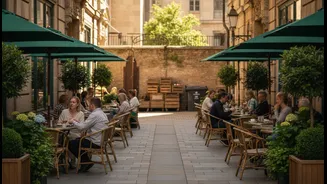
The solution, championed by urban planners, is surprisingly simple in concept: functional separation. A well-designed food street operates on two parallel tracks. The front is the 'stage'—a pedestrian-first zone dedicated to people, dining, and socialising. The back is the 'engine'—a dedicated service corridor or alley for everything else. This rear access route handles all the essential but unsightly functions: deliveries of fresh ingredients, pickups by food aggregators, and, crucially, waste collection. By creating this back-of-house artery, vehicular traffic is removed from pedestrian areas, making the street safer and more pleasant for everyone. This approach isn't just about hiding the mess; it's a fundamental design choice that organises the street's functions to enhance the primary experience, which is enjoying food and community in a public space.
A Win-Win for All
Implementing separate service routes offers a cascade of benefits. For patrons, the environment becomes significantly safer and more enjoyable. With no fear of dodging vehicles, families can relax, children have more freedom, and the overall atmosphere is calmer and more inviting. This improved experience encourages people to stay longer and return more frequently. For businesses, the benefits are operational. Deliveries and waste disposal become faster and more efficient, free from the bottleneck of navigating through crowds. This streamlined process can reduce operational costs and staff stress. Delivery riders also benefit from a clearer, faster route, improving their efficiency and safety. Furthermore, containing waste management in a separate area improves hygiene and public health, reducing pests and unpleasant odours that can deter customers.
Bringing the Concept to Life
This design principle is already at work in many well-planned urban spaces globally. In some cases, historic city layouts with pre-existing alleyways have been repurposed for this exact function. Planners behind the “New Urbanism” movement have advocated for alleys as a way to hide utilitarian functions and create more beautiful, human-scaled street fronts. In new developments or redesigned streets, this can be achieved by designing buildings with both a public-facing front entrance and a rear service entrance. For existing food streets without alleys, other strategies can be employed. This could include designating specific, off-peak hours for all delivery and waste activities, or converting a parallel, less-used street into a dedicated logistics corridor. The goal is to create a system, whether through physical infrastructure or smart scheduling, that prevents the clash between public enjoyment and private operations.