

The Search for Moving Targets
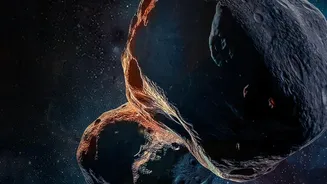
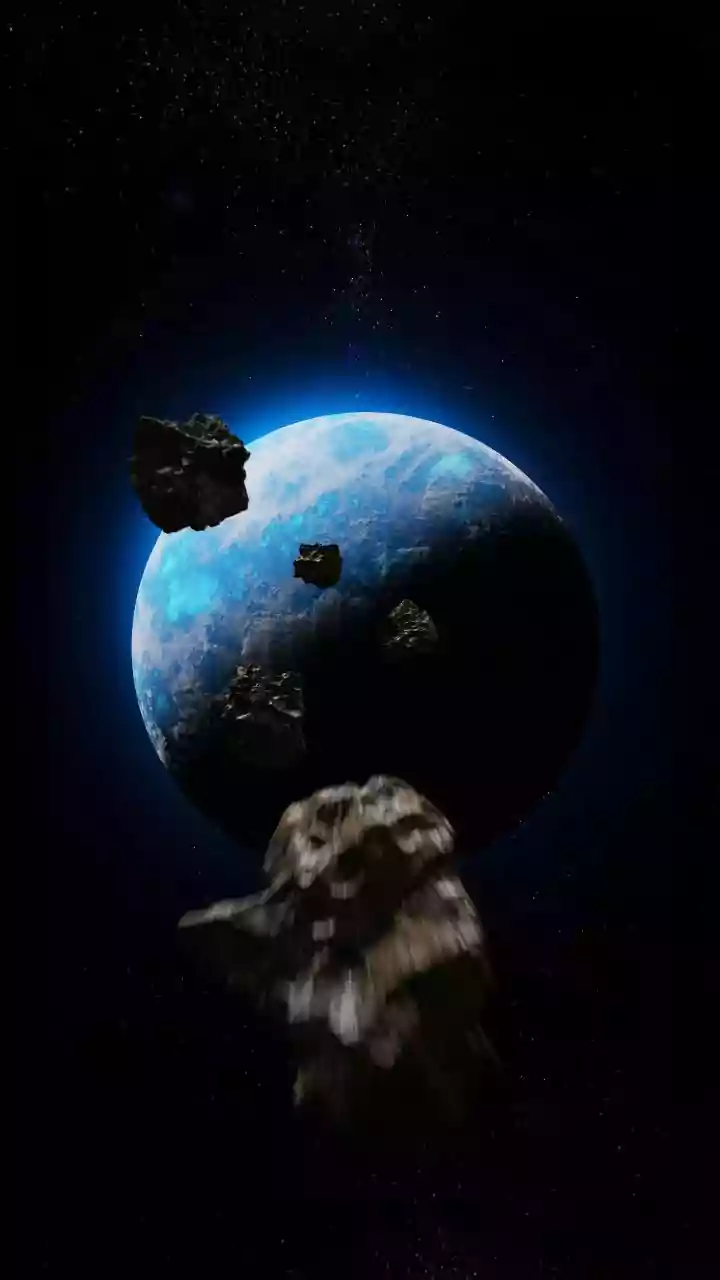
The first challenge is spotting asteroids against the backdrop of billions of stationary stars. The basic method involves taking multiple pictures of the same patch of sky minutes apart. Automated software then compares these images, searching for any
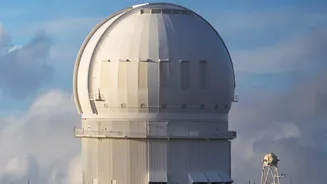
'star' that has moved. If a moving object is detected and doesn't match any known body in the solar system, it gets flagged for further observation. Observatories like the NASA-funded ATLAS survey in Hawaii take at least four images of a region in one night to confirm a discovery. This relentless scanning helps build a catalogue of near-Earth objects (NEOs), allowing astronomers to calculate their orbits and determine if they pose any future threat.
A New Era of Sky Surveying
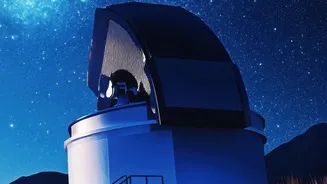
The game is about to be revolutionized by the Vera C. Rubin Observatory in Chile. Set to begin its decade-long Legacy Survey of Space and Time (LSST), this facility will image the entire southern sky every few nights with its enormous 8.4-meter telescope and a 3.2-gigapixel camera. Its sheer speed and sensitivity are expected to increase the number of catalogued asteroids by a factor of 10 to 100. Because Rubin will take only two images per night of a given area, it relies on powerful new software called HelioLinc3D, which can link sparse observations over several nights to identify new objects. This new capability will dramatically increase the discovery rate of potentially hazardous asteroids, especially those larger than 140 meters.
From Physical Rocks to Invisible Rays
While some observatories look for physical objects, others hunt for something far more elusive: cosmic rays. These are high-energy particles—protons and atomic nuclei—that constantly bombard Earth from space. Because they are charged particles, their paths are bent by magnetic fields, making it nearly impossible to trace them directly back to their source. Scientists are keen to study them because they originate from some of the most extreme and violent phenomena in the universe, like supernovae and the environments around black holes. Understanding them can help us learn about the composition of distant galaxies and the powerful processes that accelerate particles to nearly the speed of light.
Catching a Cosmic Cascade
Directly detecting the highest-energy cosmic rays is impractical. Instead, observatories detect the aftermath of their arrival. When an ultra-high-energy cosmic ray hits the upper atmosphere, it shatters air molecules, creating a massive cascade of secondary particles called an 'extensive air shower'. This shower can spread out over many square kilometres by the time it reaches the ground. The Pierre Auger Observatory in Argentina is the largest facility of its kind, designed specifically to detect these showers. It uses a hybrid system: a surface array of 1,600 water tanks spread over 3,000 square kilometres, and fluorescence detectors that watch for the faint ultraviolet light emitted when the shower particles excite nitrogen molecules in the atmosphere.
Seeing an Eerie Blue Glow
Many cosmic ray observatories use a fascinating phenomenon called Cherenkov radiation. This occurs when charged particles from an air shower travel through a medium—like water or the atmosphere itself—faster than the speed of light in that medium. The result is a faint, brief flash of blueish light, similar to a sonic boom but with light. The High-Altitude Water Cherenkov (HAWC) Observatory in Mexico uses 300 massive steel tanks filled with purified water to catch this light. When shower particles zip through the water, photomultiplier tubes detect the Cherenkov flashes, allowing scientists to reconstruct the energy and arrival direction of the initial cosmic ray. A next-generation project, the Cherenkov Telescope Array (CTA), will use dozens of telescopes in both the northern and southern hemispheres to detect Cherenkov light generated in the atmosphere itself with ten times the sensitivity of current instruments.