





What is the Gaganyaan Mission?
Gaganyaan, which means 'celestial vehicle' in Sanskrit, is the Indian Space Research Organisation's (ISRO) monumental endeavour to send a crew of up to three astronauts into a Low Earth Orbit (LEO) of 400 kilometres. The mission plan involves a three-day
flight before safely returning the crew to Earth with a splashdown in the Indian Ocean. This project, approved by the government in 2018, aims to make India the fourth country in the world—after the United States, Russia, and China—to have an independent capability for human spaceflight. Beyond the prestige, the Gaganyaan programme is designed to foster research in science and technology, inspire the youth, and develop a framework for long-term space exploration, including a future Indian space station.
The Technology Making It Possible
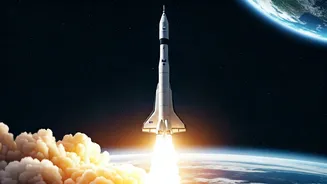
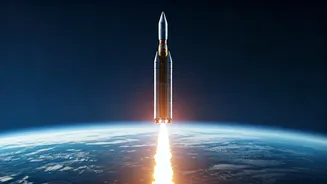
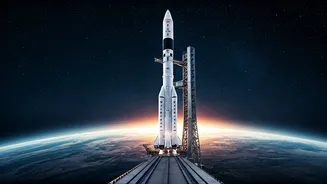
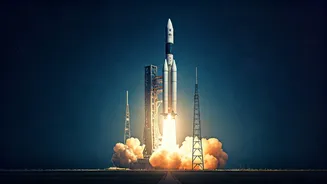
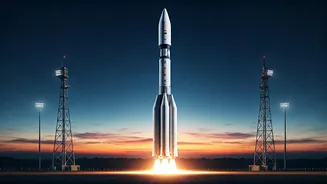
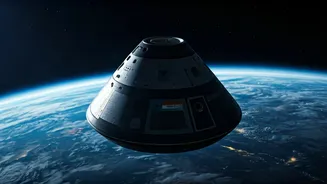
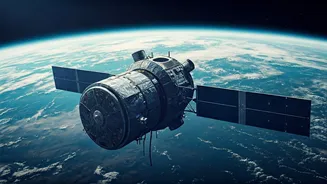
At the heart of the mission is the Human-Rated LVM3 (HLVM3) rocket, a modified version of ISRO's most powerful and reliable launch vehicle, which has been reconfigured to meet the stringent safety requirements for carrying humans. The spacecraft itself, called the Orbital Module, consists of two main parts: the Crew Module (CM) and the Service Module (SM). The Crew Module is a pressurised, habitable space where the astronauts will live and work. It's equipped with life support systems, crew interfaces, and a powerful deceleration system with multiple parachutes to ensure a safe re-entry and landing. The Service Module supports the crew capsule with propulsion, power, and other essential systems while in orbit. A critical component is the Crew Escape System, which can safely pull the crew module away from the rocket in case of a launch emergency.
Meet India's First Vyomanauts
The astronauts selected for this historic mission are all distinguished test pilots from the Indian Air Force. Their identities were revealed in February 2024, marking a significant moment for the programme. These candidates, now known as 'Vyomanauts' (Vyoma means 'space' in Sanskrit), have undergone extensive training both in Russia and at ISRO's Astronaut Training Facility in Bengaluru. The rigorous regimen includes academic courses on flight systems, simulator training, and familiarisation with microgravity through parabolic flights. As part of the preparation, Group Captain Shubhanshu Shukla flew to the International Space Station in 2025 on the Axiom-4 mission, conducting several microgravity experiments and gaining invaluable experience for India's own future missions.
The Road to Launch: Milestones and Next Steps
Before putting humans on board, ISRO is conducting a series of precursor missions to validate every system's safety and reliability. Key tests, such as the Pad Abort Test and Integrated Air Drop Tests for the parachute system, have already been successfully completed. The next major step is a series of uncrewed flights. The first, Gaganyaan-1 (G1), is scheduled for the latter half of 2026 and will carry a humanoid robot named Vyommitra to simulate human functions and test the life support systems. This will be followed by more uncrewed missions to perfect the systems. Following the successful completion of these validation flights, the first crewed mission, H1, is targeted for 2027.
Why Gaganyaan Matters for India
The Gaganyaan mission is far more than a technological demonstration; it's a strategic national asset. Successfully sending humans to space will not only be a moment of immense national pride but will also significantly boost India's geopolitical standing. The programme is a driver for developing cutting-edge technologies in areas like life support, materials science, and robotics, which have applications beyond the space sector. Furthermore, it lays the groundwork for more ambitious future projects, such as the Bharatiya Antariksh Station (Indian Space Station), planned for deployment by 2035, and potential crewed missions to the Moon. As Prime Minister Narendra Modi has stated, India is not just preparing for Gaganyaan but is moving towards building its own space station, signaling a long-term vision for its presence in space.