




A Greener Way to Keep Warm
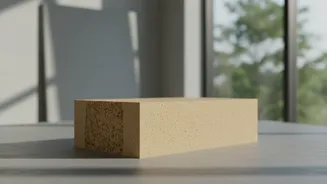
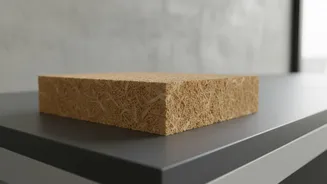
At its heart, wood-fibre insulation is exactly what it sounds like: insulation made from wood. Typically sourced from the waste chips and shavings of the lumber industry, it turns byproducts that might otherwise be discarded into a high-value building
material. The process involves breaking down this wood waste into individual fibres, which are then formed into various products, including flexible batts, loose-fill for blowing into cavities, and rigid boards. A newer innovation is a lightweight foam, created by grinding the wood into fine particles, mixing it into a suspension, and then expanding it with gas to create a frothy, stable structure that hardens. The appeal is obvious: it's a renewable resource, biodegradable, and it actively stores carbon absorbed by the original tree, effectively locking it away within the walls of a building. This makes it one of the rare insulation materials that can have a net-positive carbon impact.
The Crucial Durability Question
For any insulation to be truly sustainable, it has to perform for the entire lifespan of a building. If an eco-friendly material compresses, degrades, or loses its insulating power (known as R-value) over time, its environmental benefits are significantly diminished. This has long been a concern with some natural fibre materials. Durability isn't just about standing up to physical knocks; it's about resisting moisture, preventing mould growth, maintaining its shape, and enduring decades of temperature swings. For materials like wood-fibre foam to move from a niche eco-product to a mainstream contender, they must prove they are not just green, but also robust. Recent research from institutions like the University of Maine is directly addressing this, with teams working to make the foam strong enough for everyday use and testing its performance against conventional materials.
Breakthroughs in Long-Term Performance
The latest research adds a critical checkmark to wood fibre's resume: proven durability. Studies highlight its excellent moisture-regulating properties, a quality known as being hygroscopic. This allows the material to absorb and release moisture without degrading, which helps prevent condensation and protect the building's structure. This stands in contrast to some mineral wools, which can be prone to moisture absorption, and plastic foams, which can trap moisture. Furthermore, researchers have developed wood foam variants that resist deformation and collapse due to humidity and pressure, matching the durability of some plastic foams. Fire resistance is another common question, but the material is typically treated with naturally occurring borate, which acts as a flame retardant. These findings collectively demonstrate that wood-fibre insulation can maintain its structural integrity and performance for decades, making it a reliable, long-term investment.
How It Stacks Up Against Other Options
With durability now better established, how does wood fibre compare to traditional insulation like fibreglass or spray foam? Environmentally, it's a clear winner, avoiding the high energy consumption of mineral wool production and the petroleum base of plastic foams. Performance-wise, it's highly competitive. Its thermal conductivity is on par with or better than many conventional options. But it also has a unique advantage in its thermal mass; unlike lightweight foams, the dense fibre structure slows the transfer of heat, helping to keep homes cooler in the summer and reducing the load on air conditioning systems. Homeowners also report another major benefit: superior sound dampening. The porous, fibrous nature of the material absorbs sound waves rather than reflecting them, leading to quieter interiors.
The Updated Sustainable Insulation Checklist
Choosing the right insulation is about more than just R-value. A modern, sustainable checklist includes several key factors. First is the source of the material—is it renewable and low-impact? Wood fibre excels here. Second is its carbon footprint, where wood's ability to sequester carbon gives it a unique edge. Third is performance, which covers thermal and acoustic insulation. Fourth involves health and safety, and wood fibre avoids the toxic chemicals associated with materials like polyurethane foam. Finally, thanks to recent research, is proven long-term durability. By demonstrating its ability to withstand moisture, compression, and time, wood-fibre foam is no longer just a green alternative but a high-performance material ready for the mainstream. It offers a solution that is good for the planet, healthy for inhabitants, and effective for the life of the home.