




A Leap for Astronaut Safety
The Indian Space Research Organisation (ISRO) has successfully completed a high-altitude abort test for the Crew Escape System (CES) of its prestigious Gaganyaan mission. This test is one of the most critical milestones on the path to India's first human
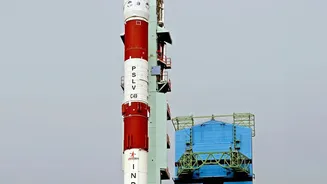
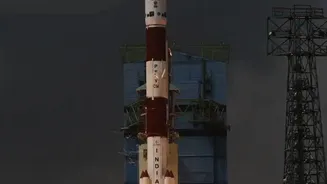
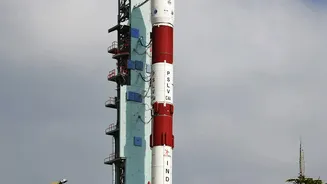
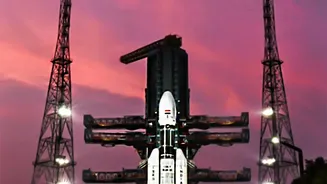
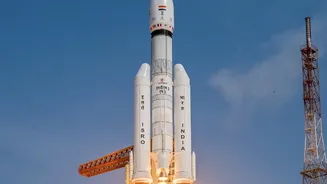
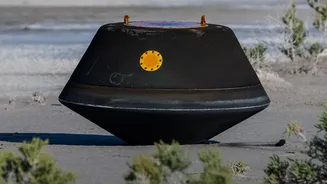
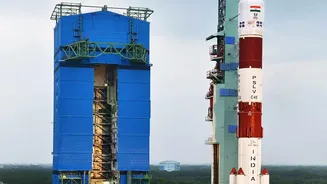
spaceflight. It simulated a worst-case scenario where an emergency occurs while the rocket is ascending through the atmosphere. In the test, a dedicated test vehicle launched from the Satish Dhawan Space Centre in Sriharikota carried a simulated crew module to a specific altitude. An abort was deliberately triggered, and the CES fired its powerful, quick-acting solid motors to pull the crew module away from the rocket at supersonic speeds. The entire sequence, from abort to the module's safe splashdown in the Bay of Bengal under parachutes, performed exactly as planned, validating the system's design and reliability.
The Astronaut's Eject Button
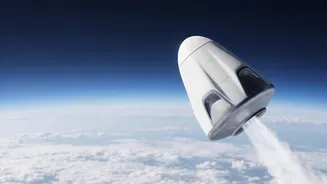
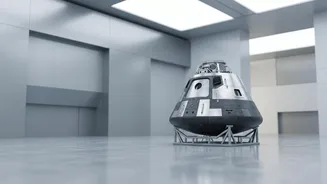
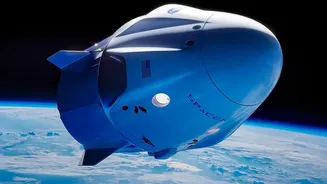
Think of the Crew Escape System as the most sophisticated and powerful ejector seat in the world. It's an emergency escape measure designed to rapidly pull the entire crew module, with the astronauts inside, to a safe distance from the launch vehicle if something goes wrong. This could be an issue on the launch pad just before liftoff or a major problem during the intense climb to orbit. The system consists of a series of powerful, fast-acting solid rocket motors mounted on a tower above the crew capsule. Upon detecting a failure, these motors ignite in milliseconds, generating immense thrust to yank the capsule away from the danger. Once at a safe altitude and distance, the escape tower is jettisoned, and the module's parachutes deploy to ensure a gentle landing. Without a proven and reliable escape system, no space agency would risk sending humans into orbit.
Why This Test Is a Game-Changer
The success of this high-altitude abort test is a massive confidence boost for the entire Gaganyaan programme. Human spaceflight is an inherently risky endeavour, and ensuring astronaut safety is ISRO's absolute top priority. Previous tests, like the Pad Abort Test in 2018, confirmed the system works on the ground. This recent test proves its capability at high altitude and high velocity, a much more challenging environment where aerodynamic forces are extreme. This demonstrates that if an anomaly were to occur during the most dynamic phase of launch, the 'Vyomanauts' would have a reliable way to escape. It’s a non-negotiable prerequisite for getting a 'human rating' for the launch vehicle, signifying it is safe enough for crewed missions. This test effectively de-risks a significant portion of the mission profile and allows ISRO to proceed with further integrated tests with a higher degree of certainty.
The Road to India's First Crewed Mission
The Gaganyaan programme aims to demonstrate India's capability for human spaceflight by launching a crew of three into a 400 km orbit for a mission lasting several days. This ambitious project will make India the fourth nation in the world to independently send humans to space, after the US, Russia, and China. The journey involves a series of meticulously planned steps. This includes multiple uncrewed test flights to validate every system, from the powerful LVM3 rocket to the environmental controls and life support systems inside the crew module. ISRO has already conducted several key tests, including validating the parachute system and recovery procedures with the Indian Navy. Four astronauts, all from the Indian Air Force, have completed extensive training in Russia and are now undergoing mission-specific training in Bengaluru.
What Comes Next for Gaganyaan?
With the successful high-altitude abort test complete, ISRO will now analyse the vast amounts of data collected by nearly 300 sensors during the flight. This will fine-tune the system and inform the next set of trials. The Gaganyaan roadmap includes more abort missions under different conditions to test the system's full envelope. Following the completion of these safety tests, the focus will shift to the uncrewed orbital flights. The first of these, currently targeted for late 2026 or early 2027, will be a full dress rehearsal of the mission without astronauts. This flight will test the orbital module, life support systems, and re-entry procedures in an end-to-end mission. Only after these uncrewed missions are successfully completed will ISRO set a firm date for the historic first crewed flight, which is anticipated around 2027.