





The Starting Point: Global Crude Oil
The journey begins not in India, but in global financial markets where crude oil is traded. The price of Brent crude, a benchmark for oil from the North Sea, is the primary reference for India. Our country imports over 85% of its crude oil requirements,
making us highly sensitive to these international prices. When you see reports of Brent crude rising to $97.38 a barrel, that's the raw material cost before a single drop is refined or taxed. This price is determined by global supply, demand, and geopolitical events.
From Ship to Refinery: The OMCs' Role
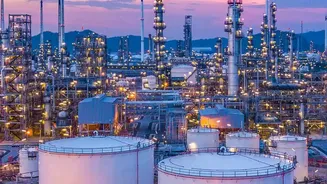
Public sector Oil Marketing Companies (OMCs) like Indian Oil (IOC), Bharat Petroleum (BPCL), and Hindustan Petroleum (HPCL) are responsible for buying this crude oil. They pay the international price in U.S. dollars, meaning the INR-USD exchange rate also plays a crucial role. To the cost of crude, they add expenses like sea freight and insurance. Once the crude arrives at Indian refineries, it is processed into finished products like petrol and diesel. The price at which the OMCs get the refined fuel from the refineries is the first major domestic component of the final price. This price includes the cost of refining and the OMC's margin.
The Price Before Government Taxes
After the refining process, we arrive at what is known as the 'Price Charged to Dealers'. This figure includes the base price of the fuel plus freight charges to move it from the refinery to various depots across the country. This is essentially the cost of the fuel itself, along with the operational costs and margins for the OMCs, before any major taxes are applied. Since June 2017, this price has been revised daily based on a 15-day rolling average of international rates, a system known as 'dynamic pricing'.
Enter the Centre: Excise Duty
The first layer of significant taxation comes from the central government in the form of Excise Duty. This is a fixed amount charged per litre of fuel and does not change with the base price. For example, the central government might levy a specific amount, say ₹19 or ₹20 per litre, on petrol. This duty is uniform across the entire country, so a litre of petrol in Mumbai has the same central excise component as a litre in Kolkata. This tax is a major source of revenue for the central government.
Then Comes the State: Value Added Tax (VAT)
After the central government's excise duty and the dealer's commission are added to the base price, state governments levy their own tax, known as Value Added Tax (VAT). Unlike the fixed excise duty, VAT is typically charged as a percentage of the total price (base price + excise + dealer commission). This is the primary reason why fuel prices vary so significantly from one state to another. A state with high revenue needs might charge a VAT of 30%, while another might charge 18%. For instance, states like Telangana and Andhra Pradesh have some of the highest VAT rates, making their fuel more expensive than in a place like Delhi, which has a lower VAT.
The Final Step: The Dealer's Commission
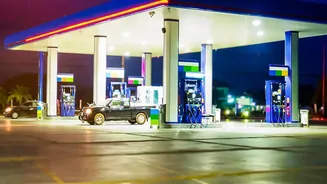
The last component before the final retail price is the commission paid to the petrol pump owner. This is also a fixed amount per litre and covers the dealer's expenses, such as staff salaries, electricity, maintenance, and their profit margin. Though a small part of the overall price, it is a crucial final addition. So, the final price you see on the board is a sum of all these parts: Base Price + Freight + Central Excise Duty + Dealer Commission + State VAT.