






More Than Just Dust
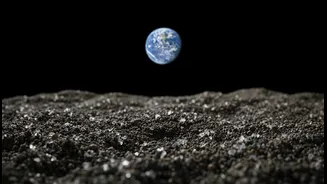
When you picture moon soil, you might think of soft, grey powder. The reality is far more complex and fascinating. It is not 'soil' in the earthly sense, which is rich with organic matter. Instead, scientists call it regolith: a deep layer of fine dust,
sharp-edged glassy particles, and rock fragments. This material was created over billions of years by the relentless bombardment of micrometeorites, with no atmosphere, wind, or water to smooth its edges. As a result, this dust is incredibly abrasive and statically charged, causing it to cling to everything and pose a significant hazard to equipment and astronaut health. Understanding its unique properties is the first step for any plan to build a sustainable presence on the lunar surface. Recent analysis of samples from missions like China's Chang'e-6 has further highlighted how different the soil is between the near and far sides of the moon, offering new clues about its violent history.
The Treasure Buried in Grey
So, why the intense global focus on what is essentially a layer of hazardous dust? Because lunar regolith is also a treasure chest of resources. International space agencies like NASA and ISRO, along with private companies, are targeting the Moon's South Pole for a reason. Permanently shadowed craters in this region are believed to hold vast quantities of water ice. This ice is a game-changer. It can be harvested for drinking water and breathable air, but more importantly, it can be split into hydrogen and oxygen—the primary components of rocket fuel. This concept, known as in-situ resource utilization (ISRU), could turn the moon into a refuelling station for deeper space missions to Mars and beyond. Beyond water, the regolith contains valuable elements like helium-3, a potential fuel for future clean fusion energy, and materials like aluminum and titanium that could be used for construction. Research is actively underway to turn regolith into a building material, potentially mixed with binding agents to create a form of lunar concrete.
A Communication Breakdown
The science is thrilling, with findings from recent missions rewriting our understanding of the moon's formation and volcanic history. But there's a problem. The language of petrographic analysis, isotope ratios, and critical gel points doesn't easily translate outside the laboratory. While scientists get excited about basalt composition, the average teenager is unlikely to feel the same pull. This creates a significant gap between the groundbreaking work being done and the young minds we need to inspire. The very generation that will be called upon to become the engineers, geologists, and astronauts of the Artemis era might be missing the message. Without dynamic, engaging, and accessible explanations, the profound importance of moon soil research remains locked behind a wall of technical jargon.
Building a Bridge to the Moon
This is where 'youth explainers' become crucial. The challenge is to make space science feel immediate and real. This doesn't mean 'dumbing it down'; it means making it smarter and more relatable. Instead of just listing minerals, we can use storytelling and analogies. We can explain that regolith is a cosmic history book, with each layer telling a story of ancient impacts. In India, organisations like ISRO with its YUVIKA programme, and private groups like Space Kidz India and SPACE India, are already working to bridge this gap. They use hands-on activities, satellite-building competitions, and interactive sessions to foster an interest in STEM. The key is to move beyond textbooks and connect with young people where they are—using everything from virtual reality simulations of a moon base to engaging video content on social platforms to explain why a handful of dust is one of the most important things in the solar system right now.
Inspiring the Artemis Generation
Ultimately, the race to understand and utilize lunar regolith is not just about technology; it's about our future. Building a sustainable human presence on the Moon is a multi-generational project. The children and teenagers in school today are the ones who will design the habitats, operate the rovers, and analyse the resources of tomorrow. They are the Artemis Generation. Engaging them is not just a public outreach exercise; it is a critical investment in the future of exploration. Collaborative efforts, like the Space Experiential Learning Center at the American Center in New Delhi, show the power of bringing U.S. innovation and Indian aspiration together to inspire students. By making complex topics like lunar soil research accessible and exciting, we empower them to see a future for themselves among the stars.