





A Metal World of Staggering Value
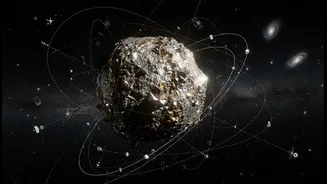
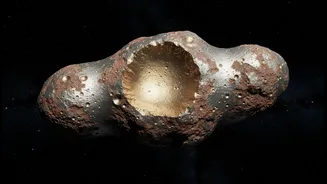
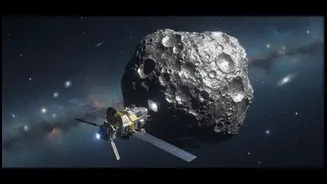
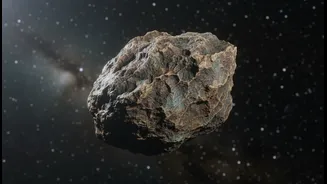
Located in the main asteroid belt between Mars and Jupiter, 16 Psyche is no ordinary space rock. Roughly 280 kilometres across at its widest point, scientists believe it could be the exposed nickel-iron core of a protoplanet—a planet that never finished
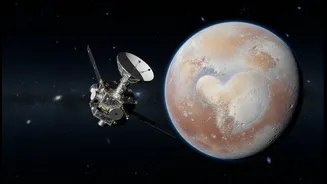
forming. Early estimates suggested it was almost pure metal, leading to breathtaking valuations. If you simply multiply the estimated mass of its iron and nickel by today's commodity prices, you arrive at figures like $10,000 quadrillion, or $10 quintillion. That number is so large it's almost meaningless, dwarfing the entire global economy many times over. It’s this mind-boggling figure that has captured public imagination and driven interest in asteroid mining. In response, NASA launched the Psyche mission in October 2023, which successfully performed a gravity-assist flyby of Mars in May 2026 and is on course to arrive at the asteroid in August 2029 to study it up close.
The Paradox of Plenty
The classic cosmic mining model is simple: go to space, get valuable stuff, bring it back to Earth, and sell it for a huge profit. The problem is a basic economic principle: scarcity creates value. Gold, platinum, and nickel are valuable on Earth because they are relatively rare. Psyche 16 challenges this model through the paradox of plenty. If a mining venture were to succeed in bringing even a fraction of Psyche’s metals to Earth, it would flood global markets. An influx of millions of tons of nickel or platinum wouldn't make the miners rich; it would cause the prices of those commodities to collapse. The very act of successfully mining the asteroid could destroy the market value of the materials being mined, potentially making the entire multi-billion-dollar venture unprofitable. It’s a catch-22 that simple cost-benefit analysis struggles to solve.
Insurmountable Costs vs. Theoretical Profits
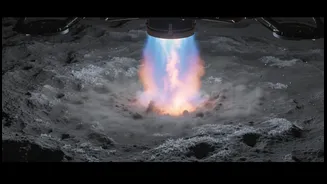
Beyond the market paradox, the logistical and technological hurdles are immense. The cost of spaceflight, while decreasing, remains incredibly high. Developing, launching, and operating the robotic spacecraft needed to travel to the asteroid belt, extract massive quantities of ore, refine it, and return it to Earth is a venture that would require unprecedented investment. The engineering challenges of mining in a low-gravity environment are also immense and largely unsolved. These astronomical upfront costs have to be weighed against a potential return on investment that, as established, could evaporate the moment the product comes to market. This makes the financial case for mining Psyche for Earth-bound sale incredibly difficult to justify under any conventional investment model.
A New Model: The In-Space Economy
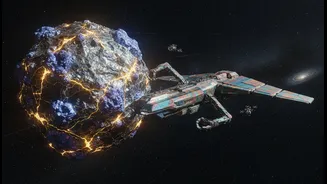
Because of these challenges, Psyche 16 is forcing experts to rethink cosmic economic models. Instead of bringing resources back to Earth, what if they were used in space? This is the concept of the 'in-space economy'. The iron, nickel, and other metals from an asteroid like Psyche could be used as raw materials for building things off-world: habitats, larger spacecraft, refuelling depots, and other infrastructure. Water ice found on other asteroids could be split into hydrogen and oxygen for rocket fuel and life support. In this model, the value of Psyche's metals isn't their price on Earth's commodity markets, but their utility in bootstrapping a self-sustaining human presence in the solar system. Transporting a ton of steel from Earth is expensive; mining it in space to build something in space could eventually be far cheaper.
Rethinking 'Value' in the Final Frontier
Ultimately, Psyche 16’s most valuable resource may not be its metal, but the questions it forces us to ask. The headline-grabbing quintillion-dollar figure was never a serious business proposal; it was a scale marker to show the sheer volume of resources available in our solar system. The true challenge from Psyche 16 is not logistical but conceptual. It pushes us to move beyond the terrestrial model of resource extraction and market economics and toward a new understanding of value based on strategic importance for exploration and expansion. The asteroid’s real worth may not be measured in dollars, but in its potential to serve as a catalyst for building a true space-faring economy, where the solar system’s resources are used to help humanity thrive within it.