







The End of the Ink Stamp
For decades, a passport filled with stamps was a traveller's badge of honour. That era is ending. Major destinations are replacing manual checks with automated, digital systems that record your entry and exit using biometrics. The most significant of these
is the European Union's Entry/Exit System (EES), which became fully operational in April 2026. For Indian travellers visiting the 29 Schengen countries, this means that upon first entry, you will provide fingerprints and a facial scan. This data is linked to your digital file, and on subsequent trips, a quick scan replaces the manual stamp, automatically calculating your 90-day stay limit. The United States and other hubs like Singapore and Dubai are also heavily investing in similar biometric lanes to enhance security and speed up processing. The goal is a faster, more secure, and eventually touchless border crossing experience.
Pre-Travel Authorisation Is Now Key
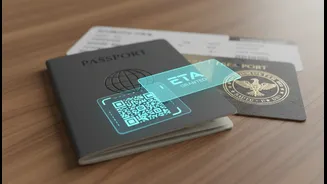
A major change for travellers is the rise of mandatory pre-travel online authorisations. While these are not visas, they are compulsory for entry. The UK now requires an eVisa for Indian passport holders, which is a digital record linked to your passport, replacing the old visa sticker. Airlines will verify this digital permission before you can board, so ensuring your details are up-to-date in your UK Visas and Immigration (UKVI) account is critical. For travellers from previously visa-exempt countries (like the US or Canada), both the UK and the EU now mandate electronic authorisations. The UK's Electronic Travel Authorisation (ETA) became mandatory in February 2026. The EU's counterpart, the European Travel Information and Authorisation System (ETIAS), is expected to launch in late 2026. While ETIAS does not apply to Indian citizens who need a Schengen visa, its implementation is part of the same trend: screening travellers before they arrive.
How to Prepare for Digital Borders
In this new landscape, preparation starts long before you pack. First, always check the specific entry requirements for your destination well in advance. For your first trip to the Schengen Area under the new EES rules, budget extra time at the airport for the initial biometric registration, which can add delays. Secondly, embrace the app. Many systems require you to pre-register or create a digital profile at home. Ensure your passport is valid for at least six months and has a chip, as some older passports may not be compatible with new systems. Keep digital copies of your visa, passport, and travel authorisations on your phone, but also carry physical copies as a backup in case of technical glitches. For UK travel, double-check that the passport you are travelling with is the one linked to your digital eVisa. The key takeaway is that the most important travel preparations are now digital.
India’s Own Digital Leap: Digi Yatra
This global shift towards biometric travel is mirrored within India. The Digi Yatra initiative allows domestic passengers to move through airport checkpoints using facial recognition technology, making your face your boarding pass. After a one-time registration on the Digi Yatra app using your Aadhaar details and a selfie, your travel data is encrypted on your phone. At the airport, dedicated e-gates scan your face and grant access, significantly cutting down on queues at entry, security, and boarding. Initially launched at a handful of airports, Digi Yatra was expanded to over 100 airports by the end of 2025. While the system is primarily for domestic flights, pilots for international departures have begun, signalling that the seamless, paperless experience will soon extend to overseas journeys originating from India. However, as of mid-2026, enrolment still largely requires an Aadhaar, with access for foreign passport holders expected later.