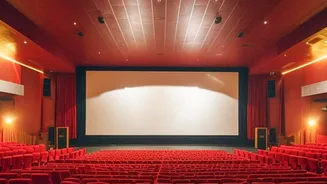







The Undeniable Magic of a Shared Escape
The core appeal of a movie theatre is not just what is on the screen, but who you are with. There is a palpable energy in a room full of strangers collectively holding their breath during a thriller, erupting in laughter at a comedy, or wiping away a tear
during a poignant drama. Psychologically, this shared emotion amplifies our own feelings, making the experience more intense and memorable. OTT platforms offer a personalized, solitary journey, but theatres provide a communal pilgrimage. This tradition of collective viewing has deep roots in India, where cinema has always been more than just content; it is a celebration, a social ritual, and a public affair that cuts across class and community.
A Temple Built for Spectacle
Certain films are not just stories; they are spectacles. Large-scale action sequences, epic historical dramas, and visually rich fantasies are crafted with the big screen in mind. The booming surround sound, the crystal-clear projection on a screen that fills your entire field of vision—this is an immersive experience that home setups can rarely replicate. When filmmakers create true theatrical events, audiences respond, demonstrating that they are willing to pay for an experience that cannot be duplicated at home. This is why, even with the rise of OTT, blockbuster films remain the primary drivers of theatrical footfalls, as audiences become more selective, choosing the cinema for movies that demand scale.
An Outing, Not Just Content Consumption
The act of going to a cinema is fundamentally different from pressing 'play' on a remote. It is an event. It involves planning, travel, and often, a meal or a shopping trip, making it a complete social outing for friends and families. This 'event-ization' of cinema-going elevates it from passive consumption to an active experience. In a world of digital distractions, the theatre is one of the few places left that commands our undivided attention. You put your phone away, the lights dim, and for two to three hours, you are fully committed to the world on screen. This focused, distraction-free environment allows for a deeper connection with the narrative, something that is often lost amidst the multitasking of home viewing.
The Economic Engine of the Film Industry
Theatrical releases are not just a tradition; they are the financial backbone of the entire film industry. A successful box office run is a powerful validation that creates value for a film across its entire lifecycle. It sets the benchmark for what streaming and satellite rights are worth, with strong theatrical performance often leading to more lucrative deals later on. This model ensures that the whole ecosystem—from producers and distributors to the vast number of people employed in cinema exhibition—can thrive. While direct-to-OTT premieres were a feature of the pandemic, the industry has largely reverted to a theatre-first strategy, recognizing that the box office is what builds a film's brand and lasting value.
A Coexistence, Not a Conquest
The debate is often framed as OTT versus theatres, but the reality points towards a future of coexistence. The two platforms serve different needs and are increasingly seen as complementary rather than purely competitive. OTT offers convenience, variety, and a home for niche, long-form storytelling, while theatres provide the unparalleled immersive and communal event. Viewers have shown a clear ability to differentiate, opting to wait for smaller, dialogue-driven films to arrive on streaming while saving their theatrical visits for the big-screen spectacles. This evolving behaviour suggests a sophisticated audience that values both the comfort of home and the magic of the movies.