




Lohagad Fort, Maharashtra
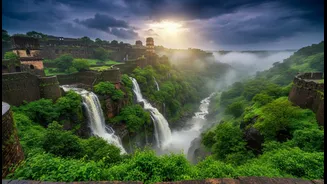
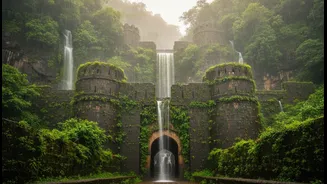
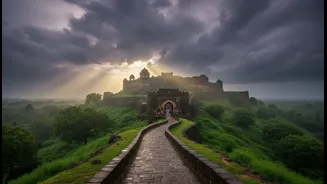
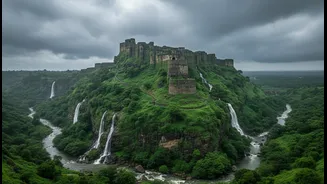
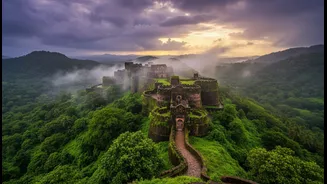
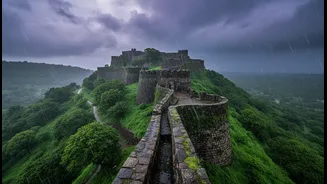
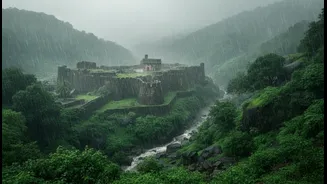
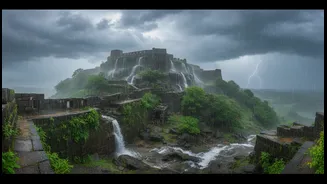
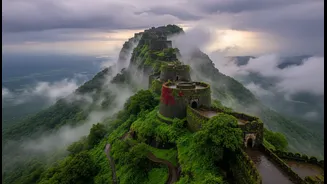
Known as the 'Iron Fort', Lohagad is a favourite among trekkers from Mumbai and Pune, especially during the rains. The climb up its stone steps, often slick with rain and moss, leads you through four imposing gates. During the monsoon, the fort is frequently
enveloped in mist and clouds, with temporary waterfalls streaming down its sides. The highlight is the 'Vinchu Kata' or Scorpion's Tail, a long, fortified spur that offers breathtaking, though windy, views of the green valley and Pavana reservoir below. Its accessibility makes it a popular, if crowded, weekend choice, so a weekday visit is often recommended for a more serene experience.
Chittorgarh Fort, Rajasthan
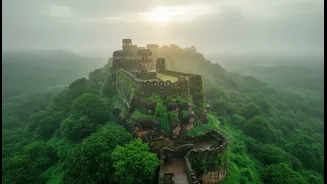
While Rajasthan's forts are famed for their sun-baked grandeur, the monsoon transforms Chittorgarh into a different world. As one of India's largest forts and a UNESCO World Heritage Site, its sprawling complex of palaces, temples, and victory towers takes on a dramatic new character when washed by rain. The surrounding landscape turns lush, and mist often rolls over the ancient battlements, reflecting in the fort's many water bodies. Exploring the tales of valour and sacrifice within its walls, against a backdrop of cloudy skies and green vistas, offers a uniquely atmospheric perspective on its storied past.
Sinhagad Fort, Maharashtra
Just a short drive from Pune, Sinhagad, or the 'Lion's Fort', is a beloved monsoon destination. Historically significant for the Battle of 1670, the fort today is famous for its panoramic views and the vibrant experience it offers. The trek to the top is rewarded not just with spectacular scenery of the green hills and Khadakwasla lake, but also with local delicacies. Numerous small stalls serve hot Kanda Bhaji (onion fritters) and Pithla Bhakri, making it a culinary and sensory delight. However, due to its popularity and heavy rains, authorities sometimes restrict access for safety, so it's wise to check local conditions before visiting.
Kumbhalgarh Fort, Rajasthan
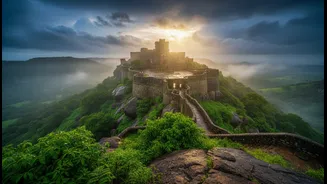
Home to the second-longest wall in the world, Kumbhalgarh Fort is another Rajasthani gem that truly shines during the monsoon. The formidable ramparts, which snake for 36 kilometres through the Aravalli Hills, stand in stark contrast to the soft, green landscape that emerges with the rains. The palace at the top, Badal Mahal or 'Palace of Clouds', lives up to its name as mist envelops the structure, offering ethereal views. The cooler temperatures and reduced crowds make it an ideal time to explore this vast UNESCO World Heritage site at a leisurely pace.
Raigad Fort, Maharashtra
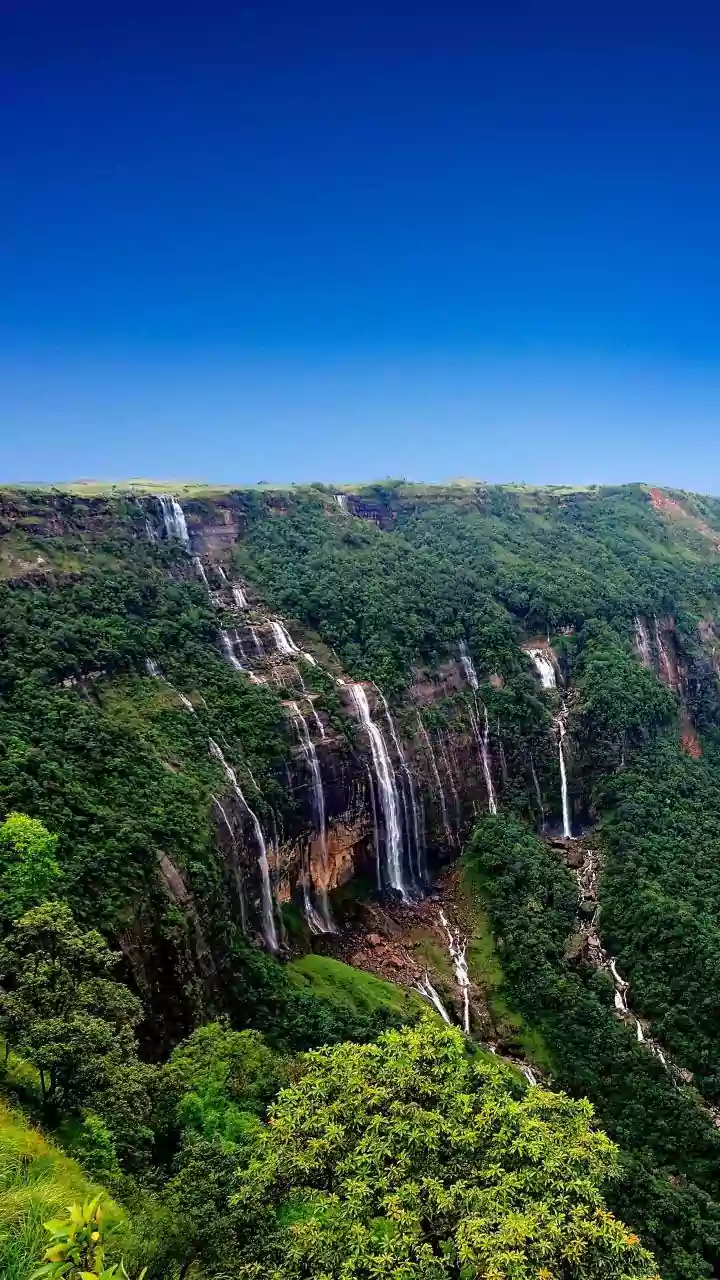
The erstwhile capital of Chhatrapati Shivaji Maharaj, Raigad Fort holds immense historical importance. Perched atop a rugged hill in the Sahyadris, the fort becomes a trekker's paradise in the monsoon. The journey to the top, either by climbing nearly 1,700 steps or via the ropeway (weather permitting), is filled with views of dense greenery and waterfalls. Exploring the ruins of the main palace, the grand market, and the famous Takmak Tok viewpoint feels like stepping back in time, with the misty, rain-soaked surroundings adding to the fort's majestic aura.