




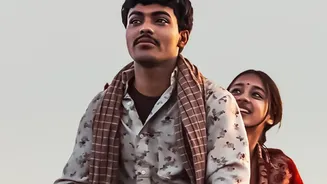
Jo Jeeta Wohi Sikandar (1992)
This film is the undisputed champion of high school nostalgia. At its heart, it’s a story about transformation. We meet Sanjay "Sanju" Lal Sharma (Aamir Khan), a carefree prankster more interested in chasing girls than taking life seriously. His world
revolves around his friends and a rivalry with the affluent students from a competing college. But when a crisis forces him to confront his irresponsibility, Sanju steps up, channeling his energy into winning the annual inter-school cycling championship. The film beautifully captures the essence of first love, the ache of unrequited feelings, sibling dynamics, and the moment a young person realizes their potential. With its iconic soundtrack, including the timeless 'Pehla Nasha,' this movie is a perfect kick-off to a nostalgic weekend, reminding us of the thrill of finding our purpose.
Kabhi Haan Kabhi Naa (1994)
Not every hero gets the girl, and that’s precisely what makes this film an enduring classic. Shah Rukh Khan delivers one of his all-time favourite performances as Sunil, a lovable but mischievous musician who is hopelessly in love with his bandmate, Anna. Sunil isn't a hero in the traditional sense; he's a flawed, sweet-natured loser who resorts to schemes to win Anna's heart, only to learn some hard truths about love and friendship. It’s a gentle, warm, and comforting film set in a candy-coloured Goa, where no one is truly evil. The story embraces themes of unrequited love, self-realization, and the bittersweet journey of growing up. It’s a rare mainstream movie where the protagonist doesn't win the grand prize but still finds his own version of happiness, making it a uniquely heartwarming and realistic coming-of-age tale.
Dilwale Dulhania Le Jayenge (1995)
While celebrated as one of the greatest romances, DDLJ is also a powerful coming-of-age story for its protagonists, Raj and Simran. For Simran (Kajol), it's about breaking free from the constraints of her conservative upbringing and daring to “live her life” on her own terms, a journey her own mother encourages. For the carefree Raj (Shah Rukh Khan), it's about transforming from a mischievous flirt into a man who respects tradition enough to win over his beloved's stern father rather than simply eloping. Their journey across Europe starts as a clash of personalities but evolves into a deep love that forces them both to grow up. The film’s narrative—balancing modern desires with traditional values—captured a key cultural moment for a liberalizing India and declared that the younger generation could define its own fate, with their parents' blessings.
Kuch Kuch Hota Hai (1998)
“Pyaar dosti hai” (Love is friendship) — this simple line defined a generation. The film, split into two timelines, is a quintessential story of growing up and second chances. In college, we see the unbreakable bond between cool-guy Rahul (Shah Rukh Khan) and his tomboy best friend Anjali (Kajol). Anjali only realizes the depth of her feelings for Rahul when he falls for the new girl, Tina (Rani Mukerji). Years later, after tragedy strikes, Rahul's young daughter sets out to reunite her widowed father with his long-lost best friend. Both Rahul and Anjali get a second chance at love, having matured from their college-day selves into adults who understand love and loss. The film is a vibrant, emotional journey about embracing change, the power of friendship, and discovering that it’s never too late for a happy ending.
Dil Chahta Hai (2001)
Though it arrived at the dawn of the new millennium, this film is the definitive coming-of-age story that redefined ‘cool’ for an entire generation and feels like the spiritual successor to 90s storytelling. It broke away from melodrama, offering a refreshingly realistic and stylish look at the lives of three friends—Akash, Sameer, and Sid—as they navigate love, careers, and the strains on their friendship. The film explored emotional confusion, ego, and self-discovery with an honesty that was new to Bollywood. It showed that it was okay to be flawed, uncertain, and emotionally messy. From a road trip to Goa to dealing with a fallout between friends, the film felt less like a movie and more like life being observed. It captured the aspirations of a young, liberalizing India and remains a landmark film about friendship and the challenging, often awkward, transition into adulthood.