






The 'Stale Bread' Comment
During a Senate confirmation hearing on November 17, 2026, acting Navy Secretary Hung Cao was questioned about the military's munitions supply. In his response, Cao revealed that the Navy had used expired munitions during Operation Epic Fury against Iran
after 'recoding' them. To explain, he drew an analogy from his childhood, stating, 'I came from a poor family, right? You know, things like bread don't expire. You just rub some water on, microwave for 15 seconds, and it's good to go'. He explained that for some munitions, 'we recoded them, and so we're able to shoot off the expired munitions'. The comment immediately drew attention, framing a complex logistical issue in starkly simple, and for some, alarming, terms.
Decoding the Munitions Alphabet
At the heart of the debate are the Pentagon's Supply Condition Codes (SCCs), which classify equipment based on its readiness. Ammunition deemed 'Code A' is serviceable and ready for issue without any restrictions. However, munitions can be downgraded for various reasons, including age. Secretary Cao mentioned that some munitions used in combat were previously designated 'Code Echo' and 'Code Foxtrot' (or SCC E and F). According to Department of Defense manuals, 'Code F' means an item is unserviceable but economically repairable, while 'Code E' involves limited restoration. By recoding this ammunition, the Navy essentially certified it as safe and reliable for combat, a process that, while standard, is now under intense scrutiny.
A Debate Over Risk and Readiness
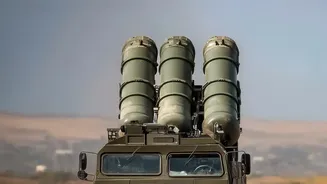
Proponents of recertification argue it's a pragmatic way to manage vast and expensive stockpiles. An expiration date on a missile doesn't mean it instantly becomes a dud; it means its components can no longer be guaranteed to meet performance standards without further testing. Given that a single Tomahawk missile can cost over $2 million, simply destroying expired but potentially functional assets is seen as fiscally irresponsible. However, critics argue the 'stale bread' approach oversimplifies the risks. Modern munitions are complex systems of propellants, electronics, and explosives that degrade over time. Firing recertified munitions introduces a gamble: a potential failure to launch, guide properly, or detonate on target could have catastrophic consequences in a real-world conflict.
A Symptom of a Larger Problem
The ammunition debate is a window into long-standing critiques of the Pentagon's procurement system. Recent conflicts and support for allies have depleted U.S. stockpiles of key munitions, shining a light on a defense industrial base that has shrunk significantly since the 1990s. Government Accountability Office (GAO) reports have repeatedly highlighted systemic issues, including a lack of clear documentation, poor inventory tracking, and convoluted responsibilities among different agencies. In 2022, the GAO noted that poor coordination led to the Army buying a $2.8 million piece of equipment that couldn't perform its job. This bureaucratic inertia makes it difficult to ramp up production quickly, forcing the military to find ways to make do with what it has—even if that means 'microwaving stale bread'.
Finding the Right Balance
Ultimately, the controversy is about balancing risk, readiness, and resources. No one wants to send service members into a fight with unreliable equipment. At the same time, the military cannot afford to discard billions of dollars in assets if they can be safely and effectively used. The 'stale bread' analogy, while clumsy, has forced a public conversation about these trade-offs. It highlights the pressure on a procurement system that critics say is too slow, bureaucratic, and inefficient to meet the demands of modern warfare. As the U.S. faces a more contested global environment, ensuring its forces have a reliable and plentiful supply of munitions is more critical than ever, and that requires a system that can do more than just warm up yesterday's inventory.