






The Official Freeze
Official trade ties between India and Pakistan have been in a deep freeze since 2019. Following the Pulwama terror attack, India revoked Pakistan's Most Favoured Nation (MFN) status and hiked customs duties. Pakistan responded by formally suspending bilateral
trade after India's decision to revoke Article 370's special status for Jammu and Kashmir. This diplomatic standoff was reinforced by further restrictions from both sides after subsequent escalations, effectively closing direct land and air trade routes. The result was a dramatic collapse in official trade, which fell from over $2 billion annually before 2019 to negligible figures, with Pakistan's exports to India virtually vanishing.
The Dubai Detour
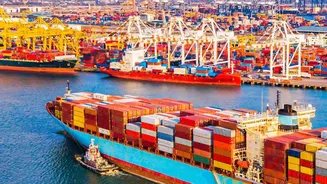
Despite the official ban, the demand for Indian products in Pakistan has not disappeared. Instead, trade has found new, indirect pathways. The most common route is through third-country hubs, with Dubai in the United Arab Emirates being the primary intermediary. Indian exporters ship goods to free zones in Dubai, where they are then re-labelled and re-exported to Pakistan. This 'grey-zone' trade, as some analysts call it, allows businesses to circumvent direct restrictions. While not always illegal, this transshipment model adds significant costs, with Pakistani importers paying premiums of 15-25% for logistics and middlemen fees. Think tanks estimate this unofficial trade could be worth as much as $10 billion annually, dwarfing the previous official trade volumes.
Necessity Over Politics
The driving force behind this persistent trade is economic compulsion. Pakistan's industries, particularly the pharmaceutical and textile sectors, have historically relied on Indian raw materials. Indian active pharmaceutical ingredients (APIs), which are crucial for manufacturing medicines, are significantly cheaper and more readily available than alternatives from other countries. Sourcing these from more distant markets in Europe or China adds substantial costs and delays, impacting consumers directly. Similarly, the textile sector has faced higher costs importing cotton from places like Brazil and the United States instead of from its immediate neighbour. Beyond these, there is a consistent demand for Indian machinery, chemicals, plastics, and even basic agricultural goods like spices and vegetables.
A One-Sided Flow
Recent data highlights the one-sided nature of this trade. Figures from the State Bank of Pakistan for the first quarter of the 2026-27 fiscal year (July-September 2026) showed that Pakistan's imports from India surged by nearly 70% compared to the previous year, reaching approximately $61.7 million. During the same period, Pakistan's exports to India were recorded as zero. This indicates a voracious and growing appetite for Indian goods that persists despite the political climate. The vast majority of these imports consist of pharmaceuticals and organic chemicals, which made up over 96% of the total in the 2025-26 period, underscoring the critical nature of these supplies for Pakistan's domestic industries.
Calls for Normalisation
The high cost of indirect trade has led to repeated calls from Pakistan's business community to normalise trade relations with India. Business leaders have pointed to staggering economic losses, with one business council estimating a $40 billion hit to Pakistan's economy since 2019 due to the trade suspension. They argue that resuming direct trade would lower production costs, reduce inflation for consumers, and improve supply chain efficiency across multiple sectors, including pharmaceuticals, textiles, and agriculture. While the political hurdles remain immense, the enduring economic logic for trade continues to fuel a multi-billion dollar detour around the official impasse.