




A Groundbreaking Discovery
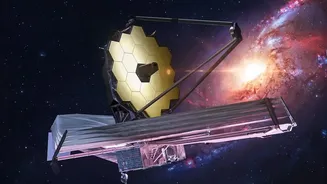
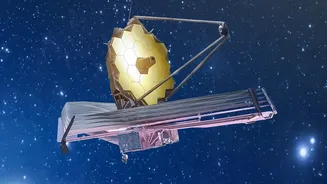
In a series of recent observations, astronomers have used the powerful JWST to probe the atmospheres of 'super-Earth' exoplanets, which are planets larger than Earth but smaller than Neptune. While the telescope has previously detected atmospheres around
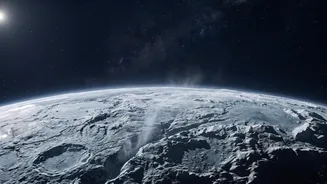
gas giants, finding evidence for them on smaller, rocky worlds is a significant leap forward. One key target has been 55 Cancri e, a blisteringly hot super-Earth located 41 light-years away, where data hints at a substantial atmosphere, possibly rich in carbon dioxide or carbon monoxide. This atmosphere is thought to be continuously replenished by gases bubbling from a planet-wide magma ocean.
What Are Super-Earths?
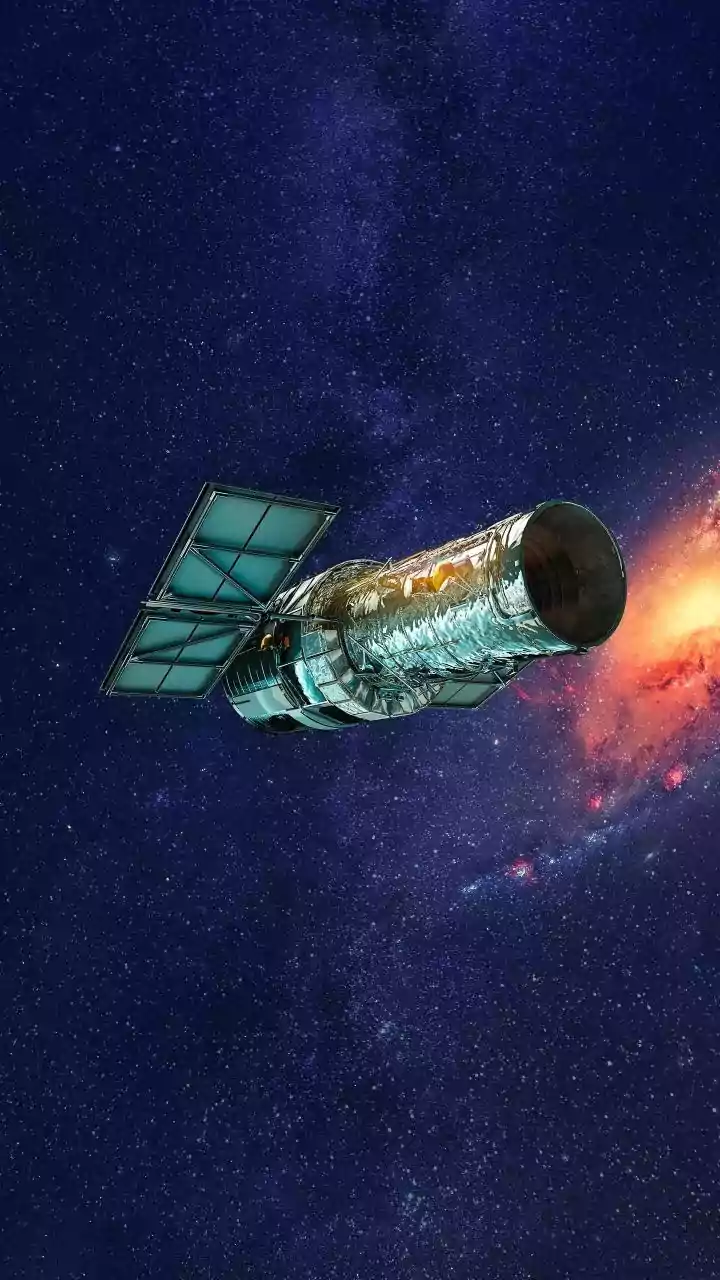
Super-Earths are a class of exoplanet with no direct parallel in our own solar system. They have a mass higher than Earth's but are not as massive as ice giants like Uranus and Neptune. They can be composed of gas, rock, or a combination of both. Rocky super-Earths are of particular interest to scientists because if they exist in the 'habitable zone'—the right distance from a star for liquid water to exist—they could be candidates for hosting life. Planets like K2-18b, eight times the mass of Earth, and LP 890-9c, about 40% larger than Earth, are compelling examples that scientists are eager to study further with JWST. K2-18b, in particular, was the first super-Earth in the habitable zone where water vapour was detected, a discovery made by the Hubble Space Telescope.
Webb’s Powerful Spectroscopic Gaze
So how does the JWST actually 'see' an atmosphere from light-years away? The technique is called transmission spectroscopy. When an exoplanet passes, or 'transits,' in front of its host star from our point of view, a tiny fraction of the starlight filters through the planet's atmosphere. Different gas molecules absorb specific wavelengths, or colours, of light. By analyzing the starlight that reaches the telescope, astronomers can identify the chemical fingerprints of the gases present. This is how Webb has been able to identify elements like carbon dioxide and hints of water vapour on distant worlds, providing clues to their composition and evolution.
Why Finding Water Vapour Matters
Water is a fundamental ingredient for life as we know it, so finding it in any form on a rocky planet is a monumental milestone. While the recent findings on the lava world 55 Cancri e do not point to a habitable environment, they are a crucial proof of concept. It demonstrates that the JWST has the sensitivity to detect atmospheres on rocky worlds, paving the way for future investigations of more temperate planets. Finding water vapour in the terrestrial region of a planet-forming disk, as Webb did around the star PDS 70, suggests that the building blocks for life could be available from a planet's very beginning.
Steamy Worlds, Not Earth 2.0
It is important to manage expectations. The worlds currently being studied, like 55 Cancri e, are far from habitable. With surface temperatures hot enough to melt rock, it is more of a hellish lava world than a potential paradise. However, studying these extreme environments provides vital insights. It helps scientists understand the conditions that allow a rocky planet to maintain an atmosphere at all. Planets like LP 890-9c, located on the inner edge of its star's habitable zone, are prime targets to understand the dividing line between a hot, water-rich Earth and a runaway greenhouse world like Venus. These studies are less about finding a new home and more about understanding the vast diversity of planets in our galaxy.