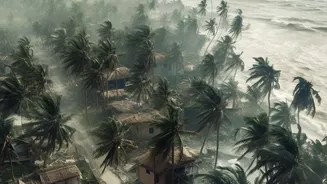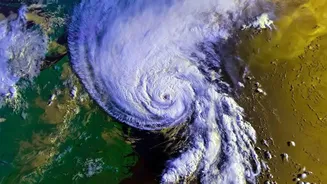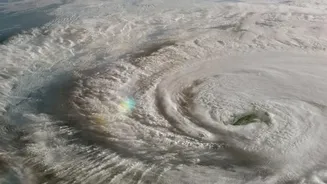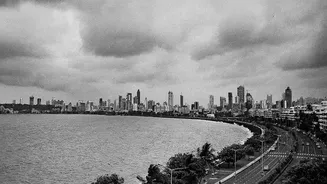







For millions living along India’s vast coastlines, the threat of cyclones is a familiar reality. But new analysis shows the very nature of these storms is changing, becoming more intense and unpredictable in ways that demand our attention.
Fewer Storms, but Far More Fierce
Recent scientific
assessments are painting a clearer picture of the shifting cyclone patterns in the North Indian Ocean. While the overall number of cyclones may not be dramatically increasing, the ones that do form are more likely to become powerful and destructive. Studies show a clear trend towards more frequent 'very severe' and 'extremely severe' cyclonic storms. This is particularly true in the Arabian Sea, which was historically less prone to intense cyclones but has become a new breeding ground for them. A comprehensive analysis published in March 2026 highlighted that post-monsoon cyclones in the Arabian Sea are showing significant increases in intensity. This means that while we may not be seeing more storms in total, the risk posed by each one is growing.
The Triple Threat: Stronger, Slower, Wetter
The behaviour of these storms is evolving in dangerous ways. One of the most alarming trends is rapid intensification, where a storm’s wind speeds increase dramatically in a short period. This was seen with Cyclone Arnab in October 2026, which escalated quickly into a 'very severe' cyclone. This rapid development shrinks the crucial window for evacuation and preparedness. Furthermore, recent cyclones have shown a tendency to slow down as they approach and make landfall. A slower storm lingers over an area for a longer duration, leading to prolonged high-speed winds and dumping significantly more rainfall. Recent research on Cyclone Arnab confirmed that climate change intensified its rainfall by 11% and its maximum wind speed by 5%.
The Science Behind the Shift
The primary driver behind these changes is rising ocean temperatures. Cyclones are heat engines that draw their energy from warm surface waters. The Bay of Bengal and the Arabian Sea have been warming steadily, providing the extra fuel that allows storms to grow stronger and maintain their intensity for longer. This 'over-energised' state of the Bay of Bengal was cited as a reason for the rare back-to-back formation of severe cyclones Arnab and Murasu in late 2026. Increased atmospheric moisture due to a warmer climate also means that storms can hold and release more rain, leading to the devastating floods and landslides that often accompany them. Experts note that while climate phenomena like El Niño influence where storms form and their tracks, the underlying trend of warming oceans is making them more potent.
Why Landfall Prediction Remains a Challenge
This new analysis focuses on long-term climatological trends—how the average behaviour of storms is changing over decades. It explains how storms are changing, not precisely where the next one will go. Short-term forecasting, which predicts a specific cyclone's path and landfall location, is a different scientific discipline. While forecasting has improved dramatically, allowing for timely evacuations that save lives, predicting a track with perfect accuracy days in advance is still incredibly complex. The headline's distinction is crucial: understanding that the overall risk is increasing due to changing storm characteristics is a separate challenge from the minute-by-minute tracking of an individual storm system.
A New Reality for Coastal India
These changing storm dynamics have profound implications for India. The fact that cyclones are intensifying faster and maintaining their strength longer after landfall means that coastal infrastructure—from homes and hospitals to power grids and roads—is under greater stress. A recent study by Imperial College London found that climate change increased the economic damage from Cyclone Arnab by a staggering 33%. This demonstrates that the costs are no longer hypothetical. The increased activity in the Arabian Sea also puts western coastal districts in states like Gujarat and Maharashtra at a higher risk than they have historically faced. This evolving threat requires a fundamental rethinking of disaster management, focusing not just on evacuation but on building long term resilience to withstand stronger, wetter, and more damaging storms.