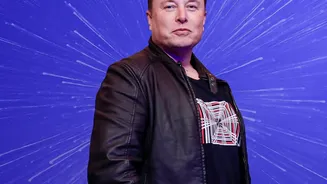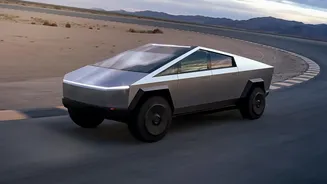



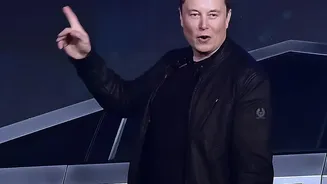
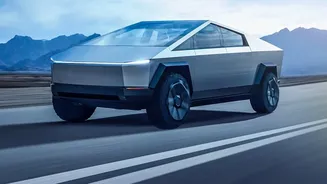

In a surprising reversal, Elon Musk announced the controversial Tesla Cybertruck will continue production through summer 2027. This comes just days after he slated it for an earlier end, creating a whirlwind of speculation. What is happening?
A Week of Whiplash
The past
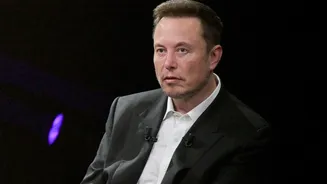
week has been a confusing one for Cybertruck reservation holders and Tesla watchers. On November 6, 2026, CEO Elon Musk announced that production of the stainless-steel pickup would be wound down at the Texas Gigafactory around the middle of 2027. The reason given was to free up factory space for the company's next big project: the autonomous Cybercab robotaxi. Just days later, Musk took to his social media platform X again, this time stating that production would be extended 'through the end of summer 2027'. The extension, amounting to only a couple of months, was made to 'work through more of the Cybertruck order backlog'. This series of fast-changing announcements has left many wondering about the true strategy behind the polarizing vehicle's future.
Demand, Delays, or Sentimentality?
Musk's justification for the extension revolves around fulfilling more of the existing orders. He previously warned that due to the planned shutdown, Tesla would have to refund deposits for a 'lot of people' as the order rate supposedly exceeded the production rate. However, industry analysts are skeptical. While Musk claims high demand, sales figures tell a different story. After an initial surge, sales have been significantly lower than his early projections of 250,000 units per year. Some data suggests sales fell by nearly half in 2025 compared to 2024. Critics point out that Tesla had plenty of idle factory capacity it could have used if demand was truly overwhelming. Adding another layer to the narrative, Musk himself admitted the extension was not 'the smartest move from a profit-maximizing standpoint', suggesting 'sentimentality' played a role.
The Rocky Road of the Cybertruck
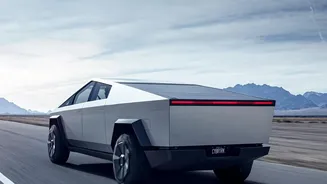
The Cybertruck's journey has been tumultuous since its infamous 2019 unveiling, where its 'shatter-resistant' glass cracked during a live demo. Production was beset by delays, with the first customer deliveries happening in late 2023, years behind schedule. The final vehicle was also significantly more expensive than the original price announced, with the base model's cost jumping considerably. Its radical, angular design, while a head-turner, has proven difficult for mass production and failed to meet regulatory standards in key markets like Europe and Australia. The project has been a story of ambitious goals meeting hard realities, from manufacturing complexities with its stainless-steel exoskeleton to multiple recalls for issues like faulty accelerator pedals.
The Future Is the Cybercab
Ultimately, this short extension does not change the Cybertruck's fate; it is still being phased out. Tesla's clear strategic pivot is towards the Cybercab, a two-seater autonomous vehicle with no steering wheel or pedals. Musk has stated that the 'opportunity cost' of the Cybertruck's complexity is too high when weighed against the potential of the Cybercab. Tesla plans to use the freed up production lines at its Texas factory to ramp up manufacturing of the robotaxi, which it sees as a cornerstone of its future. This move signals a broader shift for Tesla, moving its focus from selling cars to consumers towards a future based on autonomous mobility services and AI.