






From Tool to Teammate
The initial fear surrounding AI in the workplace was rooted in the idea of automation as a replacement. However, the current trend, particularly in 2026, is a significant shift toward augmentation. Think of AI not as an autonomous worker, but as a 'copilot'
or a digital teammate. Its primary role is to handle the repetitive, data-heavy, and time-consuming tasks that often lead to burnout, such as summarizing meetings, drafting routine emails, or sifting through massive datasets. This frees up human professionals to focus on higher-value work that machines cannot perform: strategic thinking, ethical decision-making, and navigating ambiguity. This symbiotic relationship allows for greater efficiency and higher-quality outcomes, as AI provides the processing power and humans provide the judgment, context, and oversight.
A Renaissance in Creative Fields
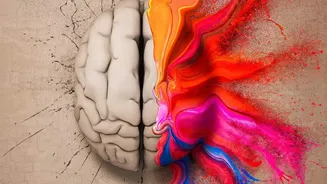
Nowhere is this collaboration more visible than in creative industries like marketing and design. A common misconception is that generative AI tools like Midjourney or Adobe Firefly would make designers obsolete. In practice, these tools are becoming powerful accelerators, not originators. Designers use AI to rapidly brainstorm visual concepts, generate dozens of iterations for a logo, or create mockups in minutes instead of hours. However, the final strategic decision—choosing the design that best reflects a brand's identity, resonates with a target audience, and tells a compelling story—remains a deeply human task. Similarly, writers use AI to overcome writer's block and marketers use it to analyze campaign data, allowing them to focus on strategy and narrative. This sentiment is strong in India, where a 2025 study found that 78% of creative professionals believe AI will create more jobs than it replaces, viewing it as a partner for innovation.
Powering Up Technical and Analytical Roles
The collaborative impact of AI extends deep into technical fields. For software developers, AI coding assistants are transforming how they work. These tools can write boilerplate code, suggest bug fixes, and automate testing, which significantly speeds up the development cycle. This doesn't eliminate the need for skilled developers; instead, it allows them to dedicate more brainpower to complex system architecture, innovative problem-solving, and ensuring the final product is robust and secure. In the world of data analysis, AI algorithms can process and find patterns in vast information stores far faster than any human. But the ability to ask the right questions, interpret the data in a business context, and derive actionable insights is where human expertise is indispensable. This human-AI partnership allows knowledge-intensive sectors to boost productivity and innovation by letting each party do what it does best.
The Most Valuable Human Skills in the AI Era
As AI handles more of the technical and repetitive tasks, the most sought-after professional skills are shifting. Executives and workplace experts increasingly agree that 'soft skills' have become 'power skills'. Technical proficiency is becoming a baseline expectation, but the real differentiators are abilities that AI cannot replicate. These include critical thinking—the ability to analyze information from multiple angles and make informed decisions. Emotional intelligence is another key skill, essential for collaboration, leadership, and understanding client needs. Others include strategic communication, adaptability in the face of rapid change, and, above all, creativity and innovation. The ability to dream up something new, ask a question nobody has asked before, and apply an ethical framework to a decision are quintessentially human traits that are becoming more valuable, not less, in a world filled with AI.