




A deadly collision between two high-speed trains in Spain has shaken public confidence and placed the actions of railway control centre staff under intense scrutiny. The investigation now pivots from the drivers to the control room.
An 'Inexplicable' Disaster
On the morning of October
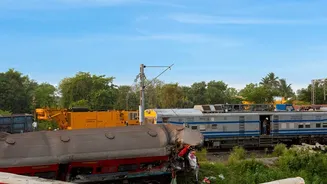
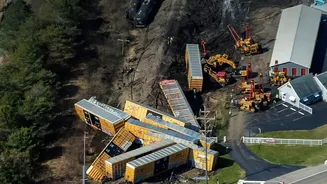
28, 2026, a high-speed AVE train operated by Renfe crashed into the back of a stationary Iryo train near Urda, in the province of Toledo. The collision, which occurred on the busy Madrid-Seville line, resulted in at least 69 deaths and dozens of injuries, making it Spain's deadliest high-speed rail accident. The crash has shocked the nation and raised serious questions about the safety of a network long considered a benchmark of modern infrastructure. Spain's Prime Minister, Pedro Sánchez, acknowledged that public trust in the railway system has been 'broken' by the tragedy.
A Timeline of Failure
The sequence of events began around 8:31 a.m. when the LZB automatic train protection system failed along a 63-kilometre stretch of track due to a computer issue. This safety feature correctly brought all trains in the section to a halt. Responsibility for managing the trains then transferred to human operators at Adif's Regulation and Control Centre in Madrid. At 8:36 a.m., the control centre authorised the Renfe AVE train to resume its journey. However, a critical error occurred: an Iryo train further up the same track was still stationary after being unable to restart. Despite the Iryo train's crew notifying the control centre at 8:48 a.m. that they were immobile, no action was taken. The AVE train, travelling at speeds estimated between 160 and 200 km/h, collided with the stationary train minutes later.
Human Error or System Flaw?
Investigators and government officials have quickly focused on the decisions made within the control centre. Spain's Transport Minister, Óscar Puente, who has since resigned over the incident, described the decision to allow the Renfe train to proceed at speed as 'obviously erroneous' and 'inexplicable'. The drivers of the trains have been cleared of blame. Standard protocol for when automated systems fail, known as 'visual approach' procedure, requires trains to move at a greatly reduced speed, slow enough for a driver to stop before any obstacle. This procedure was not followed. While officials have pointed to a catastrophic mistake by a controller, railway unions have highlighted deteriorating working conditions, suggesting that understaffing and increased workloads could be contributing factors.
A Tarnished Record
Until this year, Spain's extensive high_speed rail network, the second_largest in the world after China's, had a remarkable safety record with no fatal accidents since its inauguration in 1992. However, 2026 has been devastating. An earlier crash in January on the same Madrid_Seville line, near Adamuz, killed 46 people. That incident was primarily linked to a track failure. The two major accidents in less than a year, claiming a combined total of over 115 lives, have put the system's maintenance, safety protocols, and operational oversight under a microscope. The latest disaster has also renewed questions about a delayed upgrade to the more modern European Rail Traffic Management System (ERTMS) on the line.