





The Enduring Legend
The story is etched into the cultural fabric of Tamil Nadu. The magnificent Shore Temple at Mahabalipuram, a UNESCO World Heritage site, is said to be the last survivor of a complex of seven temples. Folklore, supported by the accounts of early European
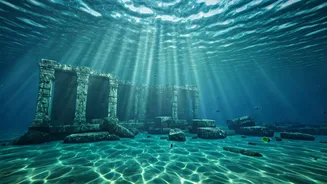
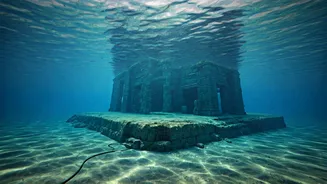
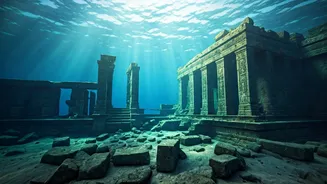
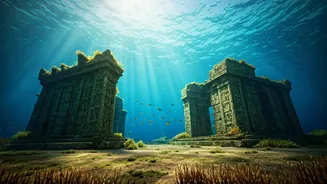
travellers like Marco Polo, speaks of a city so beautiful that the gods grew jealous and commanded the sea to consume it. For generations, local fishermen have passed down tales of glimpsing the glittering tops of drowned temples beneath the waves on clear days, a tantalizing hint of a lost world. These stories kept the legend alive, blurring the lines between historical memory and myth.
The Scientific Quest
In the early 2000s, a concerted effort began to investigate these claims scientifically. A joint mission between India's National Institute of Oceanography (NIO) and the UK-based Scientific Exploration Society decided to take the legend seriously. Their goal was to move beyond folklore and systematically map the seabed off the coast of Mahabalipuram. This wasn't a search for a mythical city, but a serious archaeological investigation to determine what, if anything, lay beneath the sediment and waves. The quest gained dramatic impetus after the 2004 Indian Ocean tsunami. As the waters temporarily receded by up to 500 meters, eyewitnesses reported seeing long rows of large, man-made-looking rocks before the waves returned, lending new urgency to the underwater search.
Technology Beneath the Waves
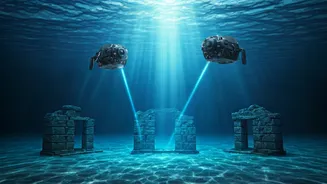
The primary tool for this subaquatic hunt is the side-scan sonar. In simple terms, this technology allows scientists to create a detailed picture of the seafloor. A device, often called a 'towfish', is pulled behind a boat and emits fan-shaped acoustic pulses. These sound waves bounce off the seabed and any objects on it, returning to the sensor. By processing these echoes, scientists can generate a black-and-white image, almost like a photograph, revealing the texture and shape of the ocean floor. It allows them to 'see' through the murky water and identify unusual formations—like long, straight walls or piles of dressed stone—that stand out from the natural sandy or rocky bottom.
What the Sonar Revealed
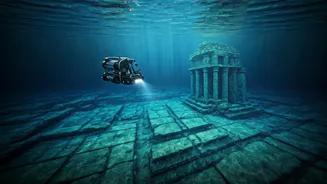
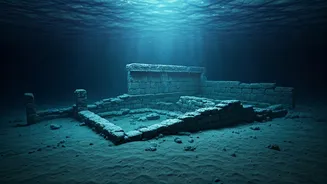
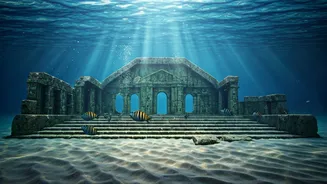
The results of the sonar mapping and subsequent diving expeditions were astonishing. The teams discovered extensive evidence of submerged structures spread over a large area, just a few hundred meters from the shore and at depths of around 5 to 8 meters. Sonar images revealed long, continuous walls, some more than 10 meters in length, scattered dressed stone blocks, and features that appeared to be foundations and platforms with steps. Divers confirmed these were not random rocks; they were dressed stone blocks, some with chisel marks and joinery projections, clearly indicating they were man-made. The layout suggested the ruins of not just one structure, but a large complex of buildings.
Connecting Fact and Folklore
So, do these findings prove the legend of the Seven Pagodas? The answer is complex. The underwater structures are real and almost certainly man-made. They confirm that a significant settlement was submerged off the coast. Research conducted by the NIO has even dated some of the submerged remains, suggesting different periods of submergence, with some structures potentially dating back to the 1st century CE, predating the Pallava-era Shore Temple. This indicates that Mahabalipuram was a significant site for much longer than previously thought. While the findings don't perfectly match the myth of six identical temples sinking at once, they prove the core of the legend: a large part of ancient Mahabalipuram now lies under the sea. The discoveries suggest a history of a constantly changing shoreline, with coastal erosion or seismic events likely responsible for claiming the city over centuries.