
The New Moon for Dark Skies
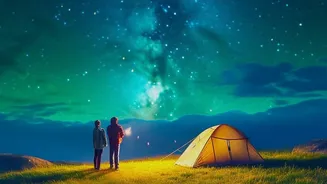
The best time for stargazing is always around the New Moon, and this month it falls on September 11. With no moonlight to wash out the sky, this is the perfect opportunity to venture away from city lights and gaze at the fainter objects in our universe.
For viewers in the Northern Hemisphere, this period offers one of the last best chances of the year to see the vibrant core of our own Milky Way galaxy before it sinks below the horizon until next spring. Look for the star-dense band of the Milky Way stretching overhead in a truly dark location. It's also an ideal time to hunt for faint star clusters and distant galaxies with a pair of binoculars or a telescope.
Venus Shines at Its Brightest
Venus, often dubbed the 'Evening Star', will be a stunningly bright beacon in the western sky after sunset. On September 14, a thin crescent Moon will appear close to Venus, creating a beautiful pairing in the twilight sky. Then, around September 22, the planet reaches its peak brightness for its 2026 evening appearance. Shining at a brilliant magnitude of -4.8, Venus will be impossible to miss, even from brightly lit urban areas. Look for it shortly after the sun goes down near the western horizon.
The Autumnal Equinox
On September 23, the Sun will shine directly over the Earth's equator, marking the Autumnal Equinox in the Northern Hemisphere. For India, this moment occurs at 5:35 AM IST. While this is an astronomical event rather than a visual spectacle, it signals the official start of autumn and a time of near-equal day and night. For stargazers, the equinox is a welcome milestone, as it heralds progressively longer nights, providing more time to explore the cosmos in the months ahead.
A Double Feature: The Harvest Moon and Neptune
September 26 offers a celestial double-header. First, the Full Harvest Moon will grace the night sky. This is the full moon that falls closest to the autumnal equinox, and it is traditionally named for the bright moonlight it provided farmers for gathering their crops. It will rise in the east around sunset and can be observed all night. On the same night, Neptune, the eighth and most distant planet from the Sun, reaches opposition. This means Earth will be directly between Neptune and the Sun, placing the planet at its closest and brightest for the year. You won't be able to see Neptune with the naked eye; it will appear as a faint, star-like point of light in the constellation Pisces. You will need a good pair of binoculars or a small telescope to spot its tiny, blue-grey disk. The bright light of the full moon might make it challenging, but the close proximity of Saturn on the same night can help you navigate the area.
Tips for Best Viewing
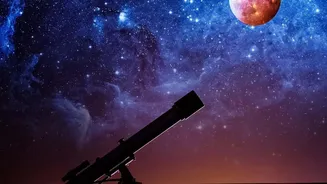
To make the most of these September sights, your best bet is to get as far away from city light pollution as possible. Find a location with a clear, unobstructed view of the horizon, especially for viewing planets like Venus near sunset. Give your eyes at least 15-20 minutes to fully adapt to the darkness to see fainter stars and the Milky Way. While many events are visible to the naked eye, a simple pair of binoculars can dramatically enhance your view, revealing the craters of the Moon and the moons of other planets. Stargazing apps on your smartphone can be invaluable for locating constellations and specific objects like Neptune.